We haven’t tested these products ourselves. This roundup is based on manufacturer information, published specifications and owner reviews.
There’s something special about watching a model aeroplane you’re controlling climb away into a clear sky. Radio-control (RC) flying has hooked people for generations, and these days it has never been easier to get started. Foam airframes bounce instead of shattering, electric motors have replaced fiddly fuel engines on most beginner models, and clever stabilisation systems can catch you before a small mistake becomes a big one.
But there’s still a learning curve, and plenty of first flights end in a heap of foam. This guide walks you through the route most experienced flyers recommend: learn on a simulator, pick a proper trainer, check the rules where you live and, ideally, join a club.
Step 1: Start on a Simulator
The cheapest crash is the one that happens on a screen. An RC flight simulator lets you practise with a real transmitter-style controller on your computer, so your thumbs learn the movements before you risk an actual aeroplane. The trickiest skill for most beginners is flying the plane when it’s coming towards you, because left and right appear reversed. A simulator lets you practise that over and over, and when you crash, you just press reset.
A few options worth knowing about:
- RealFlight from Horizon Hobby is one of the best-known RC simulators. Horizon calls it “the #1 RC flight simulator in the world”. The full RealFlight Evolution package lists more than 300 aircraft and over 75 flying sites, with Virtual Flight Instructor lessons, multiplayer and VR support. A cut-down Trainer Edition comes bundled with some beginner aeroplanes (more on that below).
- PicaSim is a free RC simulator for Android, iOS and Windows. Its developer says it mainly concentrates on gliders, with a few powered planes, and that development is on hold for now, but it’s a no-cost way to get a feel for the controls. See the PicaSim website.
Even half an hour a day on a simulator in the week before your first flight can make a real difference to how relaxed you feel at the field.

What Makes a Good Trainer Plane?
A “trainer” is a model designed to be forgiving. Not every model that looks pretty in the hobby shop is a good first plane; scale warbirds and fast sport models can be a handful even for experienced pilots. Look for these traits:
- A high wing. With the wing above the fuselage, the plane naturally tends to level itself, a bit like a pendulum. Most classic trainers, and the full-size Cessnas and Cubs that many of them resemble, are high-wingers.
- Gentle, slow flying. A trainer that can fly slowly gives you more time to think and react.
- Tough foam construction. Most beginner models today are made from moulded foam (often EPO), which shrugs off minor knocks and can be glued if it breaks.
- Electronic stabilisation. Many modern trainers include a stabilisation system that limits how far the plane can bank or pitch and can level it out when you let go of the sticks. Horizon Hobby’s version is called SAFE (Sensor Assisted Flight Envelope), and some models add a “panic” recovery button.
- Spare parts you can actually buy. You’ll break a propeller or landing gear sooner or later. Popular models from major brands are easier to repair.
RTF, BNF and “RTF Basic”: what’s in the box?
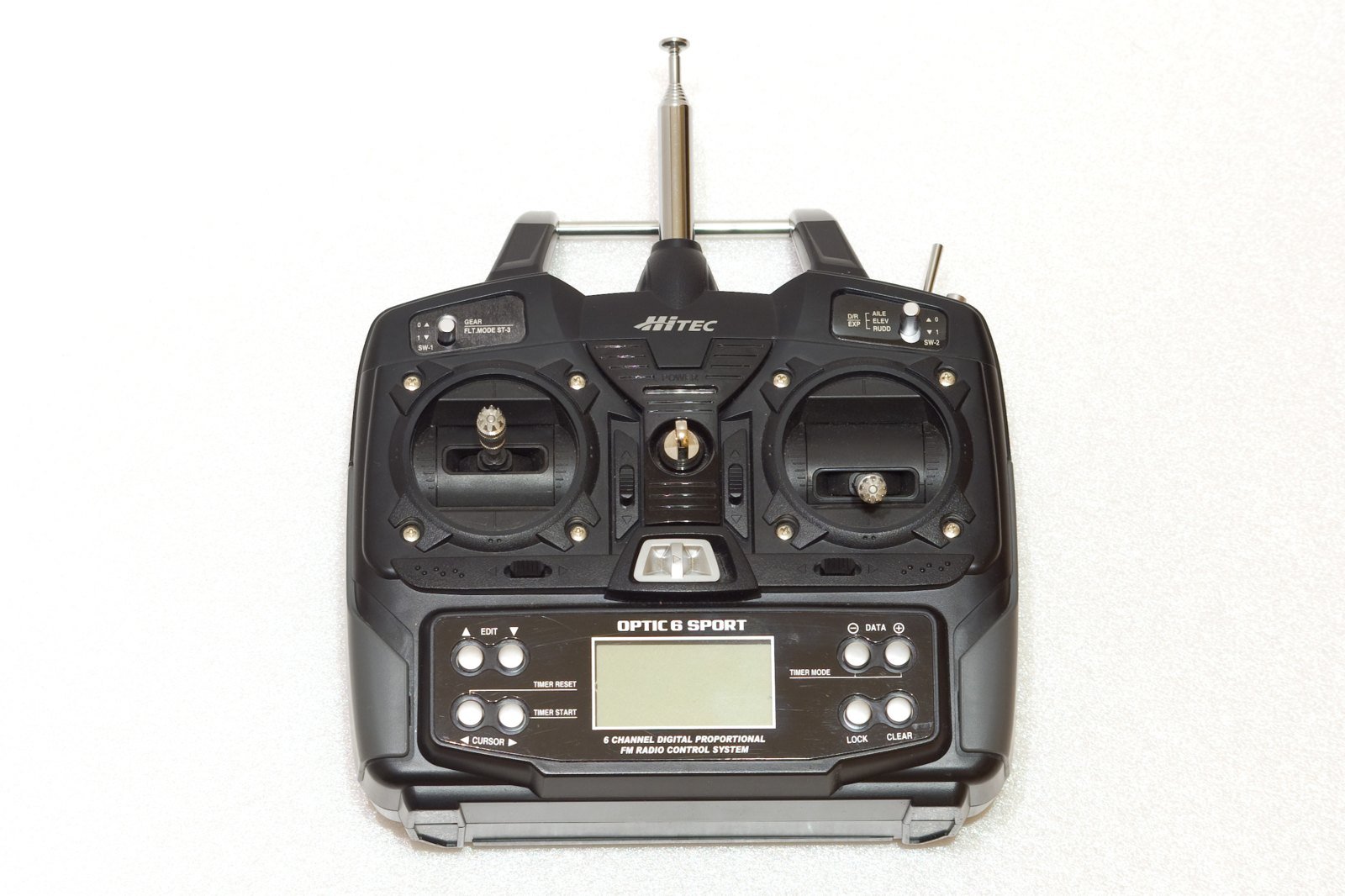
- RTF (Ready-to-Fly) usually includes the plane, a transmitter, a flight battery and a charger, so you can fly almost straight away.
- RTF Basic (Horizon Hobby’s term) includes the plane and transmitter, but the battery and charger are sold separately.
- BNF (Bind-N-Fly) includes the plane and receiver but no transmitter. It suits people who already own a compatible radio.
Always read the “needed to complete” list on the listing before you buy, so there are no surprises on flying day.
Four Beginner RC Planes Worth a Look
All four of these come from Horizon Hobby’s HobbyZone and E-flite brands, which are among the most widely sold beginner ranges, and all use SAFE stabilisation. Specifications are from the manufacturer’s listings. Availability changes often, so check before you plan around one.
HobbyZone Sport Cub S 2 RTF with SAFE
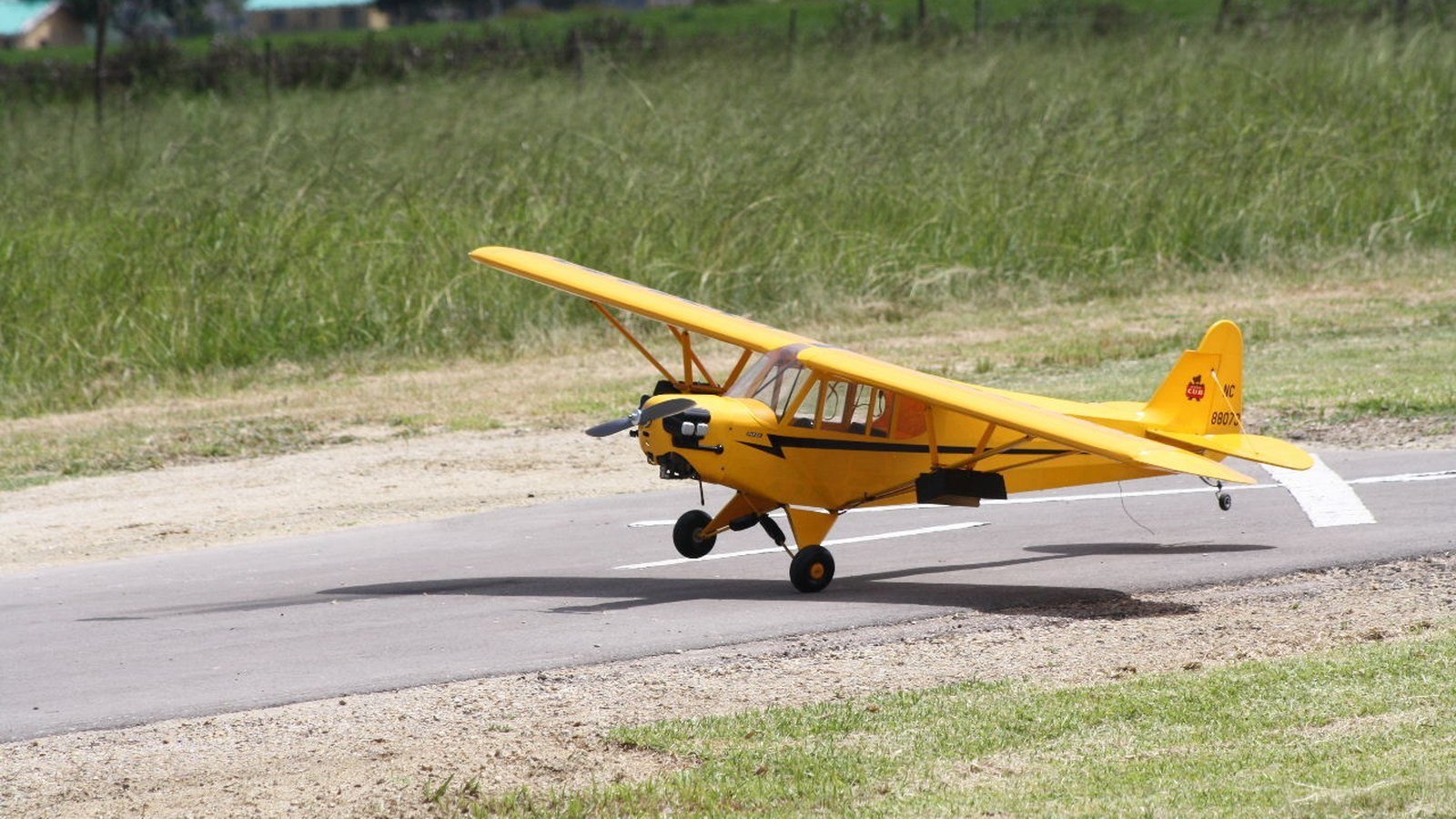
The smallest and simplest of the bunch, styled after the classic Piper Cub.
- Wingspan: 617 mm (24.3 in)
- Flying weight: 61 g with its 1S 150mAh battery
- In the box (RTF): battery, charger and transmitter
- Simulator link: the transmitter has a USB-C port and works with the included trial of RealFlight Trainer Edition
- Stabilisation: SAFE technology
Why it suits beginners: it’s tiny, light and inexpensive to repair, and you get a simulator trial in the same box. At 61 g it’s well under the 250 g threshold that matters in both Australia and the US (see the rules below). Horizon pitches it for large yards and parks, but note that in Australia parks are classed as “populous areas” by CASA, so you’ll need a suitable open space or a club field. Very light models also struggle in wind, so save it for calm days. See the Sport Cub S 2 on Horizon Hobby.
HobbyZone AeroScout S 2 1.1m RTF Basic with SAFE and RealFlight
A purpose-built trainer with a pusher propeller at the back, which keeps the prop out of the way when you land on your nose.
- Wingspan: 1095 mm (43.1 in)
- Weight: 639 g without battery; 853 g with a 3S 2200mAh battery
- Construction: EPO foam, tricycle landing gear, optional floats
- Flight modes: Beginner, Intermediate and Experienced, so the plane grows with you
- Simulator: includes the “full” version of RealFlight Trainer Edition (Windows 10 or 11 PC)
- Needed to complete: 3S battery and charger (sold separately)
Why it suits beginners: it’s big enough to handle a little more breeze than a micro, the tricycle gear makes take-offs and landings easier, and you get both the plane and a proper simulator in one purchase. See the AeroScout S 2 on Horizon Hobby.
HobbyZone Carbon Cub S 2 1.3m RTF Basic
For people who want their first plane to look like a “real” aeroplane. It’s based on the CubCrafters Carbon Cub, a modern take on the Piper Cub.
- Wingspan: 1300 mm (51.18 in)
- Weight: 913 g without battery
- Landing gear: taildragger with big tundra tyres; optional floats
- Options: SAFE Plus GPS and a Landing Assist Sensor can be added
- Needed to complete: 3S battery and charger (sold separately)
Why it suits beginners: it combines beginner-friendly stabilisation with scale looks, and it’s a model many pilots keep flying long after they’ve learned. A taildragger is a little trickier to take off than a tricycle-gear plane, so it’s worth practising on the simulator first. See the Carbon Cub S 2 on Horizon Hobby.
E-flite Apprentice STS 1.5m RTF Basic Smart Trainer with SAFE
The classic club trainer: big, stable and built to cope with more wind.
- Wingspan: 1499 mm (59 in)
- Weight: 1672 g
- Options: SAFE Plus GPS and Landing Assist Sensor
- Needed to complete: 3S 3200–4000mAh battery and charger (sold separately)
- Background: the earlier Apprentice listing describes it as the Official Trainer of the Academy of Model Aeronautics (AMA) in the US
Why it suits beginners: larger planes are generally more stable and easier to see, which is why this style of trainer is a favourite at club fields. It’s the biggest and heaviest here, so it’s best flown at a club field rather than a local reserve. At the time of writing Horizon listed it as back-ordered. See the Apprentice STS on Horizon Hobby.
Know the Rules Before You Fly
In both Australia and the US, model aeroplanes fall under the same rules as recreational drones. These are the basics; always check the official pages before you fly, because rules change.
Australia (CASA)
The Civil Aviation Safety Authority’s drone rules apply to model aircraft flown for fun. Key points include:
- No licence, accreditation or registration is needed when you fly for fun, and there’s no age limit. You need CASA approval to fly anything over 25 kg.
- Fly no higher than 120 m (about 400 ft) above the ground.
- Keep at least 30 m away from other people.
- Fly only one aircraft at a time, only in daylight, and keep it within your visual line of sight.
- Don’t fly over or above people, or in populous areas such as beaches, parks, events or sports ovals while a game is on.
- If your aircraft weighs more than 250 g, don’t fly within 5.5 km of a controlled airport.
- CASA recommends using a CASA-verified drone safety app to check where you can fly.
United States (FAA)
The FAA’s recreational flyer rules cover model aircraft too. In short:
- Register your aircraft if it weighs 250 g (0.55 lb) or more.
- Pass The Recreational UAS Safety Test (TRUST). It’s free, and you must carry proof that you passed.
- Follow the safety guidelines of an FAA-recognised community-based organisation.
- Keep your aircraft within visual line of sight and give way to other aircraft.
- Fly at or below 400 ft in uncontrolled (Class G) airspace; controlled airspace needs authorisation, through LAANC or the FAA’s DroneZone.
- Registered aircraft must broadcast Remote ID, unless you’re flying at an FAA-Recognized Identification Area (FRIA), which many club fields are.
We covered the US rules in more detail in our beginner drone guide, and they apply in the same way to model planes.
Join a Club (Seriously, It Helps)
The single best thing a beginner can do is find a local club. You get a safe, approved place to fly, experienced members who can check your plane over, and often an instructor who can help you through your first flights.
- In Australia, the Model Aeronautical Association of Australia (MAAA) describes itself as Australia’s largest flying organisation, with more than 330 affiliated clubs and over 9,500 members, and it’s been around for more than 75 years. Its clubs have recognised flight instructors, it runs a Wings program for new pilots, and its website has a Find a Club tool and information on Have a Go flying.
- In the US, the Academy of Model Aeronautics (AMA) calls itself the world’s largest model aviation association. Membership includes insurance and access to its chartered club flying sites, and it has a club finder on its website.
Tips for Your First Real Flight
- Pick a calm day. Wind is a beginner’s biggest enemy, especially with small, light models.
- Charge everything the night before, including the transmitter, and always switch the transmitter on before the plane and off after it.
- Do a pre-flight check. Make sure the control surfaces move the right way when you move the sticks, and that the propeller and battery are secure.
- Take off into the wind and climb to a comfortable height before you try turns. Height gives you time to recover.
- Keep the first flight short and simple. Gentle, wide circles are plenty. Use the beginner mode on your stabilisation system.
- Expect a few bumps. Every RC pilot has a crash story. Pack some foam-safe glue and a spare propeller, and you’ll be back in the air quickly.
Thanks for Flying With Us
Learning to fly RC is one of the most rewarding corners of aviation, and with a simulator, a forgiving trainer and a friendly club, you’ll be making smooth circuits sooner than you think. If the Cub-style trainers above have you curious about the real thing, our story of the Tiger Moth shows how full-size pilots learned on a forgiving trainer too. And if you’d rather start with a camera drone, our beginner drone guide has you covered. For the hangar wall, take a look at the vintage-aviation prints in our Art Shop.
What was your first RC plane, or which one is on your wish list? Tell us in the comments.
Full-size trainers for the shelf
While you learn on a foam RC trainer, a die-cast classic is a nice reminder of the full-size aeroplanes that taught generations of pilots. These Airmodels trainers sit well beside a Cub-style RC hangar.

de Havilland DH.82A Tiger Moth (1/72 scale)

Boeing N2S-3 Stearman (1/48 scale)

About our links: this is an affiliate link, so PlanesNStuff may earn a small commission at no extra cost to you.
God bless you with blue skies!

Leave a Reply