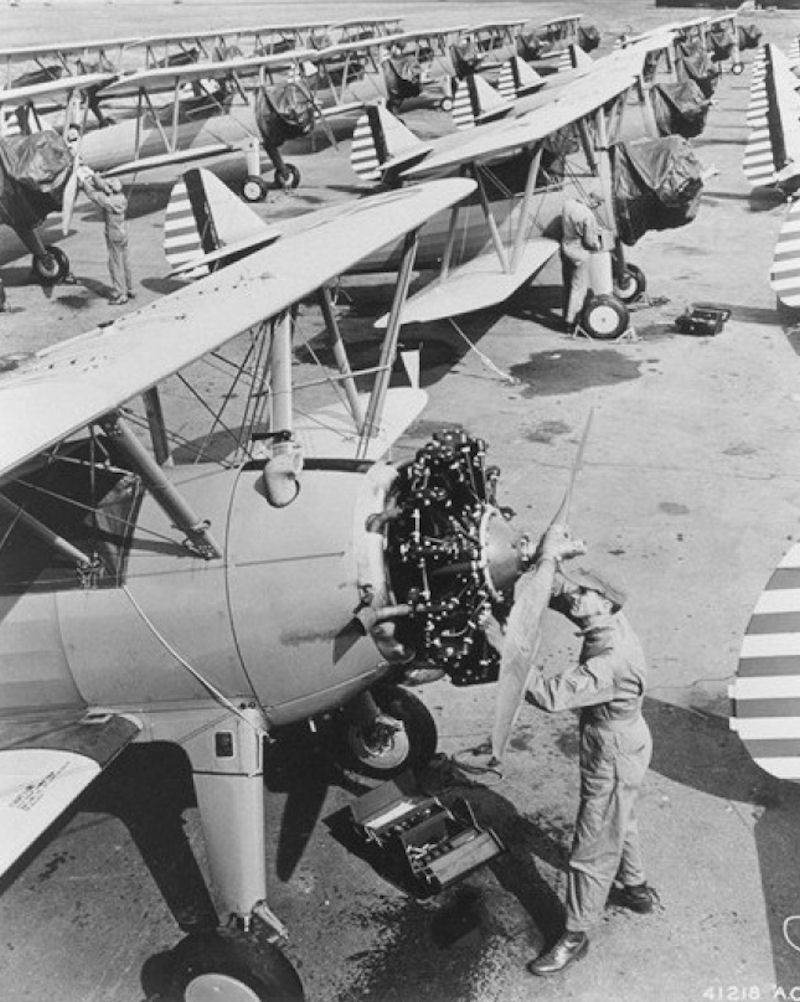
Home flight simulator with an RC plane, RC helicopter and drone flying outside the window

Your home for all things that fly

Aviation history, drones, RC aircraft, flight sims and gear, written by enthusiasts.

Latest Posts

  • Best Beginner Drones in the US: What to Look For Under FAA Rules

    Best Beginner Drones in the US: What to Look For Under FAA Rules

    We haven’t tested these products ourselves. This roundup is based on manufacturer information, published specifications and owner reviews.

    So you want to fly a drone. Good choice! There’s nothing quite like watching your neighborhood, a favorite beach or a quiet stretch of farmland open up beneath you from a few hundred feet up. It’s also one of the easiest ways into aviation: you’re dealing with lift, wind, airspace and the same “see and avoid” thinking that real pilots use every day. (If you’ve ever wondered how those little propellers keep it all in the air, our post on how planes fly covers the basics of lift.)

    Before you buy, though, it pays to know the rules, because in the US the rules actually shape which drone makes the most sense for a beginner. Let’s start there, then look at the features that matter and three beginner-friendly drones worth a look.

    The FAA Rules for Fun Flyers, in Plain English

    If you’re flying purely for fun, the Federal Aviation Administration (FAA) treats you as a recreational flyer. If you fly for any kind of work or business, even a little, you need to follow the FAA’s Part 107 rules instead. The FAA’s own advice is simple: if you’re not sure, assume Part 107.

    Here are the recreational basics, straight from the FAA’s recreational flyers page:

    • Pass the TRUST test. The Recreational UAS Safety Test is free, online and run by FAA-approved test administrators (the Academy of Model Aeronautics, Embry-Riddle and Pilot Institute are among them). You can’t fail it, because wrong answers are corrected as you go. Save your certificate and carry proof when you fly, because the test providers don’t keep a copy for you. Details are on the FAA’s TRUST page.
    • Register if your drone weighs 250 grams (0.55 lb) or more. Registration is done online at FAADroneZone, costs a small fee, lasts three years and covers every drone you own as a recreational flyer. You must be at least 13, mark your registration number on the outside of the drone and carry your certificate. Drones under 250 g flown only for fun don’t need registering. See the FAA’s registration page.
    • Remote ID comes with registration. Since September 16, 2023, any drone that has to be registered must broadcast Remote ID, a kind of digital license plate. You can comply by flying a drone with Standard Remote ID built in, by fitting a broadcast module, or by flying only at an FAA-Recognized Identification Area (FRIA). More on the FAA’s Remote ID page.
    • Keep it in sight. You (or a visual observer standing right beside you) must be able to see the drone with your own eyes.
    • Give way to every other aircraft, always.
    • Stay at or below 400 feet (122 m) in uncontrolled (Class G) airspace.
    • Get authorization before flying in controlled airspace around many airports. Recreational flyers can request it through LAANC (the FAA’s automated approval system, available in several apps) or through FAADroneZone.
    • Follow a community-based organization’s safety guidelines, such as those of the Academy of Model Aeronautics (AMA).

    To check where you can fly, use an FAA-approved B4UFLY app. They show controlled airspace, temporary flight restrictions, national parks and more, and most also handle LAANC requests.

    One more thing that catches lots of new flyers: launching, landing or flying a drone from inside most national parks is prohibited, under a National Park Service policy dating back to 2014. Read the NPS’s explanation before you pack the drone for a road trip. State and local rules can add their own limits too.
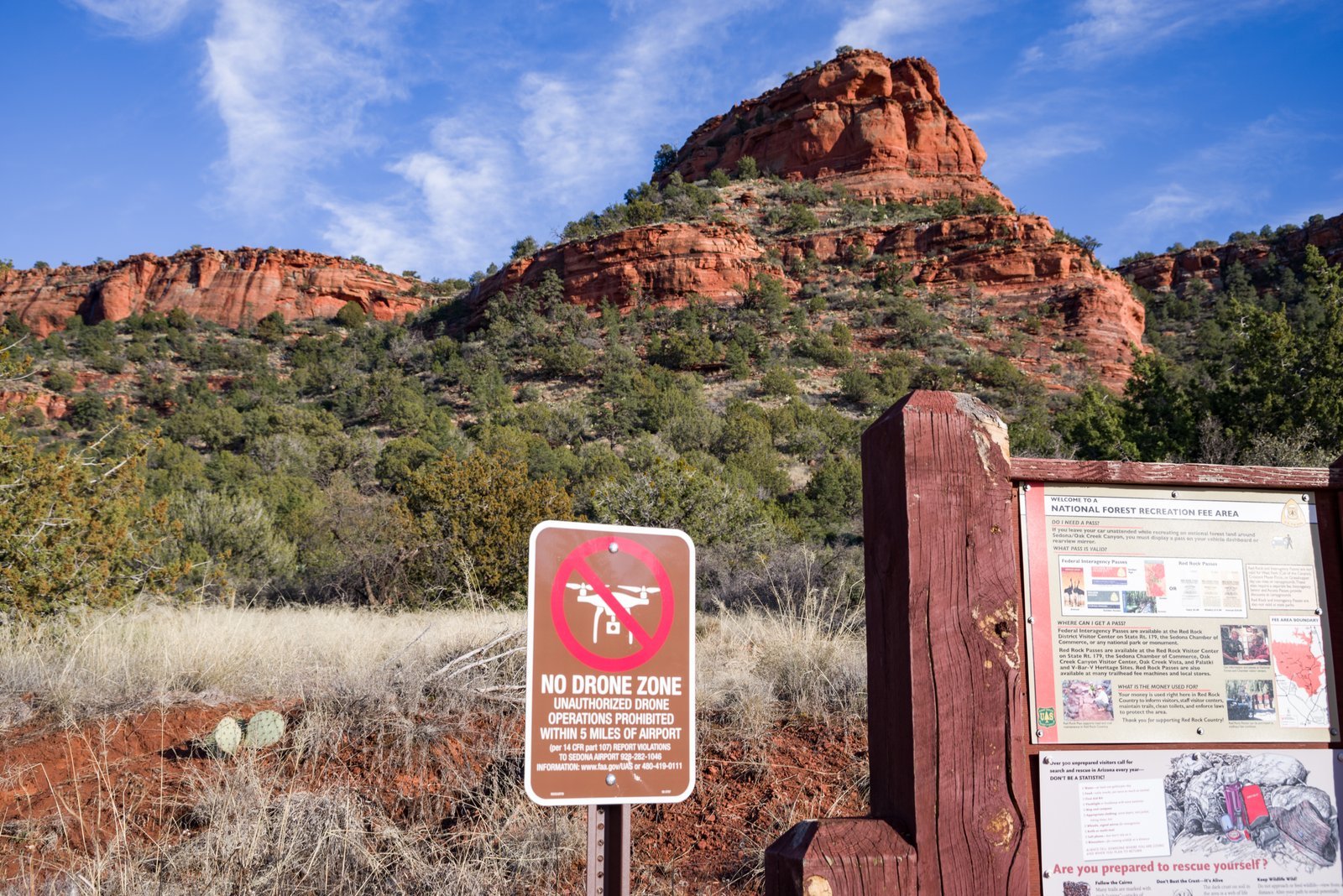
    A brown 'No Drone Zone' sign in front of red rock cliffs near Sedona, Arizona.
    A 2017 ‘No Drone Zone’ sign near Sedona’s airport in Arizona’s Coconino National Forest. Always check the current airspace before you fly. Photo: Coconino National Forest, public domain, via Wikimedia Commons.

    Why “Under 250 Grams” Is the Magic Number

    That 250 g line is why so many beginner drones are built to weigh just under it. Fly one for fun and you skip registration, and because you don’t have to register, you don’t need Remote ID either. You still need your TRUST certificate and you still follow every other rule above.

    A word of warning: some drones in this weight class can take an optional larger battery, and that can push the takeoff weight over 250 g. Once that happens, registration and Remote ID apply. Check the manufacturer’s specs for the exact battery you plan to use.

    What to Look For in Your First Drone

    • GPS position hold. A GPS drone holds its spot in the sky when you let go of the sticks, which makes learning far less stressful. Tiny indoor drones without GPS drift with every puff of air.
    • Return to home. If the signal drops or the battery runs low, a GPS drone can fly itself back to its takeoff point. It’s a beginner’s best friend, but check the return height before each flight so it clears nearby trees.
    • A stabilized camera. A 3-axis mechanical gimbal keeps video smooth and the horizon level. Single-axis gimbals with electronic stabilization work well too, though with less smoothing.
    • Wind resistance. Small, light drones get pushed around. Manufacturers often quote a “Level 5” rating (around 24 mph or 10.7 m/s), but a beginner should treat that as the limit, not the target.
    • Propeller guards. Handy for learning in a backyard or gym, and much kinder to fingers.
    • Spare batteries. Advertised flight times are measured in ideal, windless conditions, so real flights are shorter. Two or three batteries turn a quick hop into a proper afternoon of practice.
    • Beginner modes and one-tap takeoff. Slower speed modes, automatic takeoff and landing, and built-in tutorials help a lot in the first weeks.
    • Can you still buy it new (and get it serviced)? See the FCC note below.

    A Quick Note on the FCC Covered List

    In December 2025 the Federal Communications Commission (FCC) added foreign-made drones and key drone components to its Covered List. In practice, that means new foreign-made drone models can’t get the FCC equipment authorization they need to be sold in the US unless they receive a specific approval. Drones that were already authorized before then can still be sold, bought and flown legally, and owners can keep flying the drones they have. All three drones below were released and authorized before the change, but stock and accessories may get harder to find over time, so buy from an authorized retailer and check the FCC’s Covered List page if you want the latest.

    Three Beginner-Friendly Drones Worth a Look

    All three weigh under 250 g, so a purely recreational flyer in the US doesn’t need to register them. Specs below come from the manufacturers’ official pages.

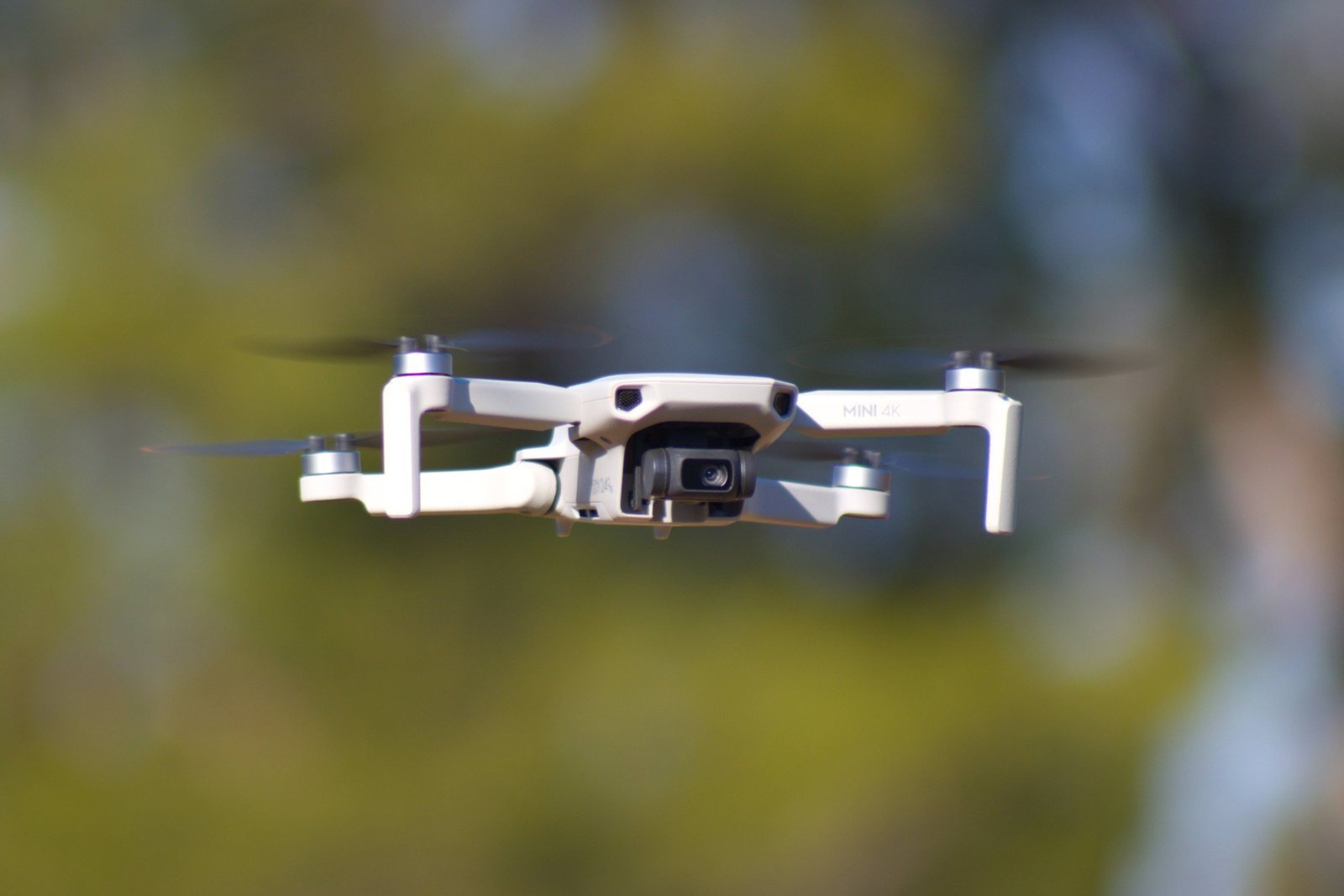
    1. DJI Mini 4K: The All-Rounder

    The DJI Mini 4K is DJI’s entry-level folding GPS drone, and it ticks almost every box on the list above.

    • Weight: 246 g (8.7 oz) standard takeoff weight
    • Flight time: up to 31 minutes (DJI’s figure, in ideal conditions)
    • Camera: 1/2.3-inch sensor, 4K video at 30fps, 4x digital zoom
    • Gimbal: 3-axis mechanical
    • Range: up to 10 km (6.2 miles) video transmission under FCC rules, though you must always keep it in sight
    • Wind resistance: Level 5 (10.7 m/s, about 24 mph)
    • Beginner help: one-tap takeoff and landing, return to home, and a beginner guide in the app

    Good for: someone who wants smooth travel and landscape video and a drone they won’t outgrow quickly. Keep in mind: it only has downward sensors, so there’s no obstacle avoidance. Fly in open spaces and keep your eyes on it.

    2. DJI Neo: The Tiny Selfie Flyer

    The DJI Neo is a very different beast: a palm-sized drone with enclosed propeller guards that can take off from and land on your hand, then follow you around for short clips.

    • Weight: about 135 g (4.8 oz)
    • Flight time: about 18 minutes (about 17 with the propeller guards fitted), per DJI
    • Camera: 1/2-inch sensor, 12 MP photos, 4K video at 30fps
    • Gimbal: single-axis mechanical (tilt), plus electronic stabilization
    • Range: about 50 m (164 ft) when flown from a phone over Wi-Fi, per DJI’s specs
    • Wind resistance: Level 4 (8 m/s, about 18 mph)
    • Sensing: downward positioning only

    Good for: first-timers, teens and anyone who mostly wants quick, fun clips of themselves on a walk, bike ride or at a family gathering. Keep in mind: the shorter range, lighter build and smaller wind rating mean it’s best on calm days and close to you.
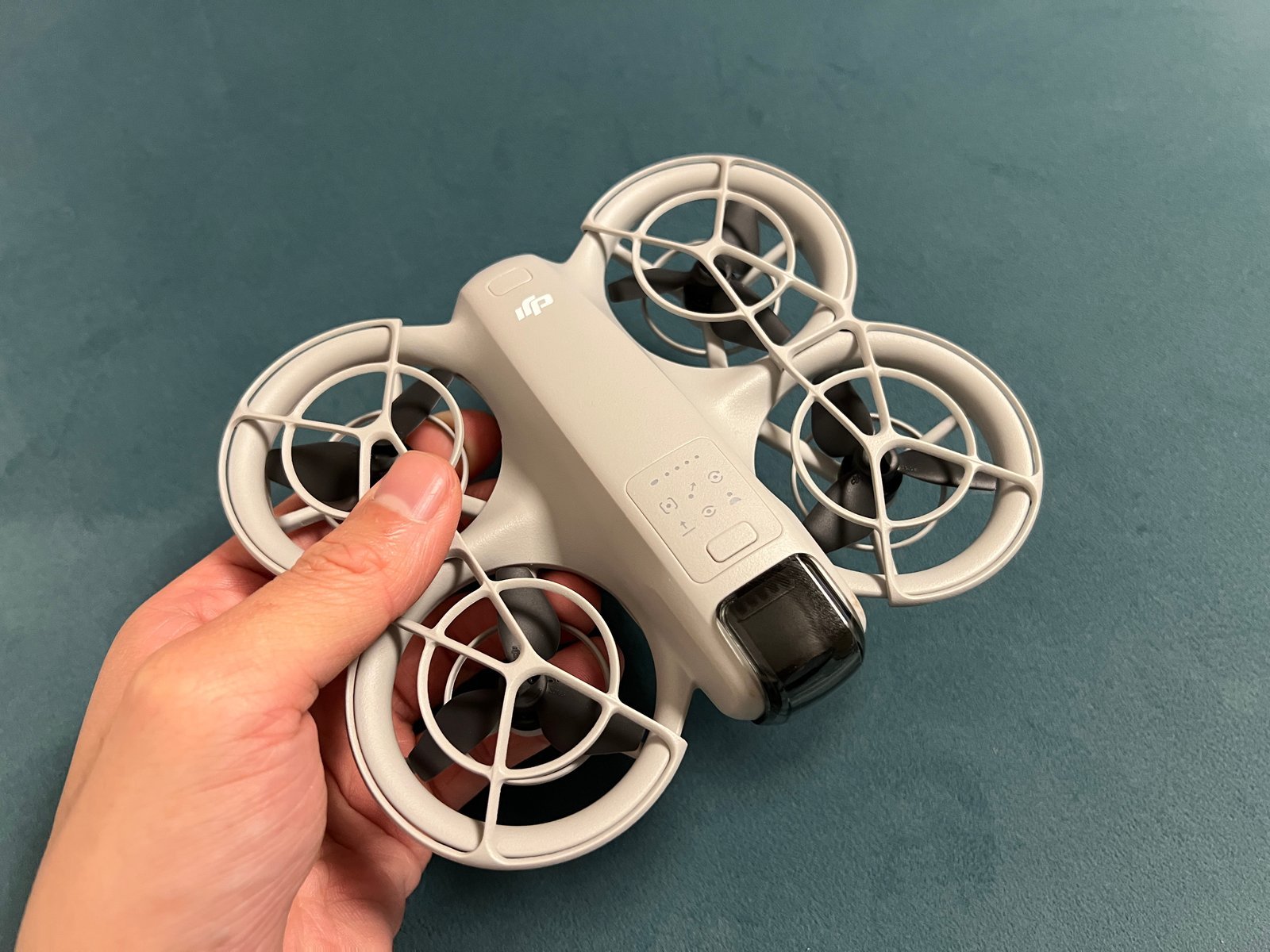
    A hand holding a small gray DJI Neo drone with round propeller guards.
    The palm-sized DJI Neo, with its built-in propeller guards. Photo: NAN LIU, CC BY-SA 2.0, via Wikimedia Commons.

    3. Potensic ATOM: The Non-DJI Alternative

    If you’d like an option from another brand, the Potensic ATOM is a folding GPS drone with a very similar recipe to the Mini 4K.

    • Weight: under 249 g (242 g per Potensic’s manual)
    • Flight time: up to 32 minutes (Potensic’s figure)
    • Camera: 1/3-inch Sony sensor, 12 MP photos, 4K video at 30fps
    • Gimbal: 3-axis mechanical
    • Range: up to 6 km (3.7 miles) with Potensic’s PixSync 3.0 transmission
    • Wind resistance: Level 5
    • Smart features: multi-system GNSS positioning, return to home, QuickShots and visual tracking

    Good for: beginners who want 3-axis smooth video, long flights and subject tracking from a non-DJI brand. Keep in mind: there’s no obstacle avoidance here either, and Potensic also sells a cheaper ATOM SE with a simpler single-axis gimbal, so check which model you’re looking at.

    Before Your First Flight

    1. Take the TRUST test and save the certificate on your phone.
    2. Practice in a big open field, well away from people, roads, trees and power lines, on a calm day.
    3. Check B4UFLY before every new location.
    4. Learn the controls slowly. Hover, then go forward and back, then gentle turns. Use beginner or slow mode.
    5. Set your return-to-home height above the tallest obstacle nearby.
    6. Consider joining a club. The Academy of Model Aeronautics has clubs and flying fields all over the country, and fellow flyers are the fastest way to learn.

    Thanks for Flying With Us

    A good first drone doesn’t need every bell and whistle. Something under 250 g with GPS, return to home and a stabilized camera will keep you legal, safe and smiling while you learn. Readers in Australia, our guide to the best beginner drones under CASA rules is coming soon. And if you’re shopping for someone else, our gift guide for aviation lovers has plenty more ideas, plus the vintage-aviation prints in our Art Shop.

    What was your first drone, or which one are you eyeing? Tell us in the comments.

    God bless you with blue skies!

  • The North American P-51: The WWII Fighter That Took the Bombers All the Way

    The North American P-51: The WWII Fighter That Took the Bombers All the Way

    Eighty-six years ago this week, on 26 October 1940, a sleek prototype called the NA-73X lifted off from Mines Field in Los Angeles (the site of today’s LAX) with freelance test pilot Vance Breese at the controls. The first flight lasted about five minutes. Within four years its descendants were escorting American heavy bombers all the way to Berlin and back.

    That aeroplane became the North American P-51, and it’s hard to find a WWII fighter with a bigger fan club. The Smithsonian’s National Air and Space Museum puts it plainly: “Many people consider the P-51 Mustang the best fighter of World War II.” It’s also the aeroplane behind our newest print, which you’ll find further down.

    If you’ve read our posts on the golden age of biplanes and the Boeing-Stearman Kaydet, this is the next chapter. Plenty of the young pilots who learnt to fly in open-cockpit biplanes went on to fly this fighter in combat.

    A British Order and a Blank Sheet of Paper

    In 1940 Britain needed fighters, fast. British purchasing officials asked North American Aviation (NAA) to build Curtiss P-40s under licence. NAA had a better idea: let us design you a new and better fighter instead. The British agreed, and the NA-73X flew that October.

    The British named it the Mustang I, and production began in 1941. Two early examples, designated XP-51, went to the US Army Air Forces (USAAF) for testing in the summer of 1941. The USAAF didn’t order it in quantity straight away, but General Henry “Hap” Arnold stepped in to keep 55 of the new fighters for American use, and most of those became F-6A photo-reconnaissance aircraft.

    Part of the design’s secret was aerodynamic. NAA gave it a so-called laminar-flow wing, shaped to keep the airflow smooth over more of the wing and cut drag, with the radiator tucked into a neat scoop under the fuselage.

    The Allison Years

    The early versions used the American Allison V-1710 engine. Down low the aeroplane was fast and pleasant to fly, but the Allison ran out of breath at high altitude, which is exactly where the air war over Europe was being fought. The RAF used its early aircraft for low-level reconnaissance and ground attack. The USAAF’s P-51A went largely to the China-Burma-India theatre, and a dive-bomber version, the A-36 Apache, went into action in June 1943.

    The Merlin Makeover

    The breakthrough came in the autumn of 1942, when engineers in both Britain and the US experimentally fitted the Rolls-Royce Merlin, the engine of the Spitfire and Lancaster. It transformed the aircraft. One Merlin-powered test aircraft reached 441 mph (710 km/h) at 29,800 ft (9,080 m), about 100 mph (160 km/h) faster than the Allison-powered P-51A.

    In the US the Merlin was built under licence by Packard as the V-1650. Merlin-powered P-51Bs came off the line at NAA’s Inglewood plant in California, and identical P-51Cs were built at a new factory in Dallas, Texas. They entered combat in December 1943 with the 354th Fighter Group, which became known as the “Pioneer Mustang Group”.

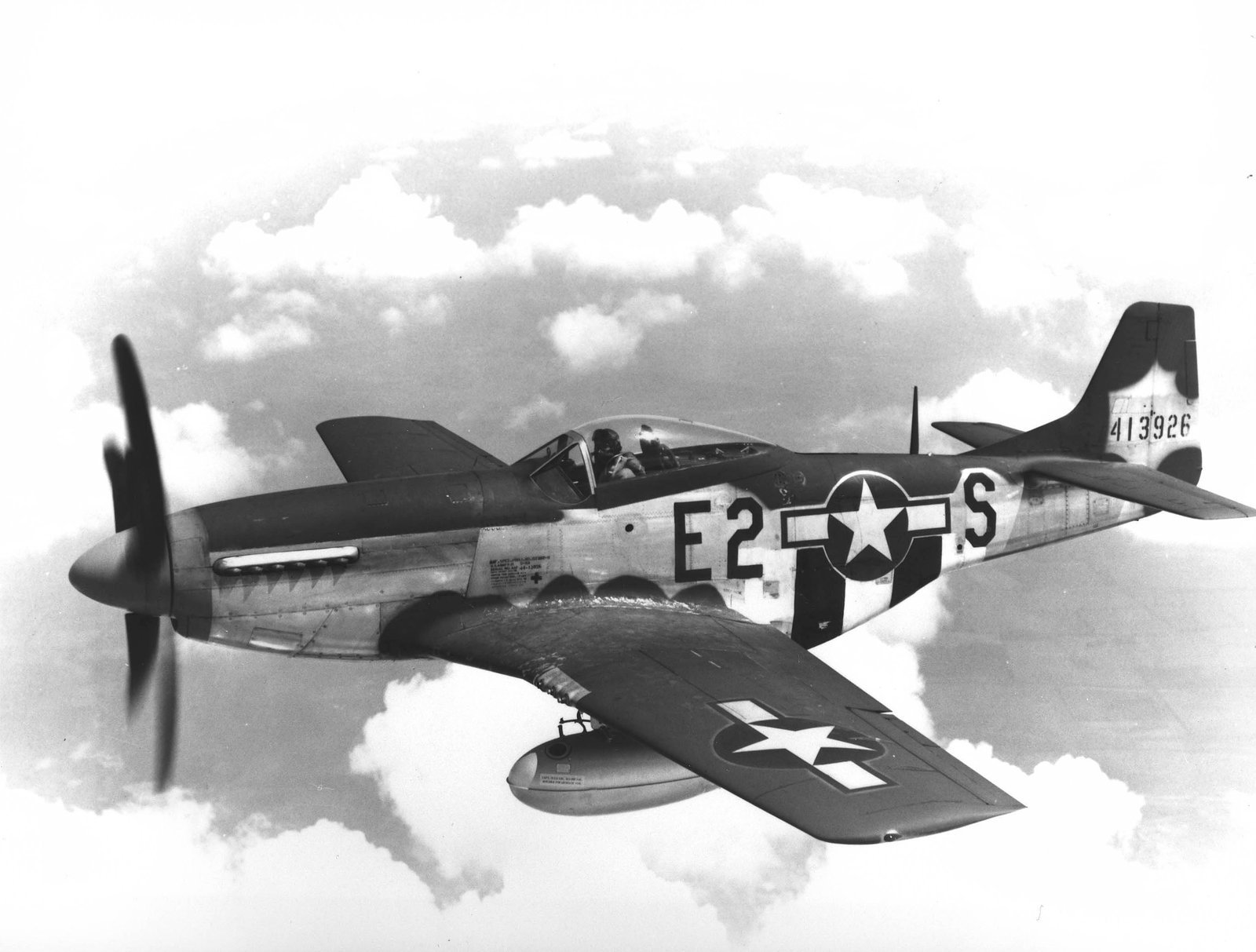
    Black-and-white photo of a P-51D fighter coded E2-S flying above clouds with a drop tank under its wing.
    A P-51D of the 375th Fighter Squadron, 361st Fighter Group, Eighth Air Force, in 1944. Photo: U.S. Air Force, public domain, via Wikimedia Commons.

    Little Friends for the Heavy Bombers

    Through 1943 the American daylight bombing campaign was in trouble. Escort fighters simply couldn’t fly far enough to protect B-17s and B-24s on the deepest raids, and losses were heavy. With drop tanks under its wings, the Merlin-powered P-51 could go the whole distance.

    By the time of the first major US heavy-bomber raid on Berlin in March 1944, about 175 P-51B and P-51C fighters were in service, flying escort alongside P-38s. Bomber crews called their escorts “little friends”, and the 353rd Fighter Group, whose markings the Smithsonian’s P-51D wears today, would escort the bombers deep into Germany and then strafe targets on the way home.

    The P-51D: The Classic Shape

    The P-51D, which arrived in quantity in the spring of 1944, is the version most people picture. It added:

    • A bubble canopy, giving the pilot a clear view all round, including behind (the earlier “razorback” B and C had a framed canopy).
    • Six .50-calibre machine guns instead of four, with a simplified ammunition feed.
    • The K-14 gyroscopic gunsight, which helped pilots work out how far to lead a target.

    Nearly 8,000 P-51Ds were built, making it the most numerous version. According to the National Museum of the US Air Force, the type destroyed 4,950 enemy aircraft in the air in Europe, more than any other USAAF fighter there. In the Pacific, P-51Ds flew from Iwo Jima from the spring of 1945 to escort B-29s over Japan.

    By the Numbers (P-51D)

    These figures come from the National Museum of the US Air Force fact sheet.

    • Engine: Packard-built Merlin V-1650, 1,695 hp (1,264 kW)
    • Maximum speed: 437 mph (703 km/h); cruise 275 mph (443 km/h)
    • Range: 1,000 miles (1,610 km)
    • Service ceiling: 41,900 ft (12,770 m)
    • Wingspan: 37 ft (11.28 m); length: 32 ft 3 in (9.83 m)
    • Maximum weight: 12,100 lb (5,490 kg)
    • Armament: six .50-calibre machine guns, plus bombs or rockets
    • Production, all versions: more than 15,000

    The Red Tails

    No story of this aircraft is complete without the Tuskegee Airmen. As we mentioned in our Stearman post, African American cadets learnt to fly at Moton Field in Tuskegee, Alabama, at a time when the US military was still segregated.

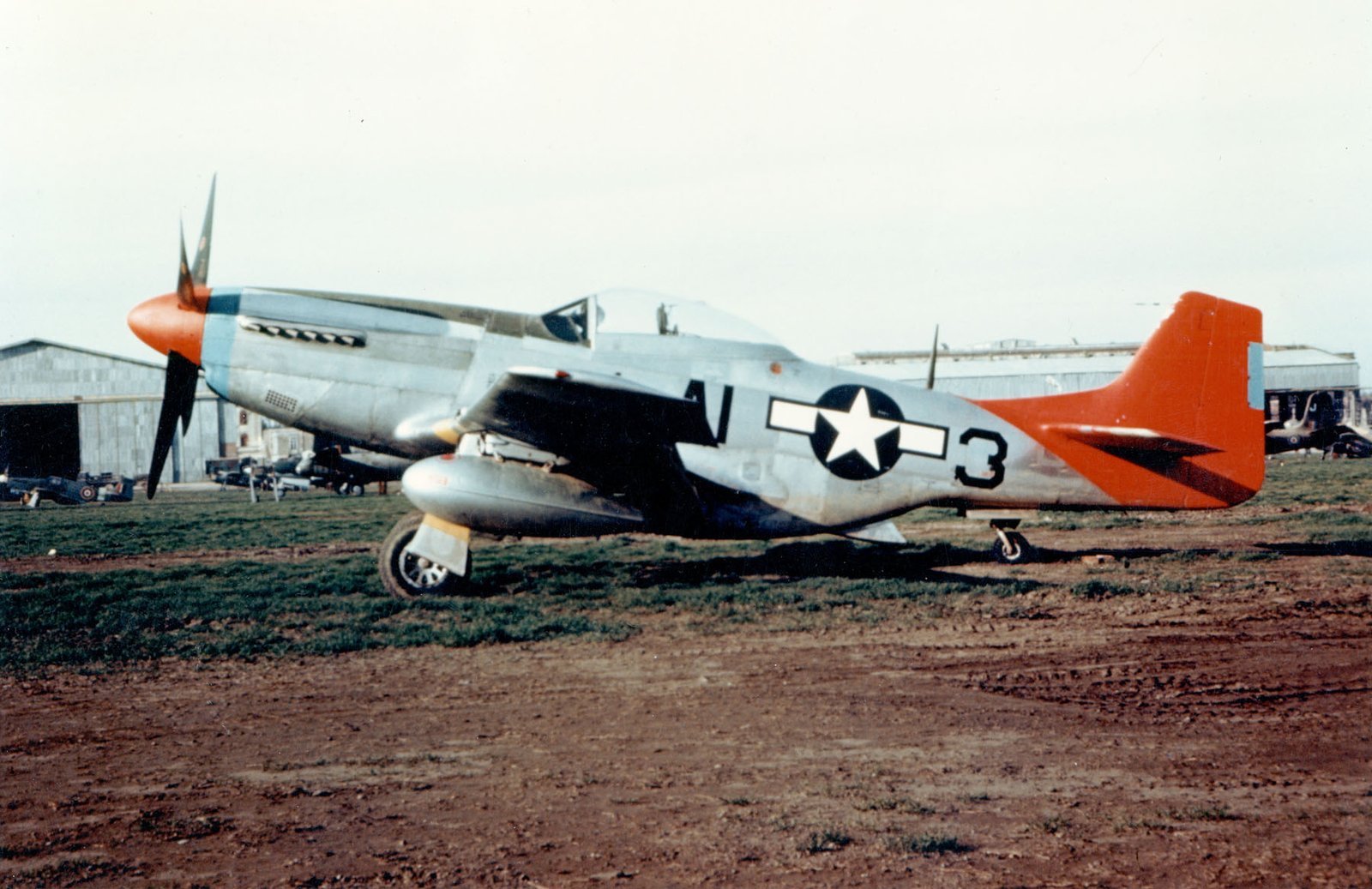
    The 332nd Fighter Group, led by Colonel Benjamin O. Davis Jr., flew from Italy with the 15th Air Force. In July 1944 the group switched to P-51s and painted the tails bright red, which is how they became the “Red Tails”. From June 1944 to the end of the war the group flew 311 missions for the 15th Air Force, 179 of them bomber escorts. On 24 March 1945 they escorted B-17s on a long raid to Berlin and shot down three Me 262 jet fighters, earning a Distinguished Unit Citation.

    About 990 pilots trained at Tuskegee, and some 350 went overseas. Their record is widely credited with helping make the case for desegregating the US armed forces after the war.

    Colour photo of a silver P-51D fighter with a bright red tail and red spinner parked on a grass airfield.
    The 332nd Fighter Group’s red tails gave the Tuskegee Airmen their famous nickname. Photo: U.S. Air Force, public domain, via Wikimedia Commons.

    Down Under: Built in Melbourne

    Australia has its own chapter. Commonwealth Aircraft Corporation (CAC) at Fishermans Bend, Melbourne, built 200 of these fighters under licence for the RAAF. The first 80 were assembled from kits supplied by North American as the CA-17, and the rest were built locally from scratch as the CA-18. The first Australian-assembled aircraft, A68-1, flew on 29 April 1945, too late for combat in WWII: only 17 had been delivered by VJ Day. The RAAF also received nearly 300 US-built P-51Ds and P-51Ks, and No. 3 Squadron RAAF flew the type in Italy from late 1944.

    Korea

    When war broke out in Korea in 1950, the fighter was back in action, now redesignated the F-51 in USAF service. It could reach targets from bases in Japan that the early F-80 jets couldn’t, and it was flown by the USAF, the Republic of Korea Air Force, the South African Air Force and the RAAF.

    No. 77 Squadron RAAF, flying from Iwakuni in Japan, went into action on 2 July 1950, the first British Commonwealth unit to see action in Korea. It flew its last operations on the type in early April 1951 before converting to Gloster Meteor jets. In the US, F-86 Sabres had largely replaced the F-51 in combat by 1953, and the Air National Guard flew its last in 1957. In Australia, the RAAF’s last went in 1959, replaced by Vampire jets.

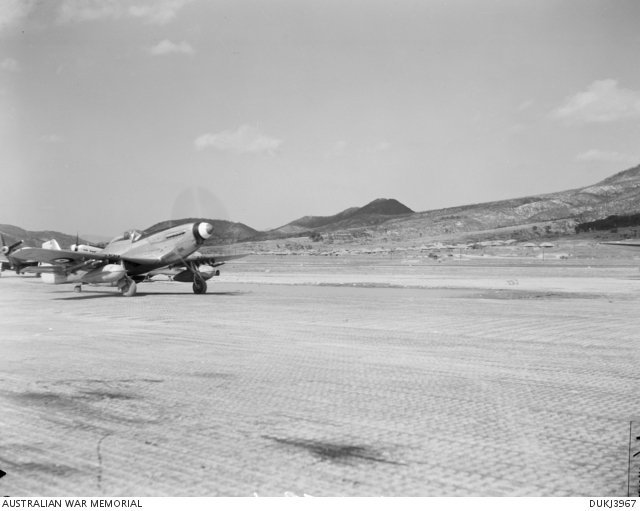
    No. 77 Squadron RAAF fighter carrying rockets and napalm tanks taxiing on metal matting in Korea, 1951.
    A No. 77 Squadron RAAF fighter, armed with rockets and napalm, taxis out for a mission in Korea in March 1951. Photo: Harold Dunkley, Australian War Memorial C1089130, public domain, via Wikimedia Commons.

    Racing: From Reno to Roswell

    After the war, surplus fighters became prized civilian warbirds, and the P-51 found a second career as a racer. From 1964 the National Championship Air Races were held in northern Nevada, where modified P-51s were stars of the Unlimited class for decades. The 2023 event was the last at Reno-Stead.

    The races have since moved to Roswell, New Mexico. After sitting out 2025, the Unlimited class made its Roswell debut on 16–20 September 2026, and Steven Hinton won Unlimited Gold in the P-51D Bardahl Special at an average of 432.897 mph (696.7 km/h). Not bad for a design that first flew in 1940.

    Where to See One Today

    These aircraft are among the most popular warbirds in the world, and plenty are still flying. Always check the venue’s own website for opening hours, flying days and bookings before you go.

    In the USA

    • National Museum of the US Air Force, Dayton, Ohio: P-51D Shimmy IV, plus the museum’s excellent fact sheets. nationalmuseum.af.mil
    • Smithsonian National Air and Space Museum, Washington, D.C.: the P-51D Willit Run? is displayed in the Jay I. Kislak World War II in the Air gallery, which opened on 1 July 2026. airandspace.si.edu
    • Planes of Fame Air Museum, Chino, California: “We fly our planes!” Check its flight schedule for flying days. planesoffame.org
    • CAF Red Tail Squadron: its P-51C Tuskegee Airmen tours air shows and events across the US, telling the Tuskegee story. cafriseabove.org
    • Stallion 51, Kissimmee, Florida: flight training and experience flights in dual-control TF-51s. stallion51.com

    In Australia

    • RAAF Museum, Point Cook, Victoria: the heritage CA-18 A68-170 is part of the Air Force Heritage Fleet flown by No. 100 Squadron, which puts on interactive flying displays on as many museum open days as possible. Flying isn’t guaranteed, so contact the museum to check before you go. Bookings are essential, and visitors over 16 need photo ID to enter the base. airforce.gov.au
    • Australian War Memorial, Canberra: an example is displayed among the Korean War aircraft in the Aircraft Hall. awm.gov.au
    • Fly in one, Brisbane: Fighter Pilot Adventure Flights at Archerfield offers P-51D flights. fighterpilot.com.au
    • Fly in one, Melbourne: Mustang Joy Flights flies CA-18 VH-BOB from Point Cook, usually on Saturdays. mustangjoyflights.com.au

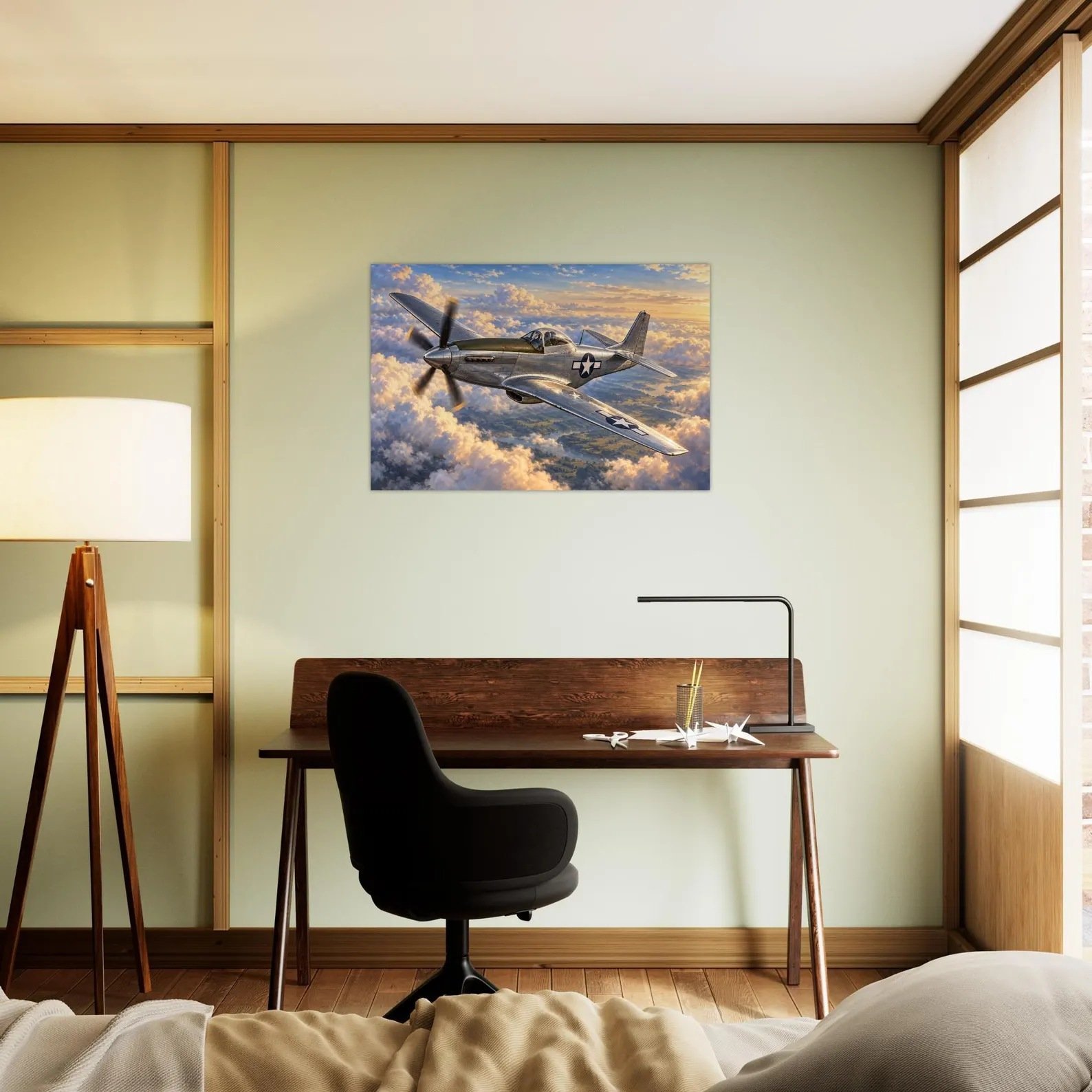
    Our Art: Silver Warbird at Sunset

    Framed Silver Warbird at Sunset print hanging above a desk with a lamp and paper planes.
    Silver Warbird at Sunset in a home study. I created this print with the help of AI image tools.

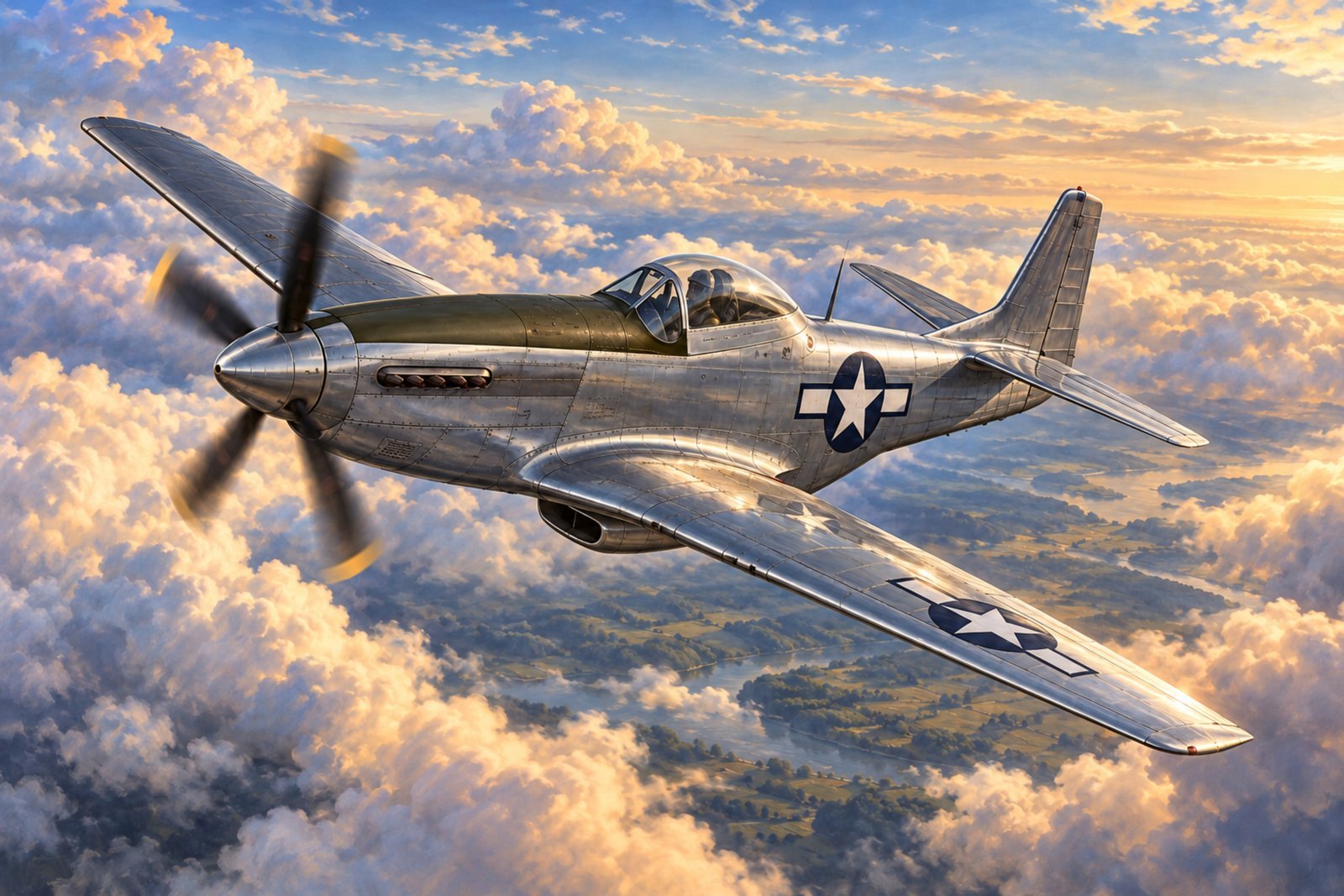
    There’s something about a bare-metal WWII fighter catching the evening light. Our Silver Warbird at Sunset print shows a silver bubble-canopy fighter in US markings cruising above glowing sunset clouds, with a river winding through the landscape far below. It’s the kind of picture that belongs above a desk, in a hangar office or on the wall of anyone who grew up building model warbirds.

    It would make a great Christmas gift for the aviation lover in your life. I created this print with the help of AI image tools.

    Thanks for Flying With Us

    From a rushed 1940 design for a British order to Berlin escorts, the Red Tails, Korea and the racecourse at Roswell, the North American P-51 packed a lot of history into a few short years, and it’s still thrilling crowds today. If you get the chance to hear a Merlin start up at an air show, take it.

    Got a favourite WWII fighter, or a family connection to one? Tell us in the comments. And if this one’s your favourite too, take a look at the Silver Warbird at Sunset poster or digital download.

    God bless you with blue skies!

  • Gifts for Aviation Lovers: Ideas for Pilots, Plane Spotters and Avgeeks

    Gifts for Aviation Lovers: Ideas for Pilots, Plane Spotters and Avgeeks

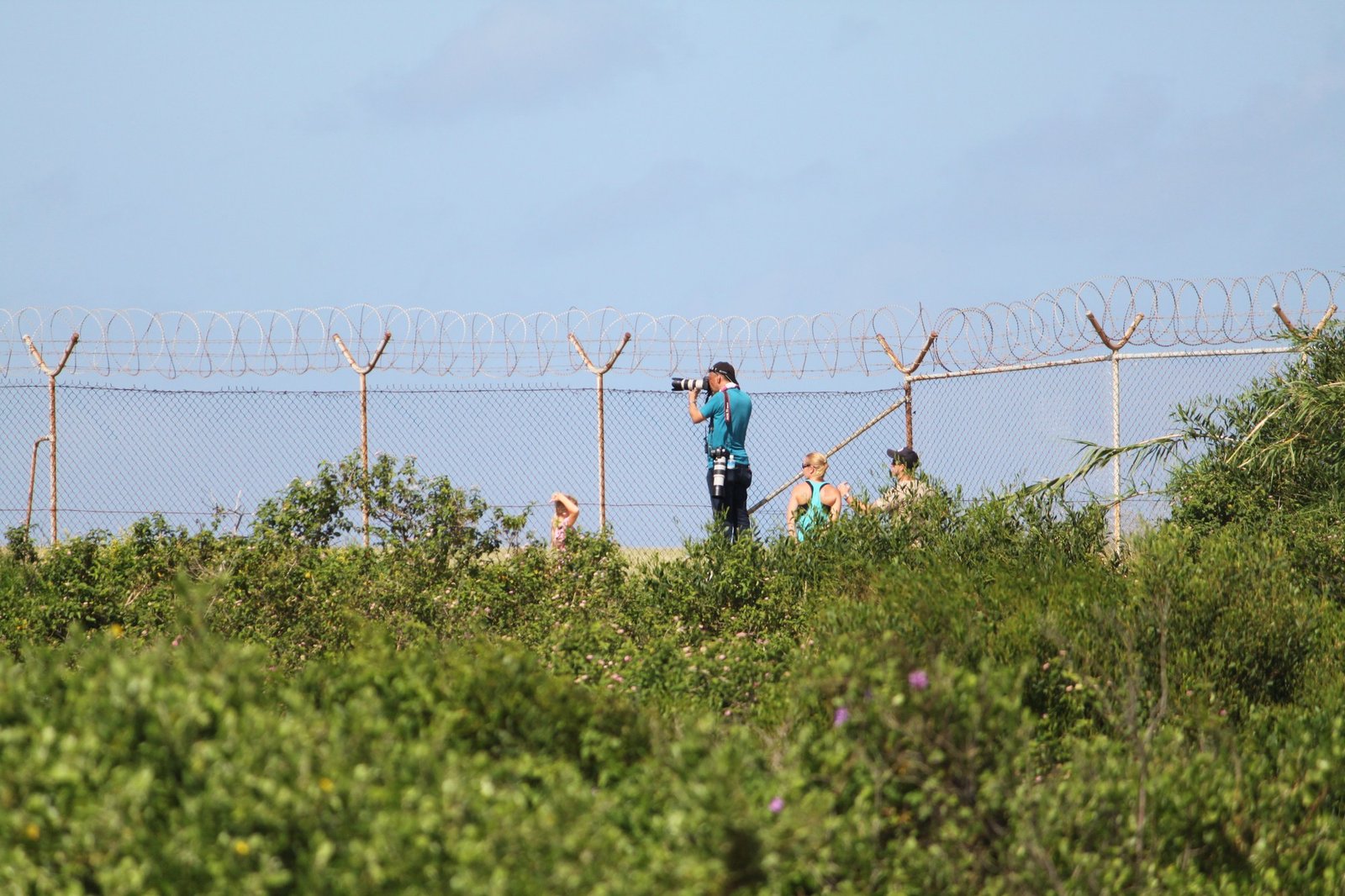
    Shopping for someone who looks up every time a plane goes over? Whether they fly for a living, spend weekends at the airport fence with a long lens, or log more hours in a home flight simulator than anyone will admit to, there’s something here for them. This is our Christmas round-up of gifts for aviation lovers, from books and model kits to flight-sim gear, RC trainers, practical pilot kit and a bit of wall art.

    “We haven’t tested these products ourselves. This roundup is based on manufacturer information, published specifications and owner reviews.”

    We’ve left prices out on purpose, because they change daily and differ between countries. Check the current price and stock where you buy.

    About our links: some links in this post are affiliate links. Right now that’s just the Airmodels links in the models section (marked “affiliate link”), so if you buy through one of them, PlanesNStuff may earn a small commission at no extra cost to you. It helps keep the blog flying, so thank you!

    Most product links go to Amazon US and Amazon Australia. These are plain links, not affiliate links. Where a product isn’t listed on one of them, we link only the store that has it.

    Books Every Aviation Lover Should Own

    Stick and Rudder by Wolfgang Langewiesche

    First published in 1944 and still in print, Stick and Rudder is the classic “why” book of flying. Its publisher, McGraw Hill, calls angle of attack “the invisible secret of all heavier-than-air flight”, and the book goes on to stalls, the landing approach, turns, and why the rudder doesn’t turn an aeroplane the way a boat’s rudder turns a boat. The publisher pitches it at learners, experienced pilots and instructors alike, and it’s a natural next read after our How Do Planes Fly? explainer.

    Find it on Amazon: US | Australia

    Fate Is the Hunter by Ernest K. Gann

    Simon & Schuster describes Fate Is the Hunter as Gann’s classic pilot’s memoir of “the treacherous early days of commercial aviation”. First published in 1961, it puts you in the cockpit with the airline crews who flew when flying was anything but routine. Gann also wrote The High and the Mighty and Island in the Sky. It’s a great pick for anyone who loves a true story more than a technical manual.

    Find it on Amazon: US | Australia

    The Wright Brothers by David McCullough

    For the history buff, The Wright Brothers is the much-loved biography of Wilbur and Orville Wright by historian David McCullough, published by Simon & Schuster. Pair it with our Golden Age of Biplanes post for the story of what came next.

    Find it on Amazon: US | Australia

    Mission Aviator by Matt Painter

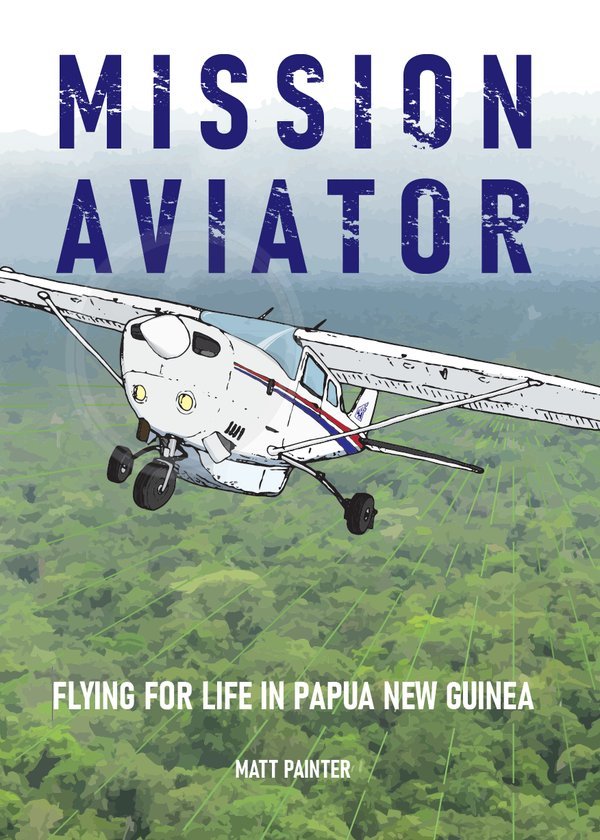
    For a modern flying story with heart, Mission Aviator: Flying for Life in Papua New Guinea collects Matt Painter’s experiences flying with Mission Aviation Fellowship (MAF) in Papua New Guinea. The blurb promises a front-seat “pilot’s-eye view” of medevacs and routine flights through challenging weather and mountainous terrain, endless changes of plan and even an engine failure. Along the way, you see the difference MAF flights make for people in remote communities with no roads. It’s sold through the MAF Gifts shop, which supports MAF Australia, and the listed price includes postage within Australia (overseas readers can email MAF to order).

    Get it from MAF: MAF Gifts (Australia)

    Cover of Mission Aviator: Flying for Life in Papua New Guinea by Matt Painter
    Mission Aviator by Matt Painter (cover courtesy of the author)

    Models for the Shelf (and the Workbench)

    Airfix Starter Set: Supermarine Spitfire Mk.Vc (A55001)

    If they’ve never built a kit, start here. According to Airfix, this 1:72 scale Spitfire is a skill level 1 kit with 26 parts, and it comes with water-based acrylic paints, glue, a brush, decals and a “shadow-effect” display stand. Finished, the wingspan is 157 mm (about 6.2 in). Airfix says it’s not suitable for children under 8 and should be built under adult supervision, so it suits a keen youngster and a grown-up working on it together.

    Find it on Amazon: US | Australia

    Corgi Aviation Archive die-cast models

    Prefer something ready-made? Corgi’s Aviation Archive range features 1:72 and 1:48 scale die-cast aircraft, “including displays and optional parts”, in Corgi’s words. Choose a type with a personal connection: the aircraft they trained on, worked on, or always stop for at an airshow.

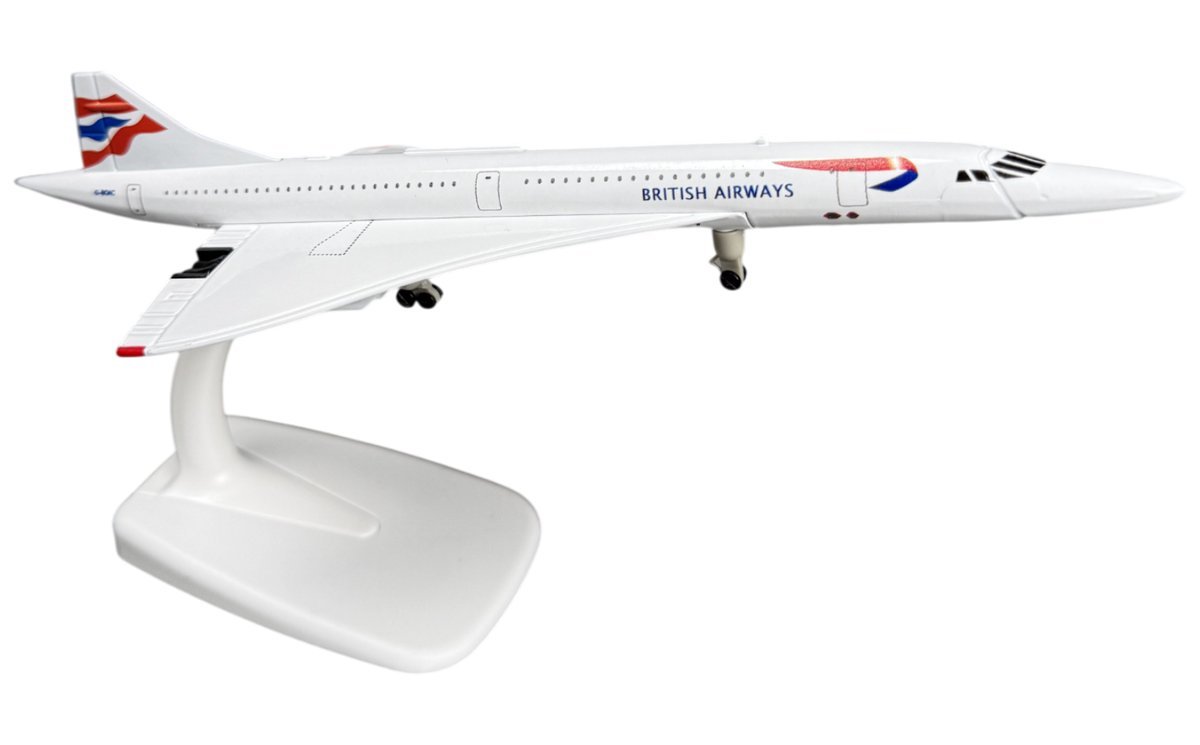
    British Airways Concorde (1:400 die-cast) from Airmodels

    For a desk-sized icon, it’s hard to beat Concorde. Going by the Airmodels listing (we haven’t handled one ourselves), this British Airways Concorde is a 1:400 scale die-cast metal model, 20 cm (7.8 in) from nose to tail with a 9 cm (3.5 in) wingspan. It arrives ready to display, with no painting or assembly needed, and comes with a display stand and detachable landing gear. Small enough for a crowded office shelf, it’s a lovely nod to supersonic history.

    See it at Airmodels (affiliate link)

    British Airways Concorde die-cast model in side view, nose to the right, with its landing gear down, on a white display stand against a plain white background
    British Airways Concorde 1:400 die-cast model. Image: Airmodels.

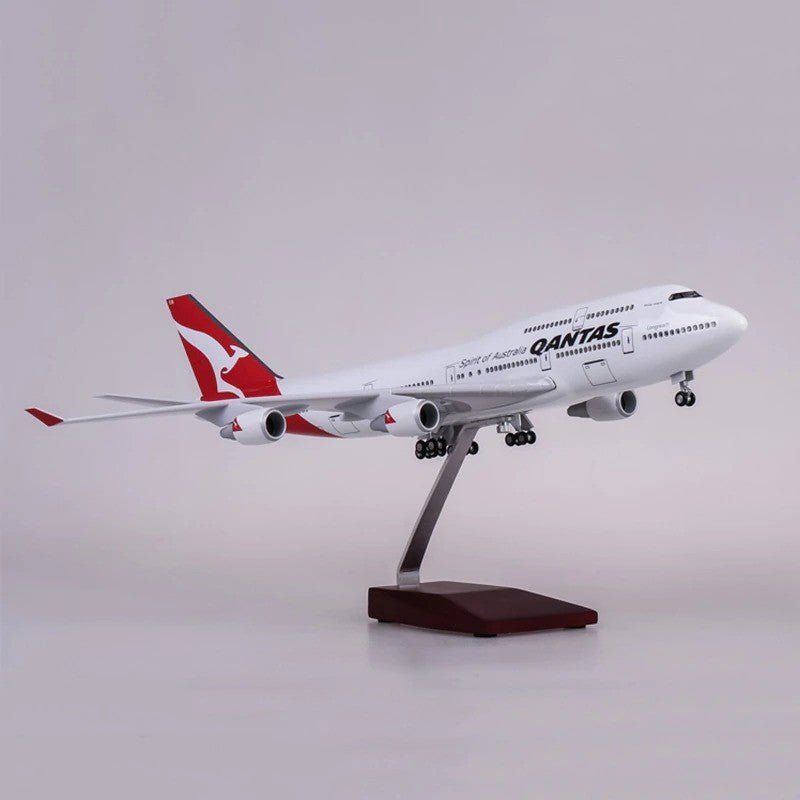
    XL Qantas Boeing 747 (1:150 resin) from Airmodels

    Want something with real shelf presence? The 747 is a true icon, and in Qantas colours it’s a natural pick for Aussie avgeeks. According to the Airmodels listing, this extra-large model is made from resin at 1:150 scale, with a 44 cm (17.25 in) wingspan and a 47 cm (18.5 in) length. It has detachable, rotating rubber landing gear and sits on a metal display stand with a mahogany-look base. It’s a big one, so check there’s room on the shelf before you wrap it. Airmodels says it ships worldwide.

    See it at Airmodels (affiliate link)

    Qantas Boeing 747 model in white and red livery with the kangaroo tail logo and Spirit of Australia titles, shown in three-quarter view with landing gear down on a metal stand with a dark wood-look base, against a plain grey background
    XL Qantas Boeing 747 1:150 resin model. Image: Airmodels.

    Flight Simulator Gifts

    Microsoft Flight Simulator 2024

    The sim itself makes a great gift for anyone who hasn’t got it yet. The official site lists it on PC (Microsoft Store and Steam), Xbox Series X|S, and PS5 and PS5 Pro, as well as through Xbox Game Pass Ultimate and PC Game Pass. Check which platform they use before you buy.

    Find it on Amazon: Xbox and Windows PC digital code: US · PS5: US | Australia

    Logitech G Flight Yoke System

    For the simmer who mostly flies light aircraft and airliners, a yoke feels far more like the real thing than a gamepad. Logitech G says its Flight Yoke System pairs the yoke with a throttle quadrant and has five axes in total, a stainless steel elevator and aileron shaft, and 25 programmable buttons and switch positions. Two desk clamps are in the box. Logitech lists Windows PC compatibility, so it’s a PC gift, not a console one.

    Find it on Amazon: US | Australia

    Thrustmaster T.Flight Hotas One (Microsoft Flight Simulator Edition)

    If they fly on an Xbox, or would like a stick instead of a yoke, Thrustmaster’s officially licensed joystick and throttle is plug-and-play on PC and Xbox Series X|S. Thrustmaster lists five axes, 14 buttons, a detachable throttle and two ways to control the rudder (twist the stick or use the tilting lever on the throttle). It weighs about 2 kg (4.5 lb) and is aimed at beginner and casual simmers.

    Find it on Amazon: US | Australia

    RC and Drone Starter Ideas

    RealFlight Evolution RC flight simulator

    Crashing on a screen is free. Crashing a real model isn’t, which is why a simulator is such a smart first step. RealFlight Evolution from Horizon Hobby is sold with or without the Spektrum InterLink DX controller and needs a Windows 10 or 11 PC. Its Steam page lists more than 300 aircraft (planes, helicopters and drones) at over 75 flying sites, and an October 2026 update added a New User Tutorial for complete beginners. The software needs a controller to run, so the bundle is the easier gift.

    Find it on Amazon: US | Australia

    HobbyZone AeroScout S 2 (RTF Basic)

    Ready to fly for real? Horizon Hobby describes the AeroScout S 2 as a 1.1 m (about 43 in) skill level 1 trainer with SAFE technology “that helps to prevent crashes”. The RTF Basic version includes a Spektrum DXS transmitter and a copy of RealFlight Trainer Edition. The battery and charger are not included: you’ll need a 3S 11.1 V LiPo (1300–2200 mAh, EC3 or IC3 connector) and a compatible LiPo charger, so budget for those too. A local model flying club can help with those first flights.

    Find it on Amazon: US (not listed on Amazon Australia at the time of writing)

    A first drone: what to check before you buy

    Small camera drones are popular gifts, but the rules matter, and they differ between countries. Rather than name one model here, we’ll be covering beginner drones properly in our upcoming drone guides. Until then, here’s what to check:

    • Weight: a drone that weighs less than 250 g (0.55 lb) keeps things simplest.
    • Australia: CASA’s Know Your Drone rules say you don’t need to register a drone you fly for fun, but you must stay below 120 m (about 400 ft), keep at least 30 m (about 100 ft) from other people, fly only in daylight and always keep the drone in sight.
    • United States: the FAA’s recreational flyer rules require registration for drones of 250 g (0.55 lb) or more (those must also broadcast Remote ID), and every recreational flyer must pass the free TRUST test and carry proof of it. Fly at or below 400 ft (about 120 m) in uncontrolled airspace.
    • US availability: the FCC added foreign-made drones to its Covered List in December 2025, so new foreign-made models can’t be authorised for sale. Previously authorised models can still be sold and flown, but check that the model you want is actually available.

    Practical Gear for Pilots

    ASA VFR Kneeboard (KB-1-A)

    A kneeboard straps to the thigh and keeps charts, notes and a pen within reach in a small cockpit. ASA’s VFR Kneeboard is brushed aluminium with an elastic leg strap, a pen or pencil holder and a 4-3/4 in (12 cm) metal clip. It also has VFR quick-reference information printed on the board. That information is based on US (FAA) rules, so for Australian pilots it’s more of a handy writing board than a reference.

    Find it on Amazon: US | Australia

    Headsets and flight bags

    A good aviation headset is high on many pilots’ wish lists, but it’s also a very personal choice (fit, weight, passive or active noise reduction, and the right plugs for their aircraft). Our detailed headset guide for student pilots is on its way. If they already have a headset, a padded flight bag to carry it, the kneeboard and a logbook is a safe, useful gift.

    Experience Gifts: Flights and Airshows

    Sometimes the best gift isn’t in a box.

    • A trial flight (Australia): CASA describes a trial instruction flight as usually a 30-minute flight with an instructor who shows you the basics and lets you take the controls. Many flying schools sell gift vouchers, and Recreational Aviation Australia offers Flight Training School Gift Vouchers for its schools.
    • Young Eagles (United States): EAA’s Young Eagles program gives young people aged 8 to 17 a free introductory flight with volunteer pilots. It costs nothing, but booking a flight together makes a lovely “voucher” for a young avgeek.
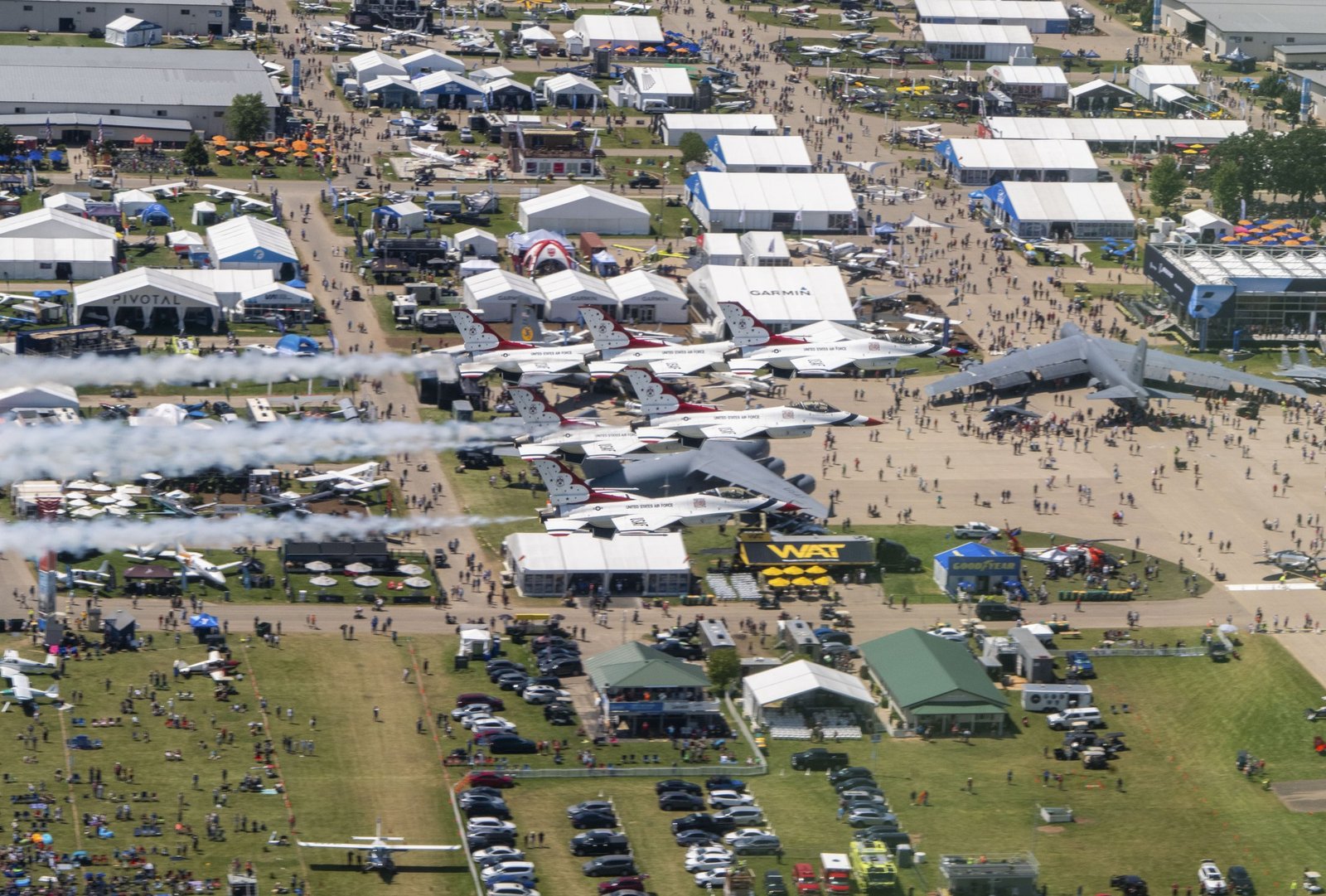
    • Avalon 2027 (Australia): the Avalon Australian International Airshow returns from 23 to 28 February 2027 at Avalon Airport near Geelong, Victoria. The public program starts on Friday 26 February, and the organisers say tickets go on sale through Ticketek in November 2026. Tickets in a Christmas card? Perfect.
    • EAA AirVenture Oshkosh 2027 (United States): EAA has confirmed 26 July to 1 August 2027 for the week-long AirVenture at Oshkosh, Wisconsin.
    Aerial view of EAA AirVenture Oshkosh with crowds, exhibit tents and parked aircraft around Boeing Plaza as USAF Thunderbirds jets trail white smoke in a formation pass overhead
    The USAF Thunderbirds pass over Boeing Plaza at EAA AirVenture Oshkosh, July 2024. Photo: U.S. Air Force, Staff Sgt. Dakota Carter, public domain, via Wikimedia Commons.

    Aviation Art for the Hangar, Office or Den

    Finally, a little something from our own studio. These are our own designs, sold through our Charis Digistore shop on Etsy:

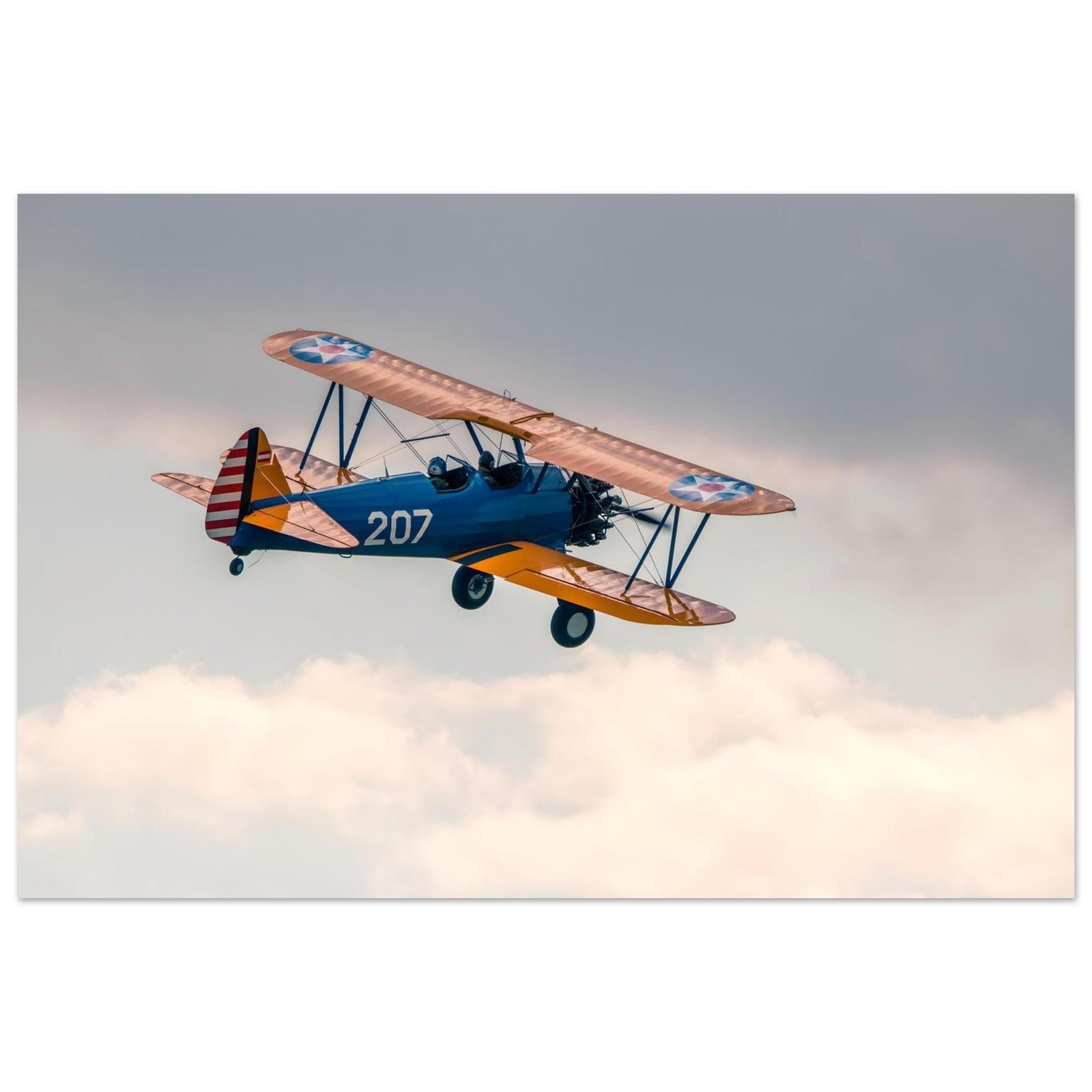
    Art print of a blue and yellow Stearman Kaydet biplane, number 207, with star roundels on its wings, flying above soft pink-tinged clouds
    Our Stearman Biplane in Flight print, available as a printed poster or a digital download from our Etsy shop.

    Happy Landings This Christmas

    The best gifts for aviation lovers connect with the flying they already love: a book for the armchair pilot, a kit for the builder, a yoke for the simmer, a first RC trainer for the backyard flyer, or a day at an airshow for anyone who still waves at planes.

    Want more? Follow PlanesNStuff on YouTube for aviation Shorts. God bless you with blue skies!
  • How Do Planes Fly? Lift Explained Without the Math(s)

    How Do Planes Fly? Lift Explained Without the Math(s)

    Watch a fully loaded airliner lift off and it’s hard not to wonder: how do planes fly? You don’t need a single equation to understand it, and once it clicks you’ll see it everywhere, from paper planes and RC trainers to helicopter rotors and drone props.

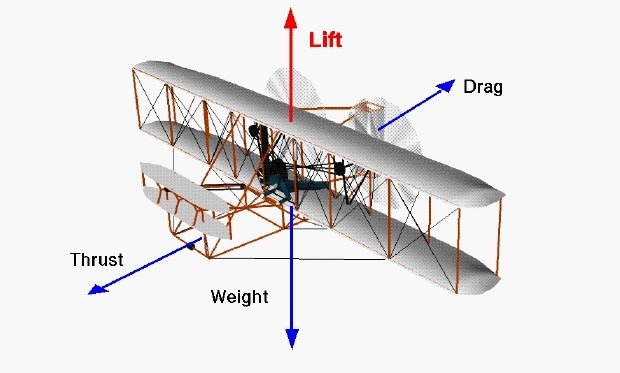
    The Four Forces: Lift, Weight, Thrust and Drag

    Every aircraft in flight is pushed and pulled by four forces:

    • Lift holds it up. Most of it comes from the wings, and it acts at right angles to the flight path.
    • Weight is gravity pulling down on the aircraft, fuel, people and cargo. It drops as fuel is burned.
    • Thrust is the forward push from the propeller, jet engine or rotor.
    • Drag is the air resisting the aircraft’s motion.
    NASA diagram of the 1903 Wright Flyer biplane with arrows showing lift pointing up, weight pointing down, thrust pointing forward and drag pointing back
    The four forces acting on the 1903 Wright Flyer: lift, weight, thrust and drag. Image: NASA Glenn Research Center, public domain.

    In steady, level flight, lift balances weight and thrust balances drag. As the FAA’s Pilot’s Handbook of Aeronautical Knowledge points out, that doesn’t make all four equal: lift and weight are bigger than thrust and drag.

    Surprisingly, the engines don’t hold the plane up. As NASA puts it, the engine’s job is to overcome drag, and the wings do the lifting. Most gliders have no engine at all and fly just fine.

    So How Does a Wing Make Lift?

    NASA’s Glenn Research Center sums it up in one line: lift happens when a moving flow of air is turned by a solid object. A wing meeting the air at a slight angle turns the passing air downwards, and by Newton’s third law (every action has an equal and opposite reaction) the air pushes the wing up. Both the top and bottom surfaces help turn the flow.

    You can describe the same thing with pressure. The air speeds up over the top of a lifting wing, and faster-moving air has lower pressure. So the pressure on top ends up lower than underneath, and that difference, added up across the whole wing, is lift.

    Bernoulli or Newton? Yes.

    People have argued for years over whether lift is “really” Bernoulli (pressure difference) or “really” Newton (air pushed down). NASA’s answer: both are correct. They’re two ways of adding up the same flow, and they give the same force. Neither man ever tried to explain lift, by the way. Newton presented his laws of motion in 1686 and Bernoulli published Hydrodynamica in 1738, long before anyone flew.

    How much lift a wing makes depends on its shape and size, its angle to the air, the air’s density and, above all, speed. Lift grows with the square of speed. The FAA’s example: an aeroplane at 370 km/h (200 knots) has four times the lift it has at 185 km/h (100 knots), all else being equal.

    Busting the “Equal Transit Time” Myth

    You may have learned this at school: the top of a wing is longer, so air going over it must hurry to meet the air from underneath at the back edge. NASA Glenn calls it one of the most widely circulated incorrect explanations of lift:

    • Nothing makes the air meet up. Air over the top actually moves much faster than the theory says and reaches the trailing edge first.
    • The numbers don’t work. The theory’s speeds predict far less lift than real wings produce.
    • Equal-length wings fly. A paper plane’s wing is a flat sheet. The Wright brothers’ wings were thin curved plates, the same distance over the top and underneath.
    • Aeroplanes fly upside down. Flip the wing and the “longer path” is on the bottom, yet aerobatic pilots do it at airshows all the time.
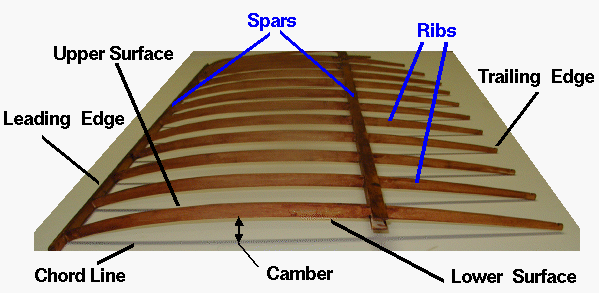
    Uncovered Wright 1903 wing frame seen from the side, showing thin curved wooden ribs labelled with the leading edge, trailing edge, upper and lower surface, chord line, camber, spars and ribs
    The thin, curved ribs of a Wright 1903 wing, shown with the fabric removed. The distance over the top and underneath is the same, yet it makes plenty of lift. Image: NASA Glenn Research Center, public domain.

    The faster air and lower pressure on top are real; it’s the reason that was wrong. (We met the 1903 Flyer in our Golden Age of Biplanes post.)

    Angle of Attack: The Secret Ingredient

    Draw a straight line from the front edge of a wing to the back edge: that’s the chord line. The angle between it and the oncoming air is the angle of attack, the pilot’s main lever on lift.

    At small angles (up to about 10 degrees), NASA says lift rises almost in step with angle of attack. That’s why a pilot raises the nose just before lifting off the runway. It’s also why a slower aeroplane needs a higher angle of attack to make the same lift. A curved (cambered) aerofoil, or “airfoil” in US spelling, makes some lift even at zero angle. A symmetrical one needs tilting first.

    Stalls: When the Air Lets Go

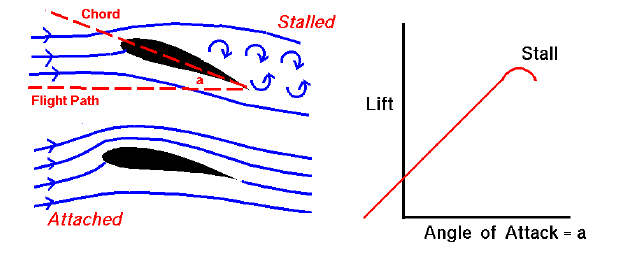
    Raise the angle too far and the air over the top can no longer follow the wing’s curve. It breaks away from the surface, and lift drops off sharply. That’s a stall.

    Diagram of two identical aerofoils: one at a small angle with smooth airflow hugging the surface, and one at a steep angle with the airflow breaking away into swirls, beside a graph of lift rising with angle of attack until it peaks at the stall
    Attached flow at a modest angle of attack (bottom) and a stalled wing at a steep angle (top). Lift climbs with angle until the stall. Image: NASA Glenn Research Center, public domain (cropped).
    • It’s not the engine. A stall is all about airflow over the wing.
    • It’s an angle, not a speed. The FAA says each aircraft stalls at one critical angle of attack, roughly 16 to 20 degrees depending on the design, whatever its speed or weight. So you can stall at any airspeed.
    • The fix is less angle. Most training aircraft are designed so the nose drops in a stall, which lowers the angle of attack and lets the air flow smoothly again.

    Flaps: Extra Lift for Slow Flying

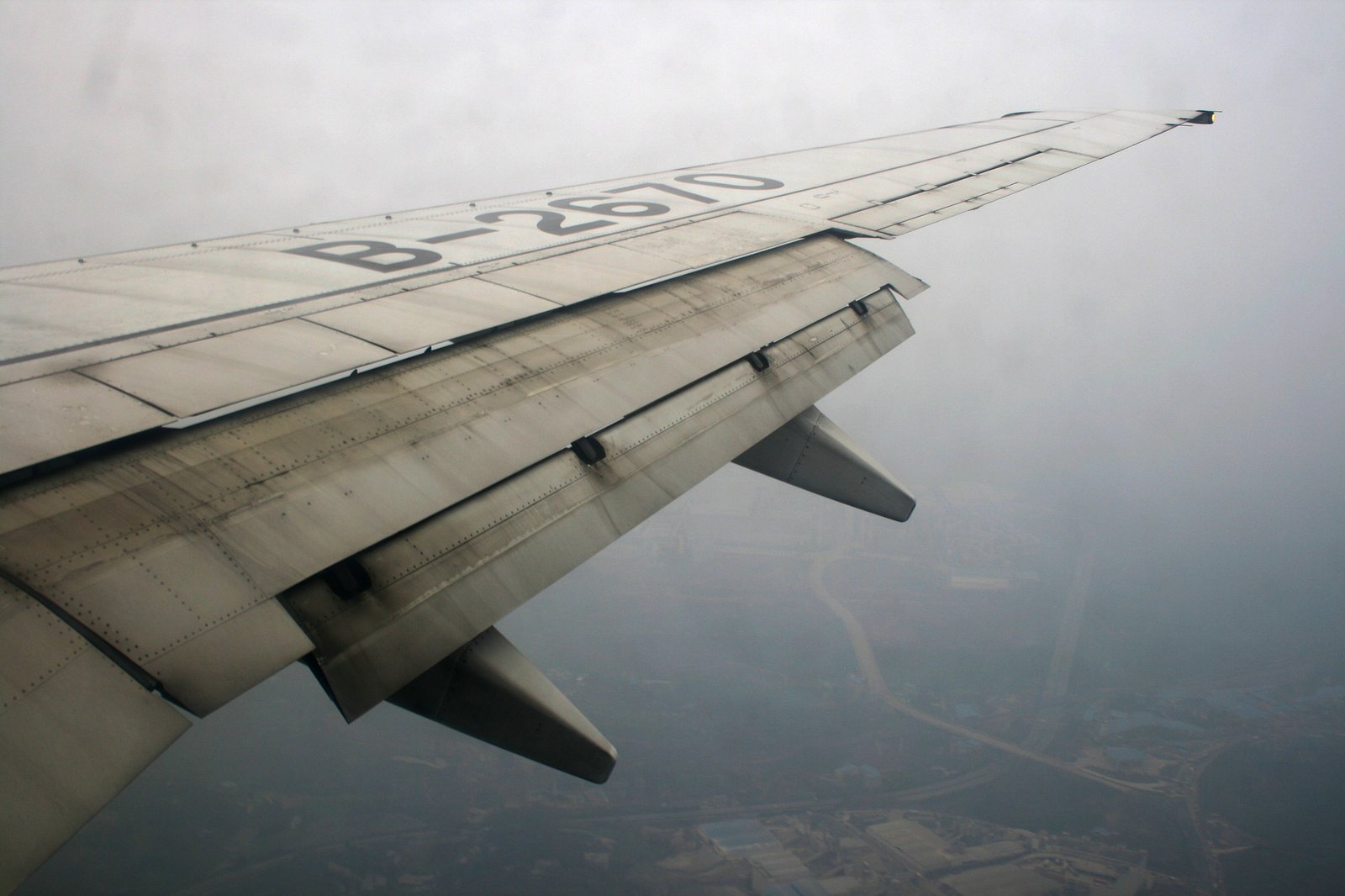
    Fast cruising and slow landing want different wings, and flaps let one wing do both. Extended from the trailing edge, they increase lift (and drag) at any given angle of attack. The FAA lists four common types: plain, split, slotted and Fowler. Fowler flaps slide backwards on tracks before angling down, adding wing area as well as curve.

    View from a passenger window of a Boeing 737-800 wing with its double-slotted Fowler flap fully extended, sliding back and angling down before landing
    A fully extended double-slotted Fowler flap on a Boeing 737-800 before landing. Photo: AlexHe34, CC BY-SA 3.0, via Wikimedia Commons.

    The swirling smoke in our header photo shows another side effect of lift. Air spills from the high-pressure underside around each wingtip into the low pressure on top, rolling up into a wingtip vortex. The FAA says these are strongest when an aircraft is “heavy, clean, and slow”.

    Same Physics, Smaller Scale: RC Planes, Helicopters and Drones

    The FAA says the four forces act on all aircraft, backyard ones included.

    • RC planes: a foam trainer’s wing turns the air just like an airliner’s, and if you fly it too slowly with too much up-elevator, it will stall too.
    • Propellers: NASA describes a propeller as being like a rotating wing. Each blade has an aerofoil cross-section and is twisted, because the tip moves faster than the hub.
    • Helicopters: the rotor blades are spinning wings. Raising the collective increases the pitch of all the blades at once, and so their angle of attack. The spinning rotor also tries to turn the body the other way, which is why there’s a tail rotor.
    • Drones: NASA’s quadcopter guide explains that the props push air down and the reaction lifts the drone, which hovers when lift equals weight. Speeding up the props on one side tilts it so part of the lift pushes it sideways. Two props spin clockwise and two anticlockwise, so their twisting forces cancel.

    Try It Yourself

    • Paper plane: throw a simple dart gently and level, then nose-up. The nose-high throw slows, stalls and drops.
    • Hand out the window: only as a passenger, at low speed on a quiet road, with the driver’s OK and nothing nearby. Tilt the front of your flat hand up slightly and feel it rise. If in doubt, stick to the paper plane.
    • In your flight sim: in a light trainer, slow down gently in level flight with flaps up and note the speed when the stall warning sounds. Repeat with full flap and you should be able to fly slower. Lower the nose to recover.
    • NASA’s free simulator: the Student Airfoil Interactive lets you change angle, speed and wing shape and watch the lift change.

    Thanks for Flying With Us

    So, how do planes fly? The wing turns the air down, the pressure on top drops, and up you go. Angle of attack is the dial, a stall is turning it too far, and flaps add lift for landing. Same physics for an airliner, a Tiger Moth or a palm-sized drone.

    The Wright brothers’ wings were turning the air in 1903, and good design never goes out of style. That’s the whole idea behind our “I’m Not Old, I’m a Classic” biplane poster.

    Want more? Follow PlanesNStuff on YouTube for aviation Shorts. God bless you with blue skies!
  • The Boeing-Stearman Kaydet: The Biplane That Taught America to Fly

    The Boeing-Stearman Kaydet: The Biplane That Taught America to Fly

    Ask a World War II pilot what they first learned to fly in, and there’s a good chance the answer is “a Stearman.” Officially it was the Kaydet. Hardly anyone called it that. To the cadets who sweated through primary training in its open cockpits, it was simply the Stearman.

    In our first post we looked at the golden age of biplanes. Now we’re taking a closer look at one of the best-loved of them all: the Boeing-Stearman Model 75.

    From Kansas Roots: Lloyd Stearman and Stearman Aircraft

    The story begins with Lloyd Stearman, born in Wellsford, Kansas, in 1898. He learned to fly with the U.S. Naval Reserve in 1918. In 1925 he teamed up with Walter Beech and Clyde Cessna to form the Travel Air Manufacturing Company. (Yes, those Beech and Cessna names became famous on their own.)

    In 1926 Stearman struck out on his own, founding Stearman Aircraft in California. He moved the company back to Wichita, Kansas, in 1927. There, Stearman biplanes included mail planes for early airlines such as Varney Air Lines.

    Boeing Comes Aboard

    In 1929 Stearman Aircraft became part of United Aircraft and Transport Corporation, the group that also included Boeing. Lloyd Stearman himself resigned in 1931. After a 1934 reorganization, Stearman became a division of Boeing. In 1941 it was renamed Boeing’s Wichita Division.

    So who designed the famous trainer? In late 1933, Stearman engineers Mac Short, Harold Zipp and Jack Clark took a 1931 Lloyd Stearman design and developed it into the Model 70. It first flew on January 1, 1934. Refined through the Model 73 and the X75, it caught the eye of the U.S. Army Air Corps, which ordered its first batch in 1935.

    PT-13, PT-17, PT-18 and N2S: Decoding the Variants

    The Model 75 wore several military designations, and for the Army, the designation mostly told you which radial engine was up front:

    • PT-13 series: Lycoming R-680 engine. This was the original Army Kaydet.
    • PT-17: Continental R-670-5, a seven-cylinder radial rated at 220 hp. This was the most-delivered Army version, with 2,942 built.
    • PT-18: Jacobs R-755. Only 150 were built, because the engines were needed for other trainers.
    • PT-27: The paperwork designation for 300 aircraft supplied to the Royal Canadian Air Force under Lend-Lease. The Canadians called it the Kaydet.

    The U.S. Navy bought its own versions as the NS and N2S, with N2S-1 through N2S-5 models using Continental or Lycoming engines. Painted overall yellow, Navy primary trainers earned the nickname “Yellow Peril”.

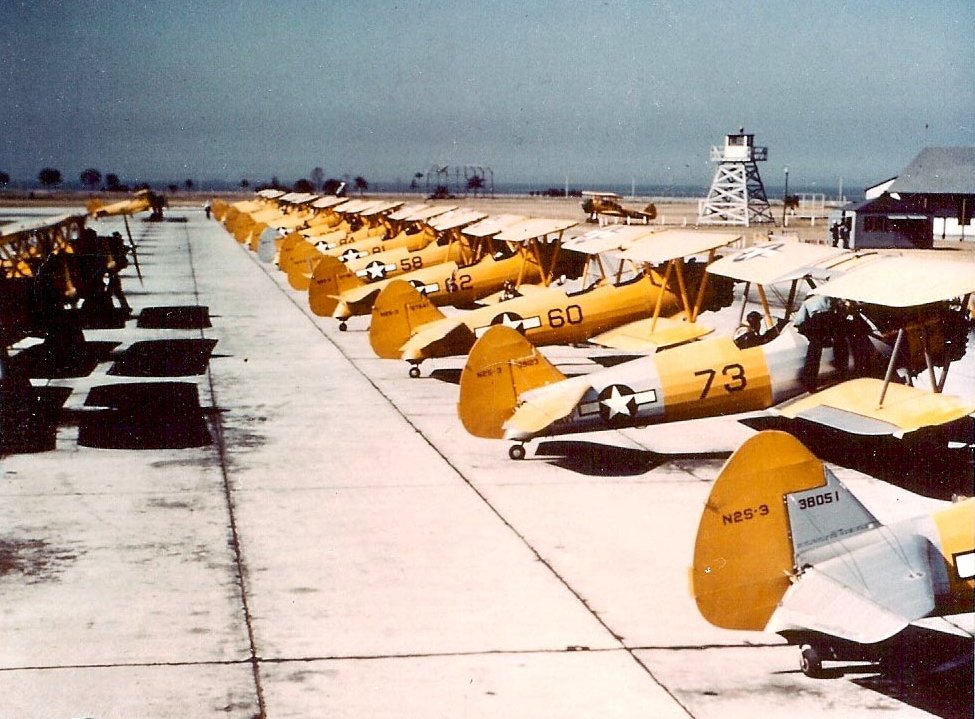
    A long line of yellow U.S. Navy N2S-3 Stearman biplane trainers parked on a concrete ramp at a Naval Air Station
    U.S. Navy N2S-3 Kaydet trainers at a stateside Naval Air Station, c. 1943–1945. Photo: U.S. Navy, public domain, via Wikimedia Commons.

    One neat detail: the Boeing-Stearman E75 was the only Army and Navy production design to be completely standardized during World War II. It served the Army as the PT-13D and the Navy as the N2S-5.

    By the Numbers

    A typical PT-17 had a wingspan of 32 ft 2 in (9.80 m) and a top speed of around 124 mph (200 km/h). The Smithsonian says Boeing’s Wichita Division built more than 10,000 Stearman trainers. Boeing’s own figure of 10,346 includes spare parts counted as aircraft, while one airframe count puts the number of complete Model 70s, 75s and 76s at 8,584. Whichever number you use, it’s one of the most-produced biplanes ever built.

    The Backbone of WWII Primary Training

    When the U.S. built up its air forces before and during World War II, it needed tens of thousands of new pilots, fast. Primary training meant a cadet’s first real flying, and the Stearman, along with Fairchild and Ryan trainers, became the backbone of Army and Navy primary training.

    The Stearman suited the job. It was rugged, with a big, fixed tailwheel landing gear and tandem open cockpits for student and instructor. The National Naval Aviation Museum describes it as reliable, simple, durable and forgiving. Still, as a taildragger it demanded real attention on takeoff and landing, and that was exactly the kind of discipline future combat pilots needed.

    Famous Cadets

    • George H. W. Bush: In January 1943, Aviation Cadet George H. W. Bush made two flights in N2S-3 Bureau Number 05369 at Naval Air Station Minneapolis. That exact aircraft is now displayed at the National Naval Aviation Museum in Pensacola, Florida. Logbooks show five surviving N2S-3s that he flew in training.
    • The Tuskegee Airmen: At Moton Field in Tuskegee, Alabama, African American cadets trained for Army Air Forces service. One of their PT-13D trainers, the Spirit of Tuskegee, now belongs to the Smithsonian’s National Museum of African American History and Culture in Washington, D.C. Its baggage compartment door is signed by 36 former Tuskegee Airmen.

    A Second Career: Crop Dusters and Airshow Stars

    After the war, thousands of surplus Stearmans were sold to civilians. Many became crop dusters. The front cockpit was replaced with a hopper for chemicals or fertilizer, and spray bars were fitted under the lower wings. A popular upgrade swapped in a more powerful Pratt & Whitney R-985 Wasp Junior engine. By one count, more than 4,345 Stearmans were working in agricultural flying in 1948. Even the Bush N2S at Pensacola spent part of its postwar life as a crop duster.

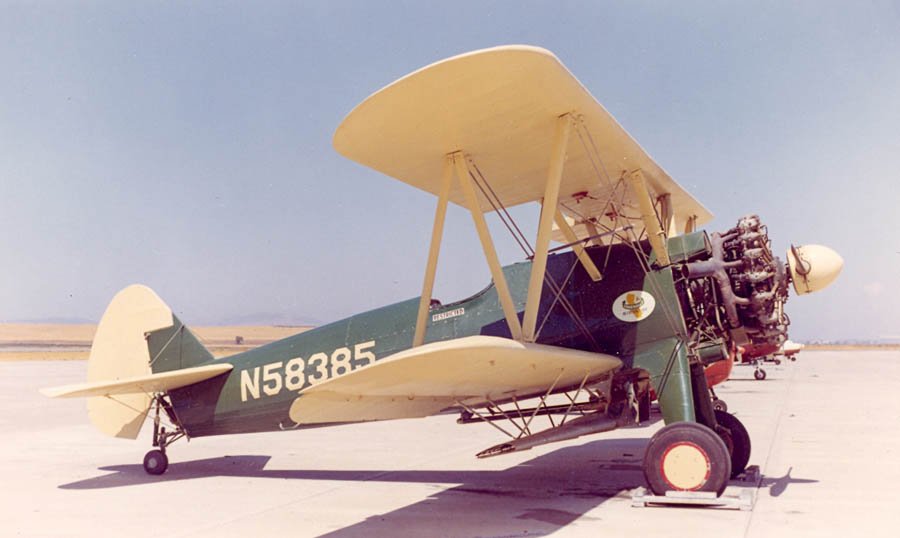
    Green and cream Stearman biplane crop duster, registration N58385, with spray equipment under the lower wing, parked on an airport ramp
    A Stearman crop duster, registration N58385. Photo: Bill Larkins, CC BY-SA 2.0, via Wikimedia Commons.

    The Stearman’s strength and big, stable wings also made it a natural for air shows, aerobatics and wing walking. In the UK, the AeroSuperBatics wingwalking team flies a team of Boeing Stearmans fitted with 450-hp radial engines. Their wingwalkers perform strapped to the top wing.

    Why Pilots and Fans Love the Stearman

    • It looks the part. Blue fuselage, yellow wings, star roundels, striped rudder. It’s the classic image of a biplane.
    • That radial sound. An uncowled radial engine has a rumble you feel in your chest.
    • It’s honest. Like the best trainers, it rewards good flying and lets you know when you’ve done it badly.
    • It’s living history. Many surviving Stearmans trained real cadets who went on to serve.

    That “old but still brilliant” spirit is exactly why we love our “I’m Not Old, I’m a Classic” biplane poster. It’s a fun nod to every proud vintage model out there, with or without wings.

    And if you love the Stearman as much as we do, our Stearman Biplane in Flight print captures a blue and yellow Kaydet climbing above the clouds. It’s available as a printed poster or an instant digital download.

    Stearman biplane art print: a blue and yellow Boeing-Stearman Kaydet, number 207, flying above the clouds
    Stearman Biplane in Flight, available as a poster or digital download on Etsy.

    Where to See a Stearman in the U.S.

    Museums

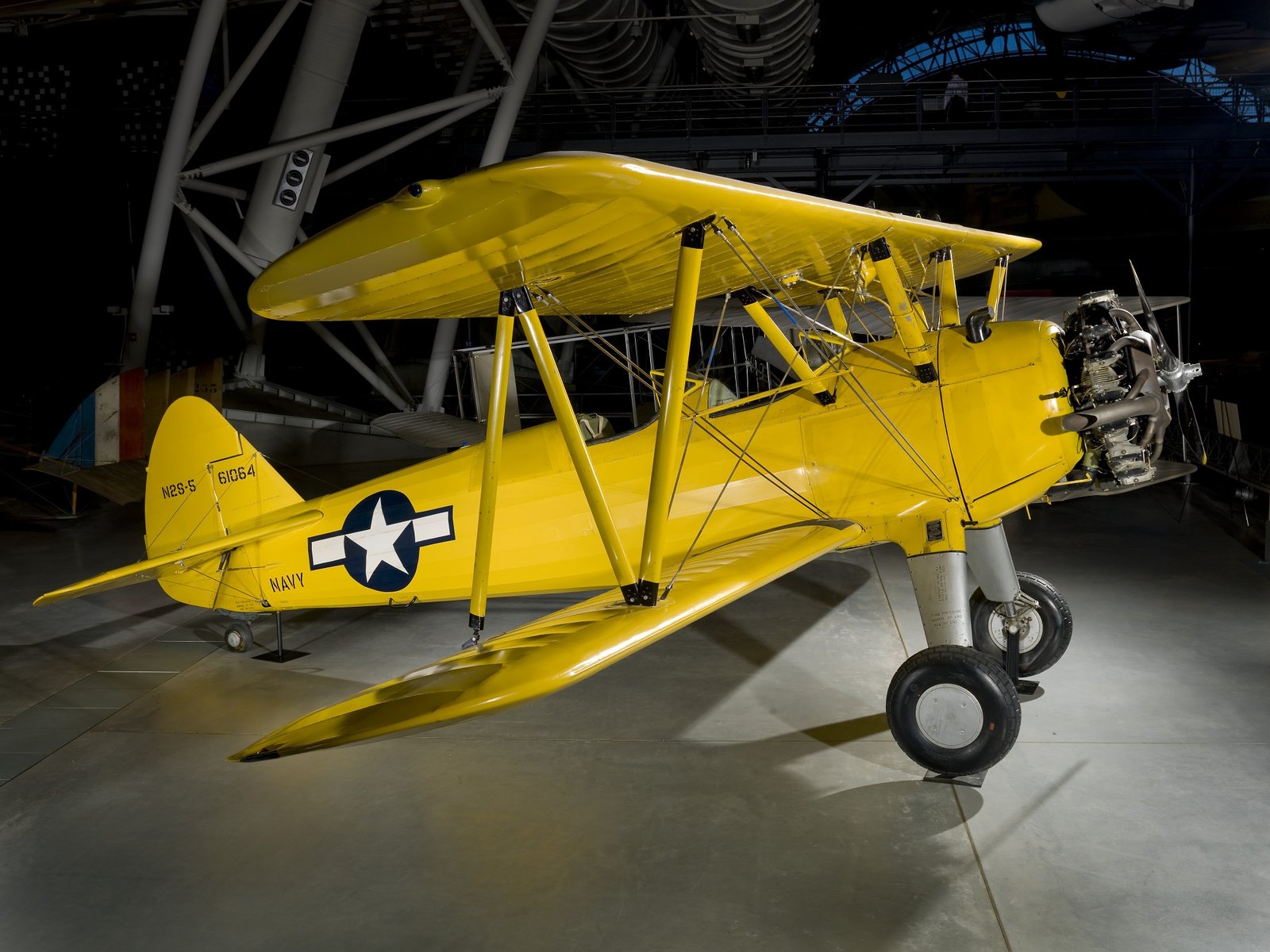
    Yellow Boeing-Stearman N2S-5 Kaydet biplane, Navy number 61064, on display inside a museum hangar
    Boeing-Stearman N2S-5 Kaydet 61064 at the Smithsonian’s Steven F. Udvar-Hazy Center. Image: Smithsonian National Air and Space Museum, CC0, via Wikimedia Commons.

    The National Stearman Fly-In

    Every September, Stearman owners gather in Galesburg, Illinois, for the National Stearman Fly-In. In 2026, the 55th event ran September 7–12 at Galesburg’s airport. It included formation flying, aerobatic and flour-bombing contests, and public community days. Check the official site for next year’s dates.

    Where to Fly in a Stearman

    Several operators offer open-cockpit Stearman rides. Each one below is listed on its own website:

    Rides are usually one passenger at a time, and operators set their own age, weight and weather rules. Check each operator’s site for current details before you book.

    Want more? Follow PlanesNStuff on YouTube for aviation Shorts.

    Watch: The Biplane That Taught America to Fly

    Thanks for Flying With Us

    The Stearman taught a generation to fly, then went right on working, playing and inspiring. That’s quite a résumé for a biplane designed in the early 1930s.

    God bless you with blue skies!
  • The Golden Age of Biplanes: Why These Classic Aircraft Still Capture Our Hearts

    The Golden Age of Biplanes: Why These Classic Aircraft Still Capture Our Hearts

    Welcome to PlanesNStuff! If you’ve ever stopped what you were doing because you heard the throaty rumble of an old piston engine overhead, you’re in the right place. This blog is for anyone who loves aircraft, whether that’s warbirds, drones, RC models, airshows or the history behind it all.

    For our very first post, it seemed right to start where powered flight itself started: with two wings, a lot of wire and plenty of nerve. Let’s talk about biplanes.

    Where It All Began: The Wright Flyer

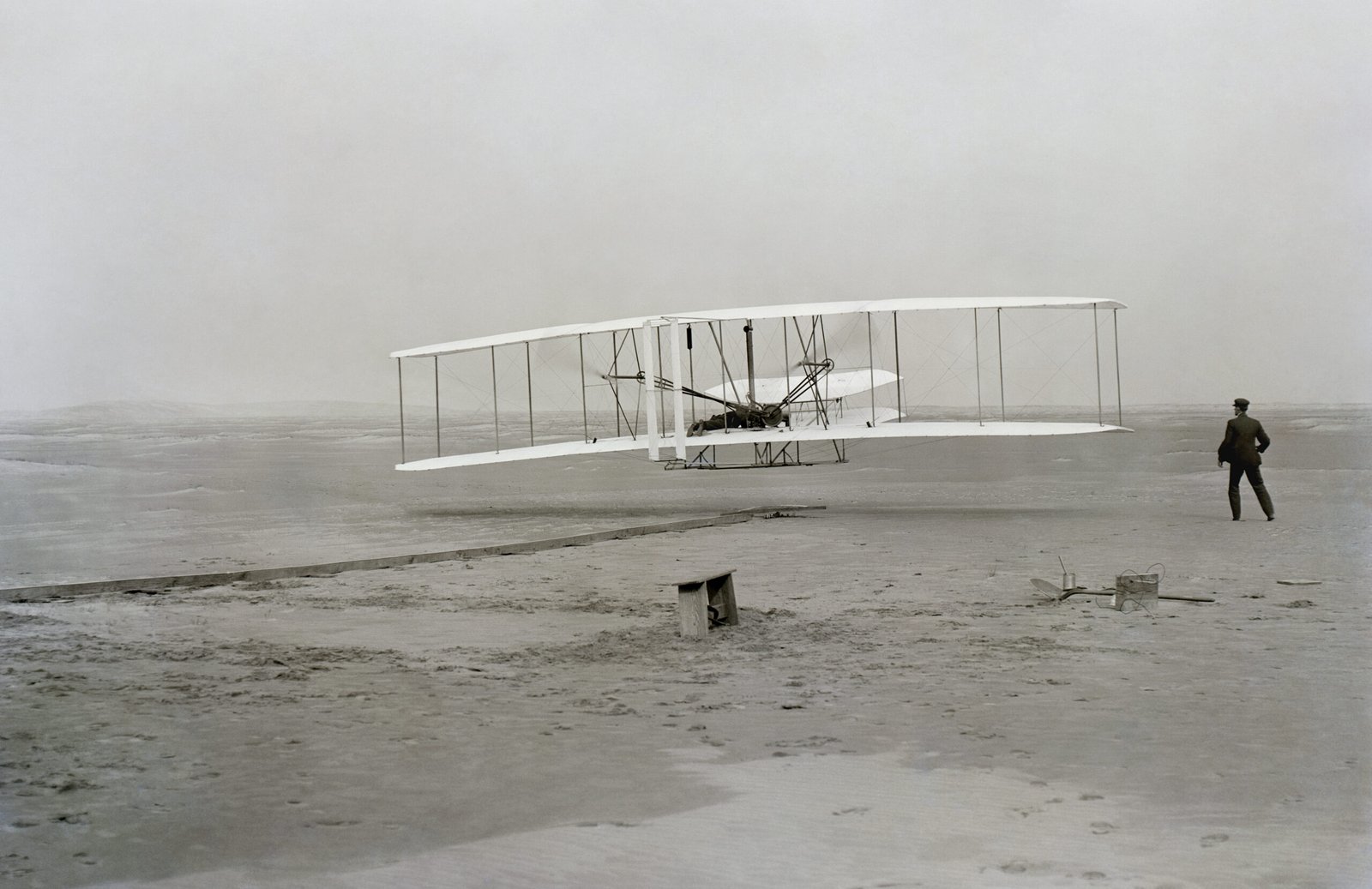
    On 17 December 1903, near Kitty Hawk, North Carolina, Orville Wright lifted the Wright Flyer off the sand for a flight of about 12 seconds, covering roughly 36 metres (120 feet). The brothers made three more flights that morning, and the longest, flown by Wilbur, lasted 59 seconds.

    Wright Flyer first flight at Kitty Hawk, 1903
    The Wright Flyer’s first flight, 17 December 1903. Public domain, via Wikimedia Commons.

    The Flyer was a biplane, and that wasn’t a coincidence. Stacking two wings and bracing them with struts and wires gave early designers a light, stiff structure with plenty of wing area. That meant a lot of lift at low speeds, which mattered a great deal when engines were weak and materials were mostly wood, wire and fabric.

    The original 1903 Flyer survives today and is displayed at the Smithsonian’s National Air and Space Museum in Washington, D.C.

    Biplanes Go to War: The Sopwith Camel

    In barely a decade, aircraft went from novelty to weapon. By the First World War, biplane fighters were duelling over the Western Front, and few are as famous as the Sopwith Camel.

    A Brilliant, Unforgiving Fighter

    The Camel first flew on 22 December 1916 and entered service in June 1917. Its nickname came from the humped fairing over its twin Vickers machine guns. Around 5,490 were built, and Camel pilots were credited with downing 1,294 enemy aircraft, more than any other Allied fighter of the war.

    It wasn’t an easy aeroplane to fly. Most of its weight sat in the first couple of metres of the fuselage, and the strong gyroscopic effect of its rotary engine made it turn much faster one way than the other. In experienced hands that made it superbly agile. For new pilots, it could be deadly.

    An Australian Connection

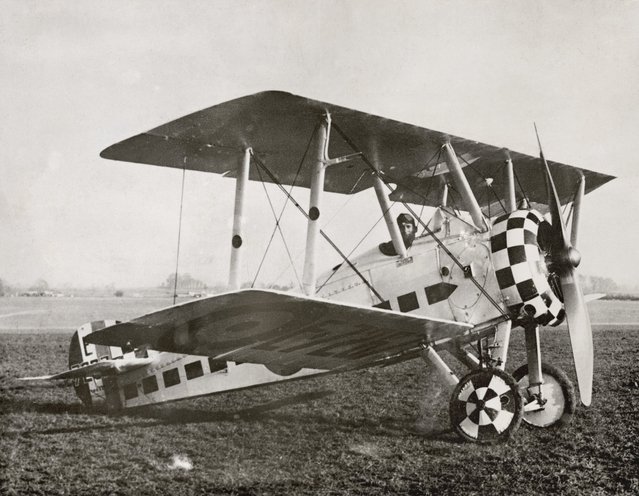
    Australians flew Camels too. No. 4 Squadron of the Australian Flying Corps operated them in France, and one of its best-known pilots, Captain Harry Cobby, was photographed in the cockpit of his Camel. That photo is now one of the classic images of the type.

    Harry Cobby in a Sopwith Camel
    Captain Harry Cobby in his Sopwith Camel. Australian War Memorial AC0158, public domain, via Wikimedia Commons.

    And yes, the Camel is also the “aircraft” Snoopy imagines flying when he takes on the Red Baron in Peanuts.

    Barnstorming: When Biplanes Came to Town

    When the war ended, there were suddenly plenty of trained pilots and plenty of surplus aircraft. In the United States, the Curtiss JN-4 “Jenny”, the trainer most American military pilots had learned on, was sold off for as little as US$200 (new, they’d cost around US$5,000).

    What followed was the barnstorming era of the 1920s. Pilots would buzz a country town, land in a farmer’s paddock, and sell joy rides for a dollar or a few. Many added stunts like loops, wing walking, parachute jumps and even plane-to-plane transfers. For many rural communities, it was the first time they’d seen an aircraft up close.

    A young Charles Lindbergh got his start barnstorming before his famous 1927 Atlantic crossing. By the late 1920s, though, new US safety rules made it very hard to keep the ageing Jennys flying, and the golden age of the travelling flying circus faded.

    The Tiger Moth: Australia’s Favourite Biplane

    If there’s one biplane that holds a special place in Australian hearts, it’s the de Havilland DH.82 Tiger Moth.

    Built to Teach

    The Tiger Moth first flew on 26 October 1931 and became the standard primary trainer across the Commonwealth. Almost 8,900 were built worldwide. Its handling was described as “easy to fly, but difficult to fly well”, and that made it an excellent teacher: forgiving enough for beginners, but quick to show up sloppy flying.

    The RAAF’s Wartime Trainer

    During the Second World War, the Tiger Moth was the basic trainer for the Empire Air Training Scheme. Twelve Elementary Flying Training Schools were set up across Australia, at places like Tamworth, Narromine, Temora, Benalla and Cunderdin. Trainees usually went solo after somewhere between seven and ten hours of flying, all in Tiger Moths.

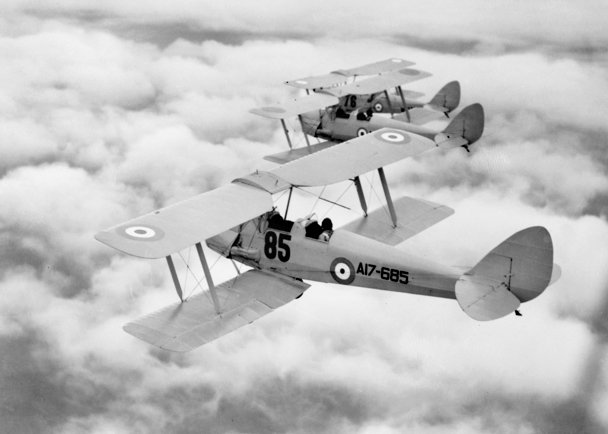
    RAAF Tiger Moth trainers in formation
    RAAF No. 3 EFTS Tiger Moths. Australian War Memorial AC0101, public domain, via Wikimedia Commons.

    De Havilland Australia built 1,070 Tiger Moths locally, and the first Australian-assembled example flew at Bankstown in Sydney in late 1940. Thousands of young Australians took their very first flight in one.

    A Fun Fact Worth Knowing

    A radio-controlled target version of the Tiger Moth, called the Queen Bee, appeared in 1935. The word “drone” for a pilotless aircraft is widely thought to come from it, since a drone is a male bee. So in a roundabout way, today’s drones owe their name to a biplane.

    The Stearman: America’s Classic Trainer

    Across the Pacific, the US Army and Navy trained their pilots on another much-loved biplane: the Boeing-Stearman Model 75, often called the Kaydet (and known by military designations such as the PT-17 and N2S).

    Boeing’s Wichita Division built more than 10,000 Stearman trainers. After the war, many found new lives as crop dusters and aerobatic and airshow mounts. Their bright paint schemes and big round engines make them crowd favourites at airshows to this day.

    Why Biplanes Still Capture Our Hearts

    So why, more than a century after the Wright Flyer, do we still go weak at the knees for these old machines?

    • You can see how they work. Struts, wires, fabric and an open cockpit. Nothing is hidden.
    • They’re slow enough to enjoy. A biplane overhead isn’t a flash and a roar; it’s a show you get to watch.
    • They connect us to people. Every surviving Tiger Moth or Stearman trained real pilots, often young people heading off to war.
    • They feel like flying. Wind, engine noise and the smell of fuel. Ask anyone who’s been up in an open cockpit and they’ll tell you it’s a completely different experience from sitting in an airliner.

    That spirit of “old but still brilliant” is exactly what inspired our own “I’m Not Old, I’m a Classic” biplane poster: a polished chrome vintage biplane in front of a retro striped sunset. It’s a bit of fun for anyone who’s proudly a vintage model themselves.

    Where to See (and Fly) a Biplane in Australia

    The good news is that you don’t have to just read about biplanes. In Australia you can still get up close, and even go flying in one.

    See One Up Close

    • Australian War Memorial, Canberra holds Tiger Moth A17-704, a 1943 Australian-built aircraft that served with No. 1 Elementary Flying Training School at Tamworth in 1944.
    • RAAF Museum, Point Cook (Victoria) displays Tiger Moth A17-711 in wartime training colours.
    • Airshows and fly-ins are often the best place to see biplanes actually flying. Keep an eye on your local aero club’s events calendar.

    Book a Tiger Moth Joy Flight

    Several operators offer Tiger Moth joy flights, usually with a leather helmet and goggles included:

    • Royal Aero Club of WA, flying from Jandakot Airport over Perth and the coast.
    • Brisbane Biplanes, based at Caboolture Airfield, north of Brisbane.
    • Vintage Tiger Moth Joyflights (Joy Flights Melbourne), flying from Lethbridge Airport, west of Melbourne.
    • Tiger Moth Joy Flights Yarra Valley, flying from Lilydale Airport in Victoria.

    Before you book, check each operator’s website for current prices, flight options, and passenger age and weight limits. Flights in open-cockpit aircraft depend on the weather, so it pays to be flexible with your dates. Rug up, too: it’s chilly up there, even in summer.

    Watch: The Golden Age of Biplanes in 25 seconds

    Thanks for Flying With Us

    Biplanes take us right back to where it all started. They remind us that flying was once (and still can be) an adventure you feel in your bones.

    This is just the first of many posts here at PlanesNStuff. We’ll be covering aviation history, famous aircraft, airshows, drones, RC flying, gear, gifts and aviation art. God bless you with blue skies!