Category: Product Reviews

  • A Guide to Pilot’s Watches: History, Features and Six Worth Shortlisting

    A Guide to Pilot’s Watches: History, Features and Six Worth Shortlisting

    We haven’t tested these products ourselves. This roundup is based on manufacturer information, published specifications and owner reviews.

    We’ve left prices out on purpose, because they change and differ between countries. Check the current price and stock where you buy.

    As an Amazon Associate I earn from qualifying purchases.

    Some links in this post go to Amazon US and Amazon Australia and are affiliate links, so PlanesNStuff may earn a small commission at no extra cost to you. It helps keep the blog flying, so thank you. Where a watch isn’t listed on one of the stores, we link only the store that has it. For more detail, see our Affiliate Disclosure.

    A good pilot’s watch is, first of all, easy to read. That simple idea has a long pedigree: from a Brazilian aviator who needed both hands on the controls, through the oversized navigator watches of the Second World War, to the slide-rule bezels and second time zones that still define the style. This guide covers that history, the features worth looking for, and six watches shortlisted from current Amazon US and Amazon Australia listings. None of them is a required cockpit instrument — they are tools, backups and a bit of aviation culture you can wear on the ground as easily as in the air.

    If you are shopping more generally, see our gift guide for aviation lovers and our student-pilot headset guide.

    From a Pocket Watch to the Wrist: Santos-Dumont and Cartier

    Cartier puts the beginning of the pilot’s watch in 1904. On its official Santos de Cartier pages, the maison says Louis Cartier imagined the watch for his friend, the aviator Alberto Santos-Dumont, “so that he could tell the time while flying,” and calls it “the first modern watch specifically designed to be worn on the wrist.” The Fondation de la Haute Horlogerie, drawing on the same history, notes that the watch designed for Santos-Dumont went on sale to the public from 1911.

    The practical problem was straightforward. Early aeroplanes asked a lot of both hands, and a pocket watch meant letting go of the controls just when a pilot most needed to know how long he had been in the air. A watch strapped to the wrist solved that. Every later pilot’s watch is still chasing the same idea: glance down, read the time, keep flying.
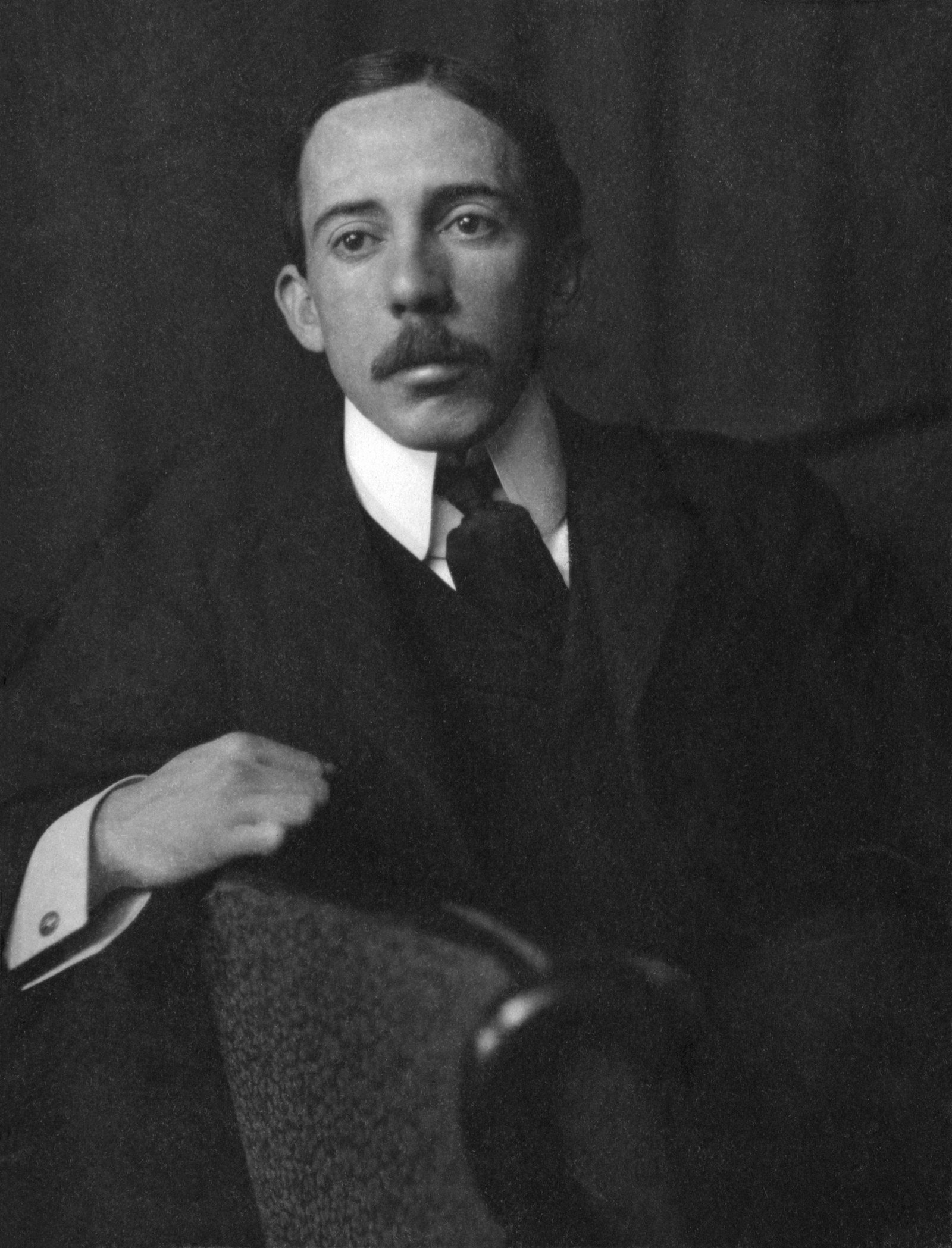
    Full black-and-white portrait of Alberto Santos-Dumont seated in a dark suit, his right arm resting on the back of a chair.
    Alberto Santos-Dumont, 1902. Photograph: Zaida Ben-Yusuf, public domain, via the Library of Congress and Wikimedia Commons, file “Alberto Santos-Dumont portrait.jpg”.

    Navigator’s Watches: The B-Uhr

    The look many people now think of as a “flieger” or pilot’s watch was sharpened in the Second World War. German Luftwaffe navigators were issued large Beobachtungsuhren, usually shortened to B-Uhr (observation or navigator’s watches). Konrad Knirim’s survey of Luftwaffe navigational timepieces, and museum notes on surviving examples, describe a highly standardised tool: a case about 55 mm across, worn over a flying suit on a long strap; a matte black dial with luminous numerals and hands; a large, easy-to-grip “onion” crown; a centre-seconds hand that could be stopped by pulling the crown (hacking), so the watch could be set to a time signal; and the marking FL 23883, which identified it as a navigation instrument.

    Type A dials, associated with 1940–41, put the hours around the outside, with a triangle at 12 o’clock; Type B, from 1941, moved the hours to an inner ring. Several German watchmakers built them to the same specification, including A. Lange & Söhne, Wempe, Laco and Stowa; Knirim also records IWC in Switzerland supplying watches in the 55 mm case. They were issued instruments, not personal jewellery. What survived in later civilian watches is the design brief: high contrast, a crown you can work with gloves, and a seconds hand you can synchronise.

    Chronographs, Slide Rules and the E6B

    A chronograph — a watch with a stopwatch — was a natural next step, because elapsed time is how a pilot turns airspeed into distance, and how long a fuel tank will last. In 1952, according to Breitling’s official Navitimer history, Willy Breitling was asked by the Aircraft Owners and Pilots Association (AOPA) to create a chronograph its members could use for flight calculations such as average speed, distance travelled, fuel consumption, rate of climb or descent, and conversions between statute miles, kilometres and nautical miles. The answer was the Navitimer, its name a blend of “navigation” and “timer.” Breitling adapted the circular slide rule from its earlier Chronomat and built it into a rotating bezel. AOPA records that it chose the Navitimer as its official timepiece and began offering it to members in 1954; Breitling says the watch was released to the public in late 1955.

    Those bezel calculations are the wristwatch version of a tool student pilots still recognise: the E6B flight computer, the circular “whiz wheel” used for time, speed, distance and fuel problems. An AOPA Flight Training article notes that electronic calculators and apps have now largely taken its place in the cockpit. A slide-rule bezel will not replace a modern electronic flight bag, but it remains one of the clearest signs that a watch is in the pilot-watch tradition.
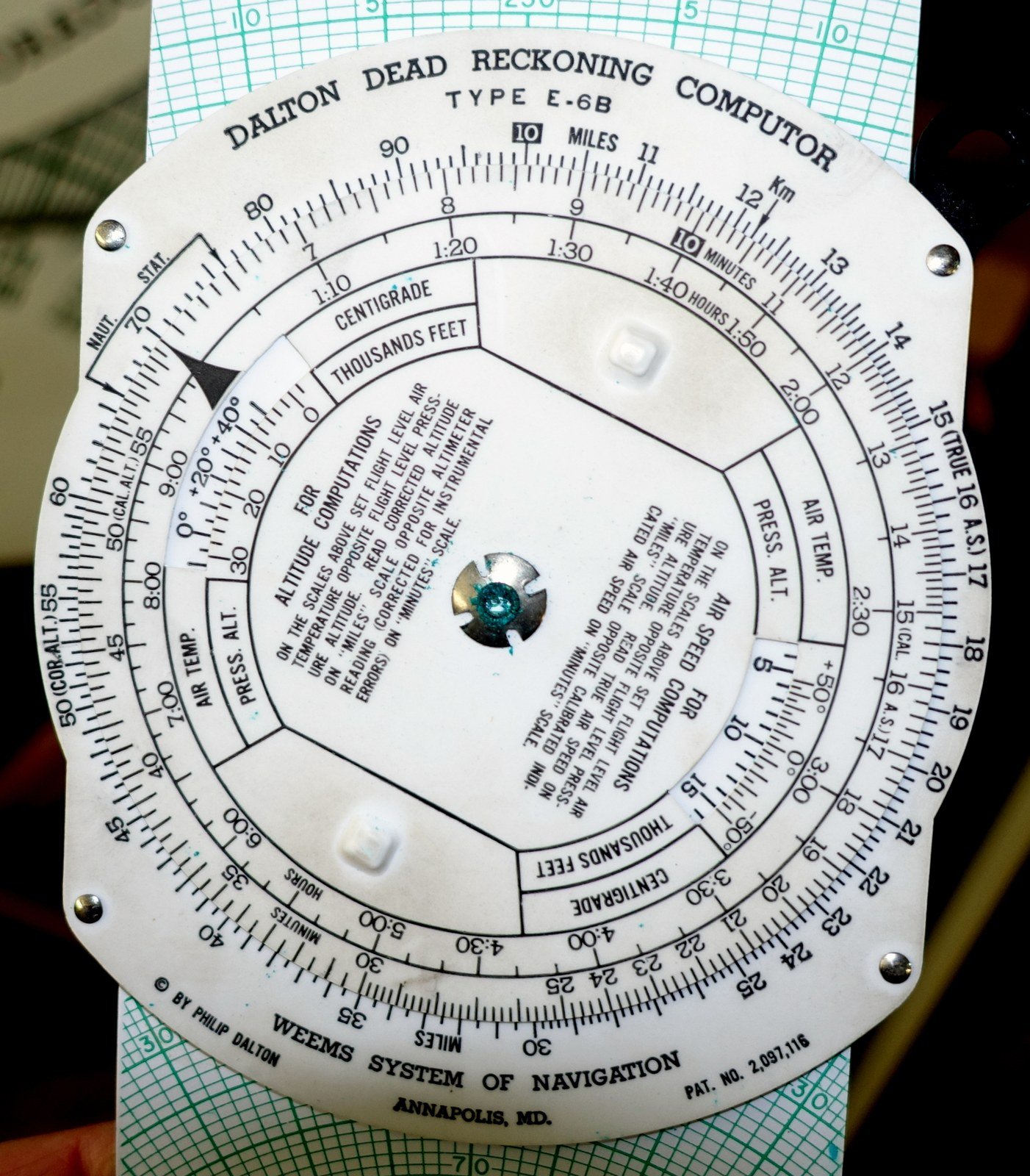
    A white circular Dalton Type E-6B dead-reckoning flight computer with black speed, time and altitude scales, labelled Weems System of Navigation, Annapolis, MD.
    A Dalton Dead Reckoning Computer, Type E-6B, by Weems System of Navigation, on display at the Oregon Air and Space Museum in Eugene, Oregon. Photo: Daderot, public domain, via Wikimedia Commons.

    GMT and a Second Time Zone

    Long-range flying created another problem: local time at the destination is not the same as time at home, or the universal time used for navigation. In 1955 Rolex introduced the GMT-Master, a watch made so pilots could follow a second time zone, using a 24-hour hand and a rotating bezel. The idea has been widely copied. On a modern GMT or dual-time watch you can read home time and local time together, which is as useful to a travelling passenger as it is to a crew member crossing several zones in a day.

    What to Look For

    History is a good design brief: high-contrast, luminous dials; a crown you can work with gloves; a chronograph or slide-rule bezel if you want to time or calculate in flight (neither replaces a current flight computer or an official cockpit instrument); GMT or dual time if you travel; and hacking seconds so you can synchronise with a time signal. Light-powered movements (Citizen Eco-Drive, Casio Tough Solar) are designed so you do not have to change a battery; automatics run from the motion of your wrist and need periodic servicing. Water resistance of 30 metres is typically splash resistance only; 50 metres is usually described as suitable for light swimming; 100 or 200 metres gives more everyday margin. Most of the watches below sit around 39–45 mm. On Amazon, confirm the model number, the seller and whether the manufacturer’s warranty will apply in your country.

    A wristwatch is a backup and a companion, not a certified aircraft clock. If you fly, treat the panel, your approved electronic flight bag and a current official time source as the primary references.

    Six Watches Worth Shortlisting

    The six below cover a range of budgets and styles, from a modern solar G-SHOCK to a Swiss mechanical flieger. Each listing was checked on 19 Nov 2026 (AEDT). All six were listed on Amazon US; five were also listed on Amazon Australia under the same ASIN. The Casio Gravitymaster GR-B300-1A was listed on Amazon US only. These are proposed picks, not a ranking, and stock changes, so open the live page before you buy.

    Casio G-SHOCK GRAVITYMASTER GR-B300-1A: A Modern Cockpit-Style Tool

    Casio’s GRAVITYMASTER line is the G-SHOCK family aimed at aviation. In a 15 May 2024 launch release, Casio America described the GR-B300-1A as an aviation-inspired watch with a high-contrast, cockpit-style dial.

    • Power: Tough Solar, with Bluetooth connection to the CASIO Watches app, which Casio says can keep the time updated and record a flight log (current time and position) on a map in the app
    • Functions: dual time on the main dial and a subdial; rotary indicator for solar charge level; Super Illuminator LED
    • Build: Carbon Core Guard structure; shock resistant; water resistant to 200 metres

    It was listed on Amazon US (sold by Amazon.com, in stock when checked) and not listed on Amazon Australia.

    Find it on Amazon: US (not listed on Amazon Australia at the time of writing)

    Timex Pan Am Waterbury Automatic GMT: A Second Time Zone with Airline Heritage

    Timex’s official page for the Pan Am x Timex Waterbury Automatic GMT (product ID TW2Y94300) describes a 41.5 mm brushed stainless-steel watch made in partnership with Pan American World Airways. (Amazon’s title says 41 mm; the official specification and Amazon’s own product description both give 41.5 mm.)

    • Movement: self-winding Seiko NH34 GMT; 24 jewels; power reserve of about 41 hours; hacking seconds
    • Functions: 24-hour hand for a second time zone; two-tone rotating bezel; date window at 3 o’clock; luminous hands and markers
    • Build: oversized crown with the Pan Am logo; double-domed K1 mineral crystal with an anti-reflective coating; stainless-steel bracelet with a butterfly clasp and tool-free adjustable links
    • Water resistance: 50 metres. Timex says that is suitable for light swimming or showering, but not for snorkelling or diving

    Listed on Amazon US (sold by Amazon.com, in stock when checked) and on Amazon Australia, same ASIN.

    Find it on Amazon: US | Australia

    Citizen Promaster Nighthawk BJ7000-52E: Slide Rule and Dual Time, Powered by Light

    The Promaster Nighthawk is Citizen’s long-running light-powered flight watch. The Amazon listings for the BJ7000-52E, and Citizen’s current official Nighthawk pages for the closely related B877-calibre models, describe it as follows.

    • Case: 42 mm stainless steel, with a slide-rule ring operated by a second crown at 8 o’clock
    • Power: Eco-Drive (charged by light; no battery change)
    • Functions: dual time; date; luminous hands and markers
    • Crystal and water resistance: anti-reflective mineral crystal; 200 metres
    • Warranty: the Amazon US listing states a five-year limited warranty

    Listed on Amazon US (sold by Amazon.com, in stock when checked) and on Amazon Australia, same ASIN.

    Find it on Amazon: US | Australia

    Bulova Archive Series A-15 Pilot 96A245: An Elapsed-Time Homage

    Bulova’s official page for the Archive Series A-15 Pilot (model 96A245) says the watch is inspired by the 1944 military-issue A-15 “Elapsed Time Watch.” It is not a chronograph: elapsed time is set with an inner disc, not a stopwatch.

    • Case and dial: 42 mm stainless steel; black dial with two rotating inner discs (crown at 2 o’clock for elapsed time; crown at 4 o’clock for dual time)
    • Movement: 21-jewel automatic, calibre 82S6; 42-hour power reserve; hacking seconds
    • Crystal and strap: double-domed sapphire with an anti-reflective coating; luminous hands and markers; brown leather strap
    • Water resistance: 30 metres, which Bulova rates as splash resistant. It is not a swimming watch
    • Warranty: three-year limited warranty, according to Bulova

    Listed on Amazon US (sold by Amazon.com, in stock when checked) and on Amazon Australia, same ASIN.

    Find it on Amazon: US | Australia

    Citizen Promaster Skyhawk A-T JY8078-01L: A Wrist-Worn Flight Computer

    The official page for the Promaster Skyhawk A-T JY8078-01L (Blue Angels edition) lists a 45 mm two-tone stainless-steel case, an indigo-blue leather strap with yellow contrast stitching, and a yellow-accented dark blue dial and bezel, with the Blue Angels insignia on the caseback.

    • Power: Eco-Drive calibre U680 (charged by light; no battery change)
    • Functions: atomic timekeeping with synchronised time adjustment available in 43 world cities; 1/100-second chronograph measuring up to 24 hours; perpetual calendar; dual time; two alarms; 99-minute countdown timer; digital backlight and UTC display; power-reserve indicator; pilot’s rotating slide-rule bezel; ana-digi display; luminous hands and markers
    • Crystal and water resistance: anti-reflective sapphire crystal; 200 metres

    The atomic update depends on being able to receive a time signal. Amazon US listed this reference (sold by Amazon.com, in stock when checked) and Amazon Australia listed the same ASIN.

    Find it on Amazon: US | Australia

    Hamilton Khaki Aviation Pilot Auto H76305530: A Swiss Mechanical Flieger

    Hamilton’s official page for the Khaki Aviation Pilot Auto, reference H76305530, is the source for the figures below.

    • Case: 39 mm stainless steel, 11.6 mm thick, 20 mm lugs; all-black dial; open caseback
    • Movement: automatic H-10 calibre; 80-hour power reserve; Nivachron balance spring, which Hamilton says is used to resist magnetic fields and improve accuracy
    • Crystal and strap: sapphire crystal with anti-reflective treatment; Super-LumiNova; dark brown calf-leather strap with an H-shaped buckle
    • Water resistance: 10 bar (100 metres)
    • Warranty: two-year international warranty, according to Hamilton

    Hamilton’s own site currently marks this reference as a past collection and does not sell it there, but the same reference was listed on Amazon US (sold by Amazon.com, in stock when checked) and on Amazon Australia under the same ASIN. Confirm the reference number and whether Hamilton’s warranty will apply in your country.

    Find it on Amazon: US | Australia

    A Note on the Seiko Flightmaster, and How to Buy

    We also looked at the Seiko Flightmaster, especially the well-known SNA411 alarm chronograph with a slide-rule bezel. It appears to be out of regular production, and the Amazon listings we found did not give a consistent, current official specification, so it is not in the shortlist. Wherever you buy, match the model number to the maker’s page, read the seller name, and check the warranty — especially on a mechanical watch, or if a listing looks as if it may have been imported from another market.

    Keep Exploring

    A watch is a personal thing to give, and it is worth taking your time. If you would rather wrap something that hangs on the wall, the vintage aviation prints in our Art Shop are a good place to start, and there is more besides in our gifts for aviation lovers guide. Student pilots comparing first big purchases may also want our headset guide.

    Which pilot’s watch do you wear, or which one is on your wish list? We would love to hear from you in the comments.

    God bless you with blue skies!

  • Getting Started in RC Planes: Trainers, Simulators and First Flights

    Getting Started in RC Planes: Trainers, Simulators and First Flights

    We haven’t tested these products ourselves. This roundup is based on manufacturer information, published specifications and owner reviews.

    There’s something special about watching a model aeroplane you’re controlling climb away into a clear sky. Radio-control (RC) flying has hooked people for generations, and these days it has never been easier to get started. Foam airframes bounce instead of shattering, electric motors have replaced fiddly fuel engines on most beginner models, and clever stabilisation systems can catch you before a small mistake becomes a big one.

    But there’s still a learning curve, and plenty of first flights end in a heap of foam. This guide walks you through the route most experienced flyers recommend: learn on a simulator, pick a proper trainer, check the rules where you live and, ideally, join a club.

    Step 1: Start on a Simulator

    The cheapest crash is the one that happens on a screen. An RC flight simulator lets you practise with a real transmitter-style controller on your computer, so your thumbs learn the movements before you risk an actual aeroplane. The trickiest skill for most beginners is flying the plane when it’s coming towards you, because left and right appear reversed. A simulator lets you practise that over and over, and when you crash, you just press reset.

    A few options worth knowing about:

    • RealFlight from Horizon Hobby is one of the best-known RC simulators. Horizon calls it “the #1 RC flight simulator in the world”. The full RealFlight Evolution package lists more than 300 aircraft and over 75 flying sites, with Virtual Flight Instructor lessons, multiplayer and VR support. A cut-down Trainer Edition comes bundled with some beginner aeroplanes (more on that below).
    • PicaSim is a free RC simulator for Android, iOS and Windows. Its developer says it mainly concentrates on gliders, with a few powered planes, and that development is on hold for now, but it’s a no-cost way to get a feel for the controls. See the PicaSim website.

    Even half an hour a day on a simulator in the week before your first flight can make a real difference to how relaxed you feel at the field.

    A red and white RC aerobatic plane hitting the grass nose-first beside a runway.
    Coming a cropper: every RC pilot has a crash story, which is why practising on a simulator first pays off. Photo: Bob Adams, CC BY-SA 2.0, via Wikimedia Commons.

    What Makes a Good Trainer Plane?

    A “trainer” is a model designed to be forgiving. Not every model that looks pretty in the hobby shop is a good first plane; scale warbirds and fast sport models can be a handful even for experienced pilots. Look for these traits:

    • A high wing. With the wing above the fuselage, the plane naturally tends to level itself, a bit like a pendulum. Most classic trainers, and the full-size Cessnas and Cubs that many of them resemble, are high-wingers.
    • Gentle, slow flying. A trainer that can fly slowly gives you more time to think and react.
    • Tough foam construction. Most beginner models today are made from moulded foam (often EPO), which shrugs off minor knocks and can be glued if it breaks.
    • Electronic stabilisation. Many modern trainers include a stabilisation system that limits how far the plane can bank or pitch and can level it out when you let go of the sticks. Horizon Hobby’s version is called SAFE (Sensor Assisted Flight Envelope), and some models add a “panic” recovery button.
    • Spare parts you can actually buy. You’ll break a propeller or landing gear sooner or later. Popular models from major brands are easier to repair.

    RTF, BNF and “RTF Basic”: what’s in the box?

    • RTF (Ready-to-Fly) usually includes the plane, a transmitter, a flight battery and a charger, so you can fly almost straight away.
    • RTF Basic (Horizon Hobby’s term) includes the plane and transmitter, but the battery and charger are sold separately.
    • BNF (Bind-N-Fly) includes the plane and receiver but no transmitter. It suits people who already own a compatible radio.

    Always read the “needed to complete” list on the listing before you buy, so there are no surprises on flying day.

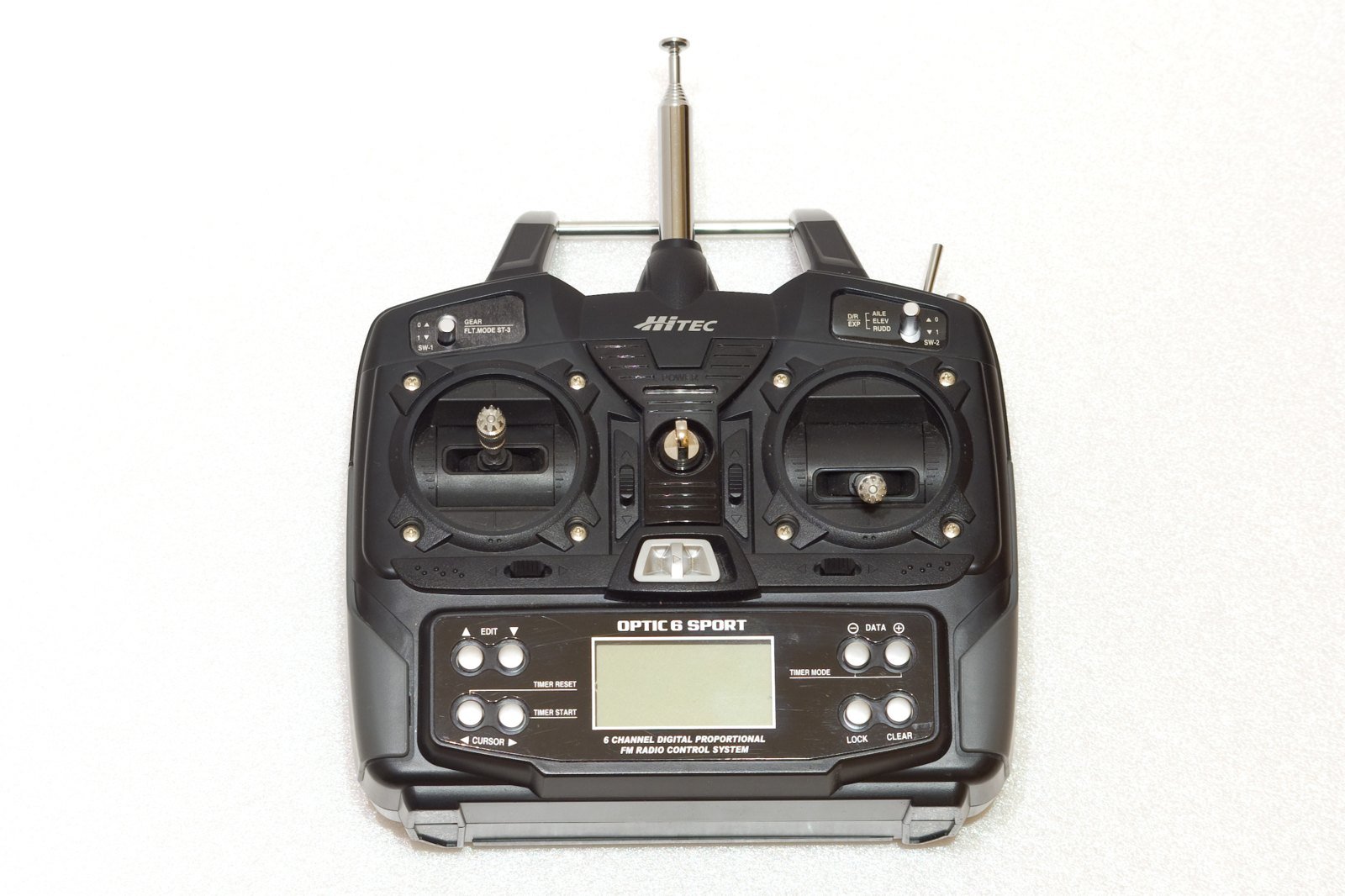
    A black Hitec Optic 6 Sport handheld radio-control transmitter with two control sticks and an aerial.
    A Hitec Optic 6 Sport six-channel transmitter. Your transmitter’s two sticks control throttle, rudder, elevator and ailerons. Photo: Foma39, CC BY-SA 3.0, via Wikimedia Commons.

    Four Beginner RC Planes Worth a Look

    All four of these come from Horizon Hobby’s HobbyZone and E-flite brands, which are among the most widely sold beginner ranges, and all use SAFE stabilisation. Specifications are from the manufacturer’s listings. Availability changes often, so check before you plan around one.

    HobbyZone Sport Cub S 2 RTF with SAFE

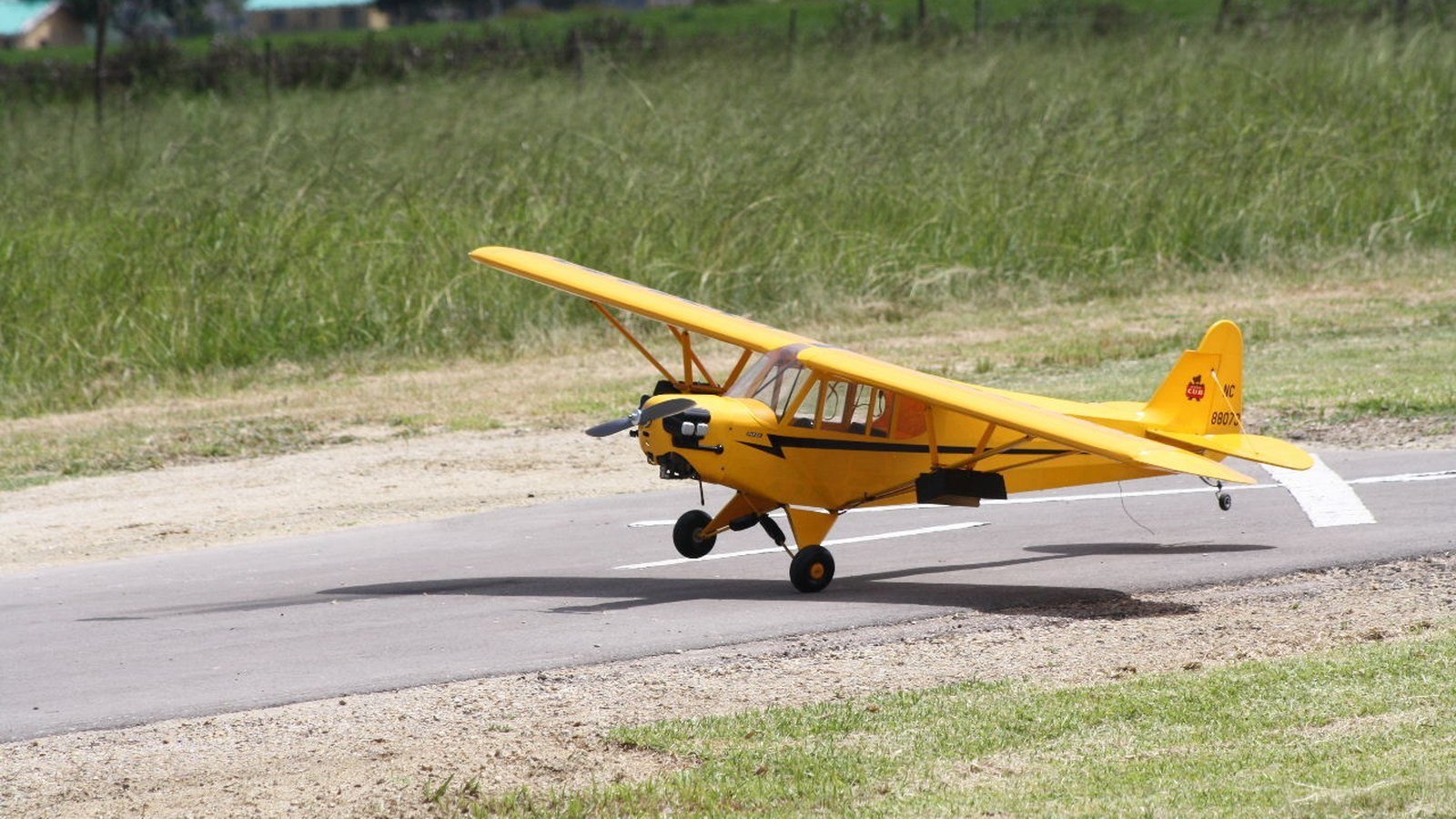
    The smallest and simplest of the bunch, styled after the classic Piper Cub.

    • Wingspan: 617 mm (24.3 in)
    • Flying weight: 61 g with its 1S 150mAh battery
    • In the box (RTF): battery, charger and transmitter
    • Simulator link: the transmitter has a USB-C port and works with the included trial of RealFlight Trainer Edition
    • Stabilisation: SAFE technology

    Why it suits beginners: it’s tiny, light and inexpensive to repair, and you get a simulator trial in the same box. At 61 g it’s well under the 250 g threshold that matters in both Australia and the US (see the rules below). Horizon pitches it for large yards and parks, but note that in Australia parks are classed as “populous areas” by CASA, so you’ll need a suitable open space or a club field. Very light models also struggle in wind, so save it for calm days. See the Sport Cub S 2 on Horizon Hobby.

    HobbyZone AeroScout S 2 1.1m RTF Basic with SAFE and RealFlight

    A purpose-built trainer with a pusher propeller at the back, which keeps the prop out of the way when you land on your nose.

    • Wingspan: 1095 mm (43.1 in)
    • Weight: 639 g without battery; 853 g with a 3S 2200mAh battery
    • Construction: EPO foam, tricycle landing gear, optional floats
    • Flight modes: Beginner, Intermediate and Experienced, so the plane grows with you
    • Simulator: includes the “full” version of RealFlight Trainer Edition (Windows 10 or 11 PC)
    • Needed to complete: 3S battery and charger (sold separately)

    Why it suits beginners: it’s big enough to handle a little more breeze than a micro, the tricycle gear makes take-offs and landings easier, and you get both the plane and a proper simulator in one purchase. See the AeroScout S 2 on Horizon Hobby.

    HobbyZone Carbon Cub S 2 1.3m RTF Basic

    For people who want their first plane to look like a “real” aeroplane. It’s based on the CubCrafters Carbon Cub, a modern take on the Piper Cub.

    • Wingspan: 1300 mm (51.18 in)
    • Weight: 913 g without battery
    • Landing gear: taildragger with big tundra tyres; optional floats
    • Options: SAFE Plus GPS and a Landing Assist Sensor can be added
    • Needed to complete: 3S battery and charger (sold separately)

    Why it suits beginners: it combines beginner-friendly stabilisation with scale looks, and it’s a model many pilots keep flying long after they’ve learned. A taildragger is a little trickier to take off than a tricycle-gear plane, so it’s worth practising on the simulator first. See the Carbon Cub S 2 on Horizon Hobby.

    E-flite Apprentice STS 1.5m RTF Basic Smart Trainer with SAFE

    The classic club trainer: big, stable and built to cope with more wind.

    • Wingspan: 1499 mm (59 in)
    • Weight: 1672 g
    • Options: SAFE Plus GPS and Landing Assist Sensor
    • Needed to complete: 3S 3200–4000mAh battery and charger (sold separately)
    • Background: the earlier Apprentice listing describes it as the Official Trainer of the Academy of Model Aeronautics (AMA) in the US

    Why it suits beginners: larger planes are generally more stable and easier to see, which is why this style of trainer is a favourite at club fields. It’s the biggest and heaviest here, so it’s best flown at a club field rather than a local reserve. At the time of writing Horizon listed it as back-ordered. See the Apprentice STS on Horizon Hobby.

    Know the Rules Before You Fly

    In both Australia and the US, model aeroplanes fall under the same rules as recreational drones. These are the basics; always check the official pages before you fly, because rules change.

    Australia (CASA)

    The Civil Aviation Safety Authority’s drone rules apply to model aircraft flown for fun. Key points include:

    • No licence, accreditation or registration is needed when you fly for fun, and there’s no age limit. You need CASA approval to fly anything over 25 kg.
    • Fly no higher than 120 m (about 400 ft) above the ground.
    • Keep at least 30 m away from other people.
    • Fly only one aircraft at a time, only in daylight, and keep it within your visual line of sight.
    • Don’t fly over or above people, or in populous areas such as beaches, parks, events or sports ovals while a game is on.
    • If your aircraft weighs more than 250 g, don’t fly within 5.5 km of a controlled airport.
    • CASA recommends using a CASA-verified drone safety app to check where you can fly.

    United States (FAA)

    The FAA’s recreational flyer rules cover model aircraft too. In short:

    • Register your aircraft if it weighs 250 g (0.55 lb) or more.
    • Pass The Recreational UAS Safety Test (TRUST). It’s free, and you must carry proof that you passed.
    • Follow the safety guidelines of an FAA-recognised community-based organisation.
    • Keep your aircraft within visual line of sight and give way to other aircraft.
    • Fly at or below 400 ft in uncontrolled (Class G) airspace; controlled airspace needs authorisation, through LAANC or the FAA’s DroneZone.
    • Registered aircraft must broadcast Remote ID, unless you’re flying at an FAA-Recognized Identification Area (FRIA), which many club fields are.

    We covered the US rules in more detail in our beginner drone guide, and they apply in the same way to model planes.

    Join a Club (Seriously, It Helps)

    The single best thing a beginner can do is find a local club. You get a safe, approved place to fly, experienced members who can check your plane over, and often an instructor who can help you through your first flights.

    • In Australia, the Model Aeronautical Association of Australia (MAAA) describes itself as Australia’s largest flying organisation, with more than 330 affiliated clubs and over 9,500 members, and it’s been around for more than 75 years. Its clubs have recognised flight instructors, it runs a Wings program for new pilots, and its website has a Find a Club tool and information on Have a Go flying.
    • In the US, the Academy of Model Aeronautics (AMA) calls itself the world’s largest model aviation association. Membership includes insurance and access to its chartered club flying sites, and it has a club finder on its website.

    Tips for Your First Real Flight

    • Pick a calm day. Wind is a beginner’s biggest enemy, especially with small, light models.
    • Charge everything the night before, including the transmitter, and always switch the transmitter on before the plane and off after it.
    • Do a pre-flight check. Make sure the control surfaces move the right way when you move the sticks, and that the propeller and battery are secure.
    • Take off into the wind and climb to a comfortable height before you try turns. Height gives you time to recover.
    • Keep the first flight short and simple. Gentle, wide circles are plenty. Use the beginner mode on your stabilisation system.
    • Expect a few bumps. Every RC pilot has a crash story. Pack some foam-safe glue and a spare propeller, and you’ll be back in the air quickly.

    Thanks for Flying With Us

    Learning to fly RC is one of the most rewarding corners of aviation, and with a simulator, a forgiving trainer and a friendly club, you’ll be making smooth circuits sooner than you think. If the Cub-style trainers above have you curious about the real thing, our story of the Tiger Moth shows how full-size pilots learned on a forgiving trainer too. And if you’d rather start with a camera drone, our beginner drone guide has you covered. For the hangar wall, take a look at the vintage-aviation prints in our Art Shop.

    What was your first RC plane, or which one is on your wish list? Tell us in the comments.

    Full-size trainers for the shelf

    While you learn on a foam RC trainer, a die-cast classic is a nice reminder of the full-size aeroplanes that taught generations of pilots. These Airmodels trainers sit well beside a Cub-style RC hangar.

    de Havilland DH.82A Tiger Moth die-cast model aircraft, 1/72 scale
    Image: Airmodels

    de Havilland DH.82A Tiger Moth (1/72 scale)

    Boeing N2S-3 Stearman die-cast model aircraft, 1/48 scale
    Image: Airmodels

    Boeing N2S-3 Stearman (1/48 scale)

    NA LT-6G Texan die-cast model aircraft, 1/72 scale
    Image: Airmodels

    NA LT-6G Texan (1/72 scale)

    About our links: this is an affiliate link, so PlanesNStuff may earn a small commission at no extra cost to you.

    God bless you with blue skies!

  • Best Aviation Headsets for Student Pilots: Passive vs ANR Explained

    Best Aviation Headsets for Student Pilots: Passive vs ANR Explained

    We haven’t tested these products ourselves. This roundup is based on manufacturer information, published specifications and owner reviews.

    Ask a room full of pilots what their first big purchase was and plenty will say the same thing: a headset. It sits on your head for every minute of every lesson, it’s how you hear your instructor and air traffic control, and it’s the main thing standing between your ears and a loud engine a few feet in front of you. Get the right one and you’ll finish lessons less tired and hear radio calls more clearly. Get the wrong one and you’ll be counting the minutes until you can take it off.

    This guide explains the big choice every student pilot faces, passive or ANR, walks through the features that actually matter, and then looks at four headsets that student pilots often shortlist.

    Why Your Ears Need Protecting

    Small piston aircraft are noisy places. The FAA’s pilot safety brochure Hearing and Noise in Aviation explains that unprotected exposure to steady noise above 90 dB can cause temporary hearing impairment, and that years of regular exposure can cause permanent hearing loss. It also notes that the damage often starts around 4,000 Hz, outside the range of normal conversation, so it can go unnoticed for a while.

    The FAA’s advice is simple: use hearing protection. A good aviation headset does two jobs at once. It protects your hearing, and it gives you clear communications with your instructor and ATC. That’s why it’s worth choosing carefully, even as a beginner.

    Passive vs ANR: What’s the Difference?

    Passive headsets block noise physically. Thick ear cups, a firm seal around your ears and steady clamping pressure keep the sound out, much like industrial earmuffs. They have no electronics for noise reduction, so they need no batteries for that job. They’re usually tougher and simpler, but they tend to be heavier and clamp harder, because that seal is doing all the work.

    Passive headsets are typically rated with a Noise Reduction Rating (NRR) in decibels. Higher numbers mean more attenuation, but no headset blocks everything.

    ANR (active noise reduction) headsets start with passive ear cups, then add electronics. Small microphones pick up the noise around your ears, and the headset plays a matching “anti-noise” signal that cancels much of it out. The FAA brochure notes that this works especially well on low-frequency noise, which is exactly the deep drone of a piston engine and propeller. Because the electronics take over some of the work, ANR headsets can often be lighter and clamp more gently.

    Most ANR aviation headsets run on batteries (usually two AA cells) or on power from the aircraft’s panel. Look for one that keeps the radio working if the batteries die, so you never lose communications mid-flight.

    One safety note worth knowing early: the FAA has reminded pilots that noise-cancelling headsets can make some sounds harder to hear, such as cockpit warning tones that don’t come through the intercom, or an engine that suddenly sounds wrong. The FAA’s suggestion, in its Special Airworthiness Information Bulletin CE-16-08, is to check on the ground and in flight that you can still hear important alarms and sounds with your headset on.

    An aviation headset fitted to a grey mannequin-style acoustic test head in a laboratory.
    An aviation headset on an acoustic test fixture at the NIOSH Acoustics Laboratory, where hearing protectors are measured. Photo: Chuck Kardous, NIOSH, public domain, via Wikimedia Commons.

    What to Look For in Your First Headset

    • The right plugs. Most US general aviation aircraft, including the Cessnas and Pipers used for training, use GA dual plugs: a 1/4-inch headphone plug (often called PJ-055) and a slightly thinner microphone plug (PJ-068). Some aircraft use a single 6-pin LEMO-style plug that powers the headset from the panel, and helicopters often use a U-174 plug. Check what your flight school’s aircraft use before you buy. Many headsets come in more than one configuration.
    • Comfort over long lessons. Weight, clamping force and ear-seal material all matter. Gel or leatherette seals feel different, and if you wear glasses, look for seals that are designed to fit around the frames.
    • A good noise-cancelling microphone. Your instructor and ATC need to hear you clearly, so a noise-cancelling electret microphone on a flexible boom is the norm.
    • Mono and stereo. Older training aircraft usually have mono intercoms. A stereo/mono switch lets a headset work properly in both.
    • Bluetooth and audio input. Handy for phone calls on the ground or for electronic flight bag alerts, and many headsets automatically lower your music when the radio or intercom comes on. Nice, not essential.
    • Warranty and service. You’ll wear this headset for years, so a long warranty and a maker with good support are worth a lot.
    • FAA TSO approval. Many aviation headsets carry FAA Technical Standard Order (TSO) approval, which shows they meet a recognized standard for aviation use.

    Four Headsets Student Pilots Often Shortlist

    The four below cover the classic passive choice and three popular ANR headsets. We’ve stuck to the specifications each maker publishes, and we’ve left prices out because they change often. Check each maker’s site for the current details.

    1. David Clark H10-13.4: The Classic Passive Headset

    If you’ve ever seen a pilot in green ear cups, there’s a good chance it was a David Clark. David Clark calls the H10-13.4 one of the best-selling headsets in aviation, and it’s the headset many pilots learned on.

    • Type: Passive, around-the-ear
    • Noise Reduction Rating: 23 dB
    • Weight: 16.5 oz (about 488 g) without the cord
    • Microphone: M-7A noise-cancelling electret on a flexible boom
    • Plugs: GA dual plugs as standard, with stereo, helicopter, youth and NATO-plug versions also listed
    • Warranty: five years
    • Approval: FAA TSO C57b and C58a; made in the USA

    Why students like it: it’s simple, rugged and has a long track record, and with no batteries there’s nothing to run flat. The trade-off is weight and clamping pressure, which some pilots find tiring on long flights. Many pilots keep one as a spare or passenger headset even after they upgrade.

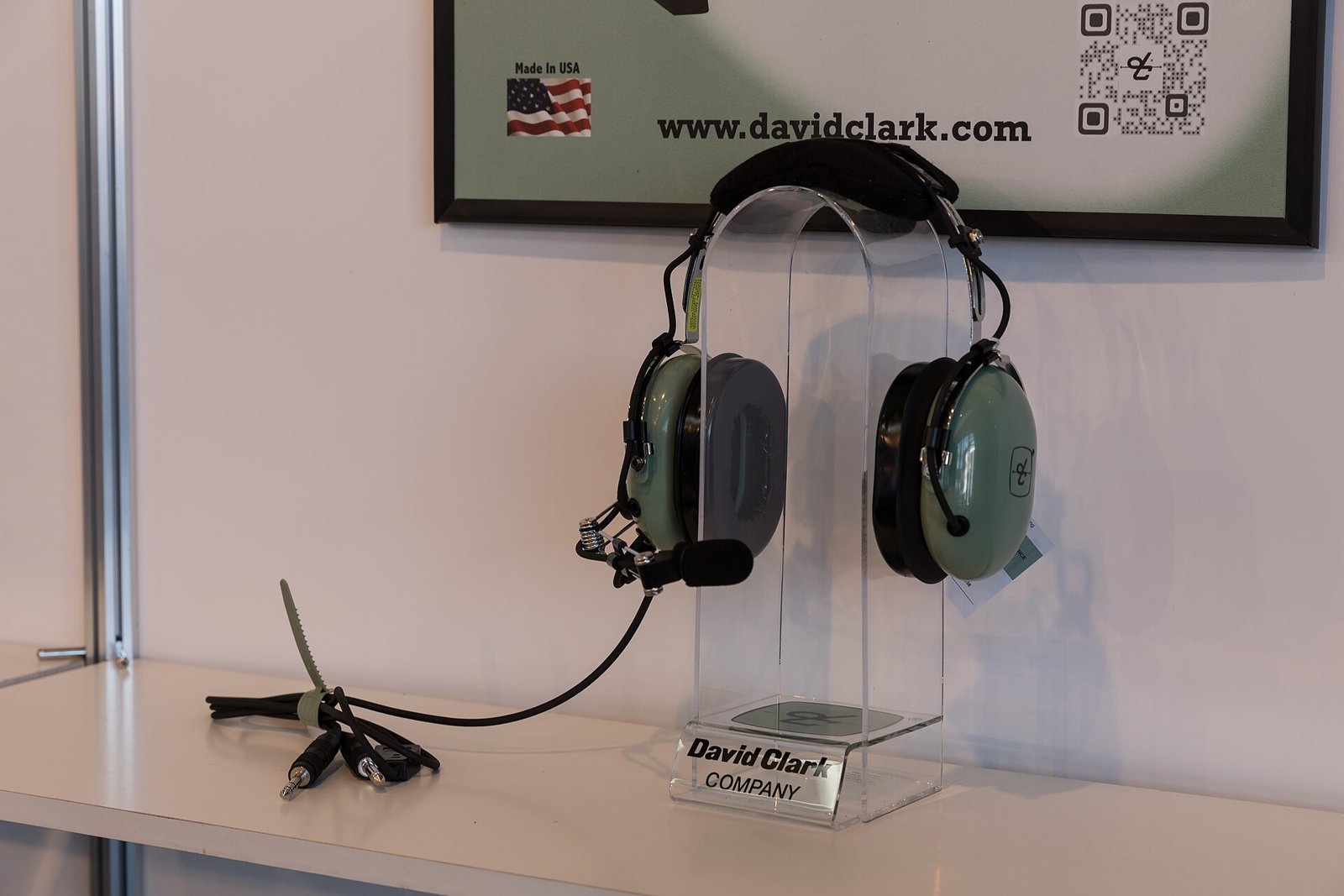
    A green David Clark aviation headset with a boom microphone and dual plugs on a clear display stand.
    A classic green David Clark headset, with its GA dual plugs, at the AERO Friedrichshafen show in 2018. Photo: Matti Blume, CC BY-SA 4.0, via Wikimedia Commons.

    2. David Clark DC ONE-X: A Light ANR Step Up

    The DC ONE-X is David Clark’s lightweight ANR headset.

    • Type: ANR (hybrid electronic noise cancellation), around-the-ear
    • Weight: 12.3 oz (about 349 g) without the cable
    • Battery life: up to 50 hours on two AA batteries
    • Fail-safe: David Clark says communications keep working if the batteries run out or the system fails
    • Extras: Bluetooth, an audio mute that lowers music during radio and intercom calls, a reversible microphone boom, an Outlast head pad and leatherette ear seals
    • Plugs: GA dual plugs (model 43102G-01)
    • Warranty: five years, plus a 30-day money-back guarantee
    • Approval: FAA TSO C-139a

    Why students like it: a lighter, gentler fit than a passive headset, with a fail-safe for communications, from a maker with a long history in aviation headsets.

    3. Lightspeed Zulu 3: Built for the Long Haul

    Lightspeed’s Zulu 3 is a premium ANR headset built mostly from stainless steel and magnesium, with Kevlar-cored cables.

    • Type: ANR, around-the-ear
    • Weight: 14.6 oz (about 414 g), including ear seals and mic boom
    • Battery life: up to 40 hours on two AA batteries, according to Lightspeed’s user guide (heavy Bluetooth use reduces it)
    • Extras: Bluetooth, an auxiliary input, ComPriority (which lowers music during radio calls), Auto Shutoff, adjustable mic gain, and Lightspeed’s free FlightLink recording app for iPhone and iPad
    • Fit: tapered ear seals that Lightspeed says seal better around glasses frames
    • Plugs: GA dual plugs, 6-pin panel power or U-174 helicopter versions
    • Warranty: seven years, plus a 30-day money-back guarantee

    Why students like it: the FlightLink app lets you record your radio calls and replay them after a lesson, which is a great way to sharpen your radio work. The long warranty is a bonus.

    4. Bose A30: The Lightest-Clamping Premium Option

    The Bose A30 replaced the long-running A20, and Bose’s focus with it was comfort.

    • Type: ANR with three selectable noise-cancelling modes, around-the-ear
    • Weight: 14.2 oz (404 g) on the head
    • Clamping force: 20% less than the Bose A20, according to Bose
    • Battery life: at least 45 hours on two AA batteries, or 25+ hours with Bluetooth in continuous use
    • Extras: Bluetooth with audio prioritization, a tap control for talk-through, and a down cable and mic that can be swapped to either side without tools
    • Plugs: GA dual plugs, plus 6-pin panel-power, 5-pin XLR and U-174 versions
    • Warranty: five-year limited warranty
    • Approval: FAA TSO and EASA E/TSO-C139a

    Why students like it: a light, low-clamping fit and adjustable noise cancellation. It’s at the premium end of the market, so many students save it for later, once they know they’re in for the long haul.

    Should a Student Pilot Buy Passive or ANR?

    There’s no wrong answer here, only trade-offs.

    • Start with passive if you’re just testing the waters, want something rugged and battery-free, or would like a spare headset for passengers later.
    • Go straight to ANR if you already know you’ll stick with flying, find heavy headsets uncomfortable, or fly long lessons in a noisy aircraft. Many pilots who start with passive end up upgrading.

    Either way, try before you buy if you can. Ask your flight school whether it has headsets you can borrow, ask other students what they fly with, and look for a maker’s money-back guarantee so you can return a headset that doesn’t suit your head.

    Caring for Your Headset

    • Coil the cord loosely and keep the headset in its bag between flights.
    • Replace ear seals and head pads when they wear out or flatten, since a worn seal lets in more noise. All four makers sell replacement parts.
    • Keep spare AA batteries in your flight bag if you fly ANR.
    • Don’t leave it baking in a hot cockpit all day.

    Thanks for Flying With Us

    A headset is one of the few pieces of gear you’ll use on every single flight, so it’s worth taking your time. Work out which plugs your training aircraft use, decide how much comfort and noise reduction matter to you, and choose a maker with good support. If you’re learning in a classic, our story of the Boeing-Stearman Kaydet, the biplane that taught America to fly, shows how far cockpit comfort has come. And if you’re shopping for a pilot this Christmas, our gift guide for aviation lovers has plenty more ideas, plus the vintage-aviation prints in our Art Shop.

    Which headset did you learn on, or which one is on your wish list? Tell us in the comments.

    God bless you with blue skies!
    —