
We haven’t tested these products ourselves. This roundup is based on manufacturer information, published specifications and owner reviews.
Ask a room full of pilots what their first big purchase was and plenty will say the same thing: a headset. It sits on your head for every minute of every lesson, it’s how you hear your instructor and air traffic control, and it’s the main thing standing between your ears and a loud engine a few feet in front of you. Get the right one and you’ll finish lessons less tired and hear radio calls more clearly. Get the wrong one and you’ll be counting the minutes until you can take it off.
This guide explains the big choice every student pilot faces, passive or ANR, walks through the features that actually matter, and then looks at four headsets that student pilots often shortlist.
Why Your Ears Need Protecting
Small piston aircraft are noisy places. The FAA’s pilot safety brochure Hearing and Noise in Aviation explains that unprotected exposure to steady noise above 90 dB can cause temporary hearing impairment, and that years of regular exposure can cause permanent hearing loss. It also notes that the damage often starts around 4,000 Hz, outside the range of normal conversation, so it can go unnoticed for a while.
The FAA’s advice is simple: use hearing protection. A good aviation headset does two jobs at once. It protects your hearing, and it gives you clear communications with your instructor and ATC. That’s why it’s worth choosing carefully, even as a beginner.
Passive vs ANR: What’s the Difference?
Passive headsets block noise physically. Thick ear cups, a firm seal around your ears and steady clamping pressure keep the sound out, much like industrial earmuffs. They have no electronics for noise reduction, so they need no batteries for that job. They’re usually tougher and simpler, but they tend to be heavier and clamp harder, because that seal is doing all the work.
Passive headsets are typically rated with a Noise Reduction Rating (NRR) in decibels. Higher numbers mean more attenuation, but no headset blocks everything.
ANR (active noise reduction) headsets start with passive ear cups, then add electronics. Small microphones pick up the noise around your ears, and the headset plays a matching “anti-noise” signal that cancels much of it out. The FAA brochure notes that this works especially well on low-frequency noise, which is exactly the deep drone of a piston engine and propeller. Because the electronics take over some of the work, ANR headsets can often be lighter and clamp more gently.
Most ANR aviation headsets run on batteries (usually two AA cells) or on power from the aircraft’s panel. Look for one that keeps the radio working if the batteries die, so you never lose communications mid-flight.
One safety note worth knowing early: the FAA has reminded pilots that noise-cancelling headsets can make some sounds harder to hear, such as cockpit warning tones that don’t come through the intercom, or an engine that suddenly sounds wrong. The FAA’s suggestion, in its Special Airworthiness Information Bulletin CE-16-08, is to check on the ground and in flight that you can still hear important alarms and sounds with your headset on.

What to Look For in Your First Headset
- The right plugs. Most US general aviation aircraft, including the Cessnas and Pipers used for training, use GA dual plugs: a 1/4-inch headphone plug (often called PJ-055) and a slightly thinner microphone plug (PJ-068). Some aircraft use a single 6-pin LEMO-style plug that powers the headset from the panel, and helicopters often use a U-174 plug. Check what your flight school’s aircraft use before you buy. Many headsets come in more than one configuration.
- Comfort over long lessons. Weight, clamping force and ear-seal material all matter. Gel or leatherette seals feel different, and if you wear glasses, look for seals that are designed to fit around the frames.
- A good noise-cancelling microphone. Your instructor and ATC need to hear you clearly, so a noise-cancelling electret microphone on a flexible boom is the norm.
- Mono and stereo. Older training aircraft usually have mono intercoms. A stereo/mono switch lets a headset work properly in both.
- Bluetooth and audio input. Handy for phone calls on the ground or for electronic flight bag alerts, and many headsets automatically lower your music when the radio or intercom comes on. Nice, not essential.
- Warranty and service. You’ll wear this headset for years, so a long warranty and a maker with good support are worth a lot.
- FAA TSO approval. Many aviation headsets carry FAA Technical Standard Order (TSO) approval, which shows they meet a recognized standard for aviation use.
Four Headsets Student Pilots Often Shortlist
The four below cover the classic passive choice and three popular ANR headsets. We’ve stuck to the specifications each maker publishes, and we’ve left prices out because they change often. Check each maker’s site for the current details.
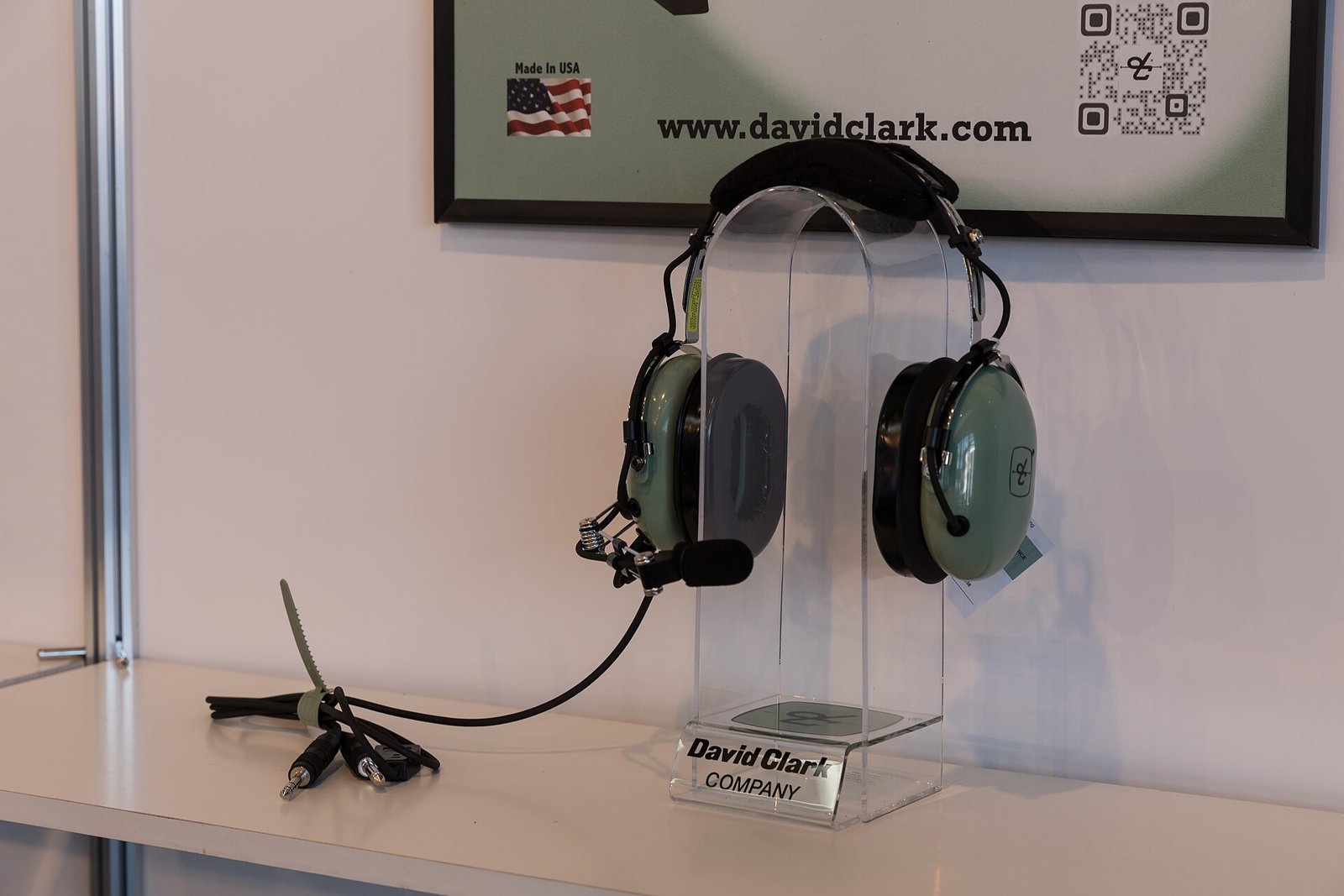
1. David Clark H10-13.4: The Classic Passive Headset
If you’ve ever seen a pilot in green ear cups, there’s a good chance it was a David Clark. David Clark calls the H10-13.4 one of the best-selling headsets in aviation, and it’s the headset many pilots learned on.
- Type: Passive, around-the-ear
- Noise Reduction Rating: 23 dB
- Weight: 16.5 oz (about 488 g) without the cord
- Microphone: M-7A noise-cancelling electret on a flexible boom
- Plugs: GA dual plugs as standard, with stereo, helicopter, youth and NATO-plug versions also listed
- Warranty: five years
- Approval: FAA TSO C57b and C58a; made in the USA
Why students like it: it’s simple, rugged and has a long track record, and with no batteries there’s nothing to run flat. The trade-off is weight and clamping pressure, which some pilots find tiring on long flights. Many pilots keep one as a spare or passenger headset even after they upgrade.
2. David Clark DC ONE-X: A Light ANR Step Up
The DC ONE-X is David Clark’s lightweight ANR headset.
- Type: ANR (hybrid electronic noise cancellation), around-the-ear
- Weight: 12.3 oz (about 349 g) without the cable
- Battery life: up to 50 hours on two AA batteries
- Fail-safe: David Clark says communications keep working if the batteries run out or the system fails
- Extras: Bluetooth, an audio mute that lowers music during radio and intercom calls, a reversible microphone boom, an Outlast head pad and leatherette ear seals
- Plugs: GA dual plugs (model 43102G-01)
- Warranty: five years, plus a 30-day money-back guarantee
- Approval: FAA TSO C-139a
Why students like it: a lighter, gentler fit than a passive headset, with a fail-safe for communications, from a maker with a long history in aviation headsets.
3. Lightspeed Zulu 3: Built for the Long Haul
Lightspeed’s Zulu 3 is a premium ANR headset built mostly from stainless steel and magnesium, with Kevlar-cored cables.
- Type: ANR, around-the-ear
- Weight: 14.6 oz (about 414 g), including ear seals and mic boom
- Battery life: up to 40 hours on two AA batteries, according to Lightspeed’s user guide (heavy Bluetooth use reduces it)
- Extras: Bluetooth, an auxiliary input, ComPriority (which lowers music during radio calls), Auto Shutoff, adjustable mic gain, and Lightspeed’s free FlightLink recording app for iPhone and iPad
- Fit: tapered ear seals that Lightspeed says seal better around glasses frames
- Plugs: GA dual plugs, 6-pin panel power or U-174 helicopter versions
- Warranty: seven years, plus a 30-day money-back guarantee
Why students like it: the FlightLink app lets you record your radio calls and replay them after a lesson, which is a great way to sharpen your radio work. The long warranty is a bonus.
4. Bose A30: The Lightest-Clamping Premium Option
The Bose A30 replaced the long-running A20, and Bose’s focus with it was comfort.
- Type: ANR with three selectable noise-cancelling modes, around-the-ear
- Weight: 14.2 oz (404 g) on the head
- Clamping force: 20% less than the Bose A20, according to Bose
- Battery life: at least 45 hours on two AA batteries, or 25+ hours with Bluetooth in continuous use
- Extras: Bluetooth with audio prioritization, a tap control for talk-through, and a down cable and mic that can be swapped to either side without tools
- Plugs: GA dual plugs, plus 6-pin panel-power, 5-pin XLR and U-174 versions
- Warranty: five-year limited warranty
- Approval: FAA TSO and EASA E/TSO-C139a
Why students like it: a light, low-clamping fit and adjustable noise cancellation. It’s at the premium end of the market, so many students save it for later, once they know they’re in for the long haul.
Should a Student Pilot Buy Passive or ANR?
There’s no wrong answer here, only trade-offs.
- Start with passive if you’re just testing the waters, want something rugged and battery-free, or would like a spare headset for passengers later.
- Go straight to ANR if you already know you’ll stick with flying, find heavy headsets uncomfortable, or fly long lessons in a noisy aircraft. Many pilots who start with passive end up upgrading.
Either way, try before you buy if you can. Ask your flight school whether it has headsets you can borrow, ask other students what they fly with, and look for a maker’s money-back guarantee so you can return a headset that doesn’t suit your head.
Caring for Your Headset
- Coil the cord loosely and keep the headset in its bag between flights.
- Replace ear seals and head pads when they wear out or flatten, since a worn seal lets in more noise. All four makers sell replacement parts.
- Keep spare AA batteries in your flight bag if you fly ANR.
- Don’t leave it baking in a hot cockpit all day.
Thanks for Flying With Us
A headset is one of the few pieces of gear you’ll use on every single flight, so it’s worth taking your time. Work out which plugs your training aircraft use, decide how much comfort and noise reduction matter to you, and choose a maker with good support. If you’re learning in a classic, our story of the Boeing-Stearman Kaydet, the biplane that taught America to fly, shows how far cockpit comfort has come. And if you’re shopping for a pilot this Christmas, our gift guide for aviation lovers has plenty more ideas, plus the vintage-aviation prints in our Art Shop.
Which headset did you learn on, or which one is on your wish list? Tell us in the comments.
God bless you with blue skies!
—

Leave a Reply