Picture a cattle station in outback Queensland in the 1920s. Someone has been badly hurt, the nearest doctor is hundreds of kilometres away, and there’s no telephone. The Royal Flying Doctor Service puts it plainly in its own history: injured people had to travel by horse, cart or camel to reach help, and they often died before they got there.
In Mission Aviation: The Early Years, we promised to tell the Flying Doctor’s story in its own post. Here it is: how one minister’s dream, one leased biplane and one pedal-powered radio grew into the aeromedical service Australians know as the RFDS, what it flies today, and where you can see the story for yourself.
A Mantle of Safety: John Flynn’s Vision
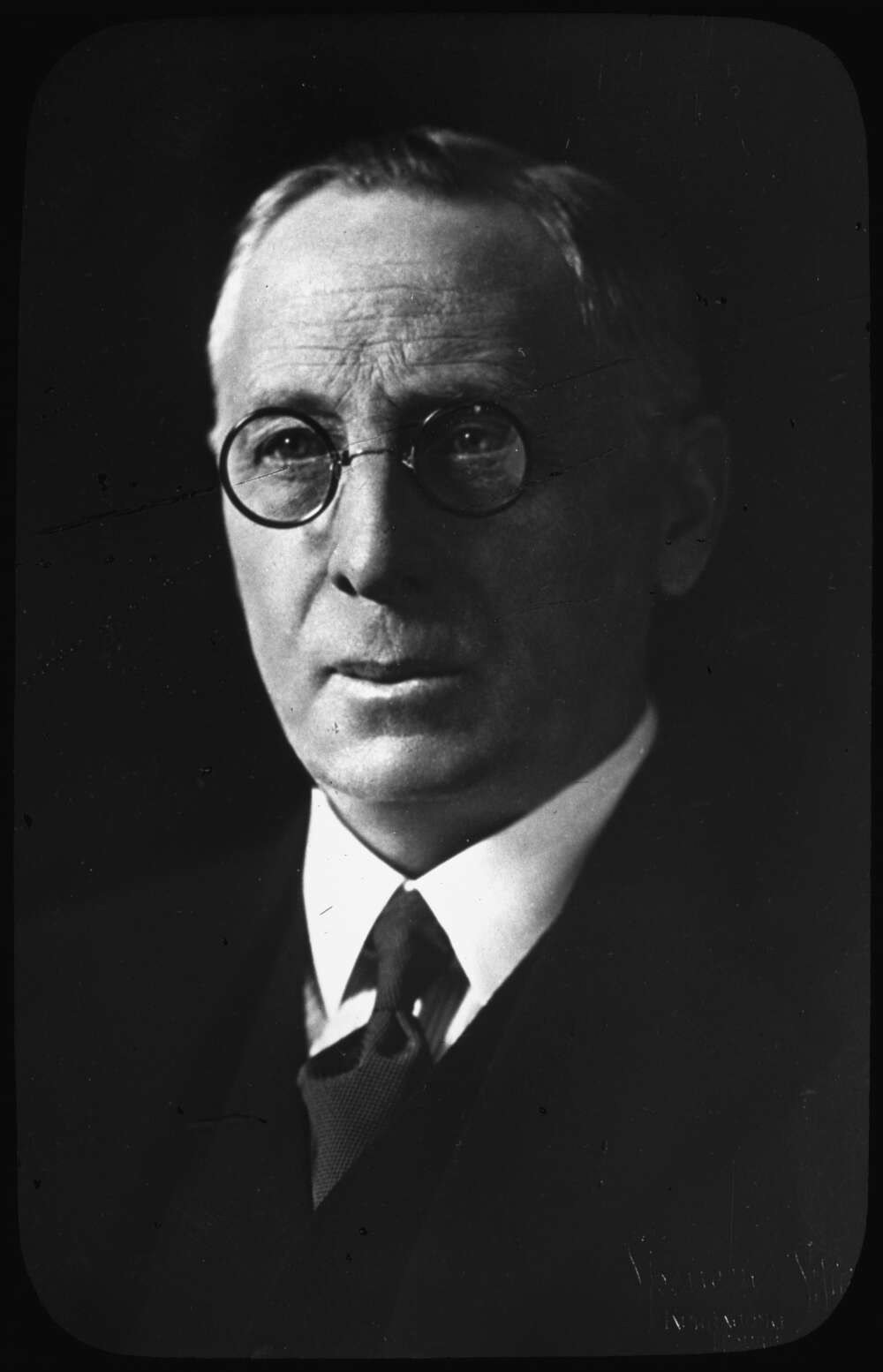
According to the RFDS’s biography of its founder, John Flynn was born at Moliagul in central Victoria on 25 November 1880. He worked as a schoolteacher, studied for the Presbyterian ministry and was ordained in January 1911. That same year he arrived at the Smith of Dunesk Mission at Beltana, more than 500 km north of Adelaide, and saw for himself that people living and travelling in the inland had no medical care at all.
His 1912 report on life in the Northern Territory led the Presbyterian Church to create the Australian Inland Mission (AIM), with Flynn at its head. The National Museum of Australia notes that from 1913 the AIM’s “patrol padres” offered everything from pastoral care to basic health care, and bush hospitals staffed by nurses followed. Flynn’s goal was what he called “a mantle of safety” over the inland.
Two events in 1917 pointed his thinking towards the sky. On 29 July, Kimberley stockman Jimmy Darcy suffered massive internal injuries when his horse fell in a cattle stampede. The RFDS says his death made national headlines and spurred Flynn’s vision of an outback aeromedical service. That year Flynn also received a letter from Lieutenant Clifford Peel, a Victorian medical student with an interest in flying, suggesting that aircraft could carry medical help to the outback. Peel was shot down in France and died at just 24, never knowing his letter would become a blueprint for the Flying Doctor.
Flynn campaigned for the next ten years. The breakthrough came when his long-time supporter H.V. McKay left a large bequest for “an aerial experiment”. Flynn also met Hudson Fysh, one of the founders of Qantas, and in 1927 Qantas and the Aerial Medical Service signed an agreement to operate an aerial ambulance from Cloncurry, Queensland.
17 May 1928: Victory Takes Off from Cloncurry
The RFDS dates the opening of the Australian Inland Mission Aerial Medical Service in Cloncurry to 15 May 1928. The National Archives of Australia explains that Flynn chose the town because it had a hospital, a Qantas aerodrome and a telephone and telegraph network.
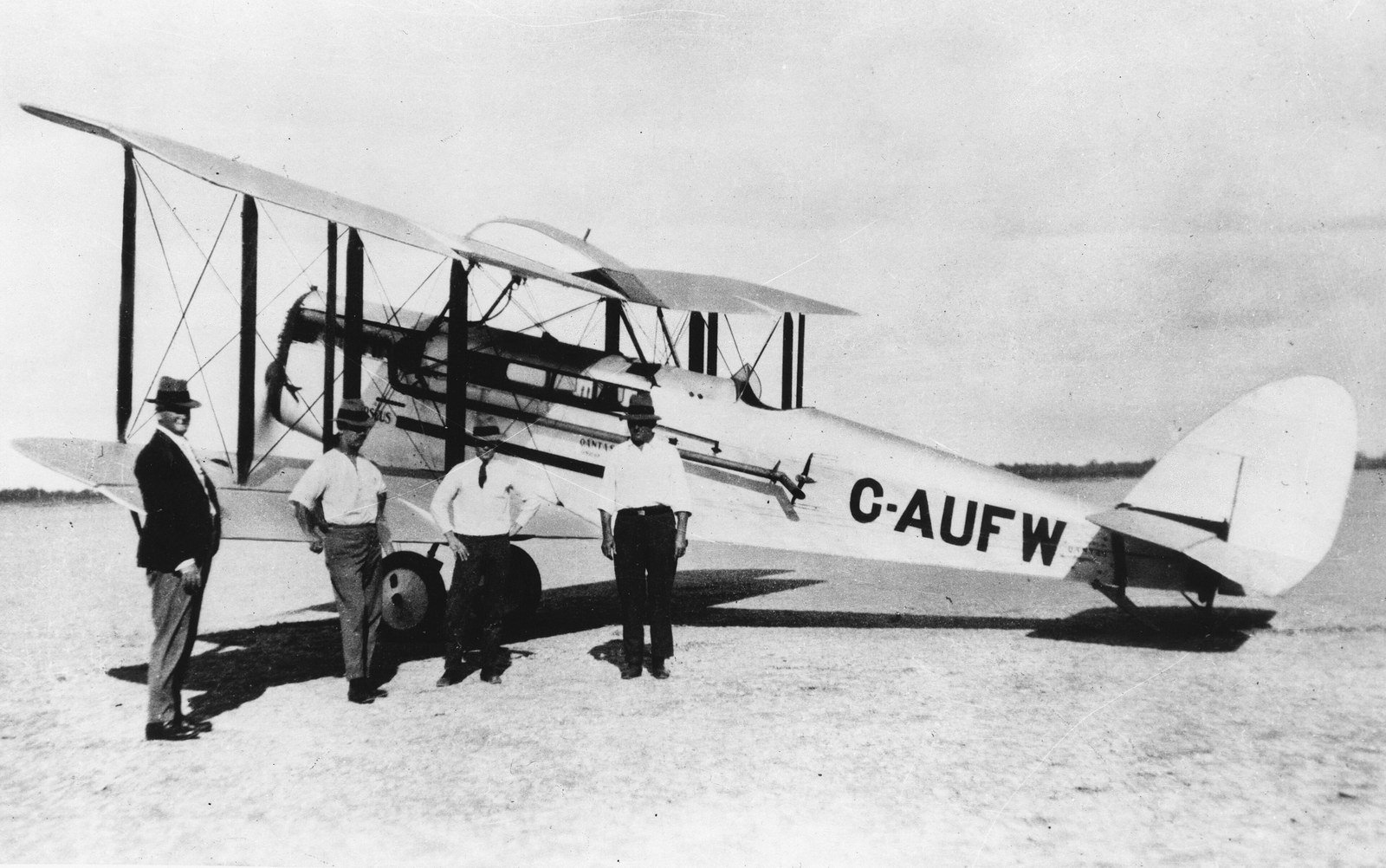
The Archives holds a wonderful letter dated 16 May 1928, signed by Hudson Fysh as Qantas’s managing director. It tells the Controller of Civil Aviation that “our Aerial Ambulance, D.H. 50A G-AUER” was now at Cloncurry, together with pilot A.H. Affleck and Dr K. St V. Welch. The aircraft was a four-passenger de Havilland DH.50A biplane imported from Britain and named Victory. The RFDS says Qantas leased it to the service for two shillings per mile flown.
The very next morning, 17 May 1928, a call came in from the Julia Creek Bush Nursing Home. Pilot Arthur Affleck and Dr Kenyon St Vincent Welch took off in Victory, and the RFDS records that the two patients Dr Welch operated on that day both survived. An independent account in the BMJ, written for the service’s 50th birthday in 1978, confirms the date, the crew and the aircraft.
Flying it was no picnic. The RFDS says Affleck had no navigational aids, no radio and only a compass. He followed fences, rivers, dirt roads, wheel tracks and telegraph lines, sitting in an open cockpit behind the doctor’s cabin, exposed to the weather. Airstrips were claypans at best and hastily cleared paddocks at worst. The DH.50 cruised at about 130 km/h (80 mph) and had a range of roughly 800 to 970 km (500 to 600 miles).
In its first year, the National Archives says, the service flew 28,129 km. The two sources differ slightly on patients: the Archives says 255 patients were attended, with complaints ranging from typhoid fever to gunshot wounds, while the RFDS’s Flynn biography records 50 flights to 26 destinations and 225 patients. An archived RFDS history page says Victory flew 110,000 miles (about 177,000 km) for the Flying Doctor until 1934, when Qantas replaced it with a DH.83 Fox Moth.
Giving the Outback a Voice: Traeger’s Pedal Radio
An air ambulance isn’t much use if nobody can call it. That problem was solved by Alfred Traeger, an Adelaide engineer who, the National Museum of Australia says, began working with Flynn in 1926 on radio experiments in the Northern Territory.
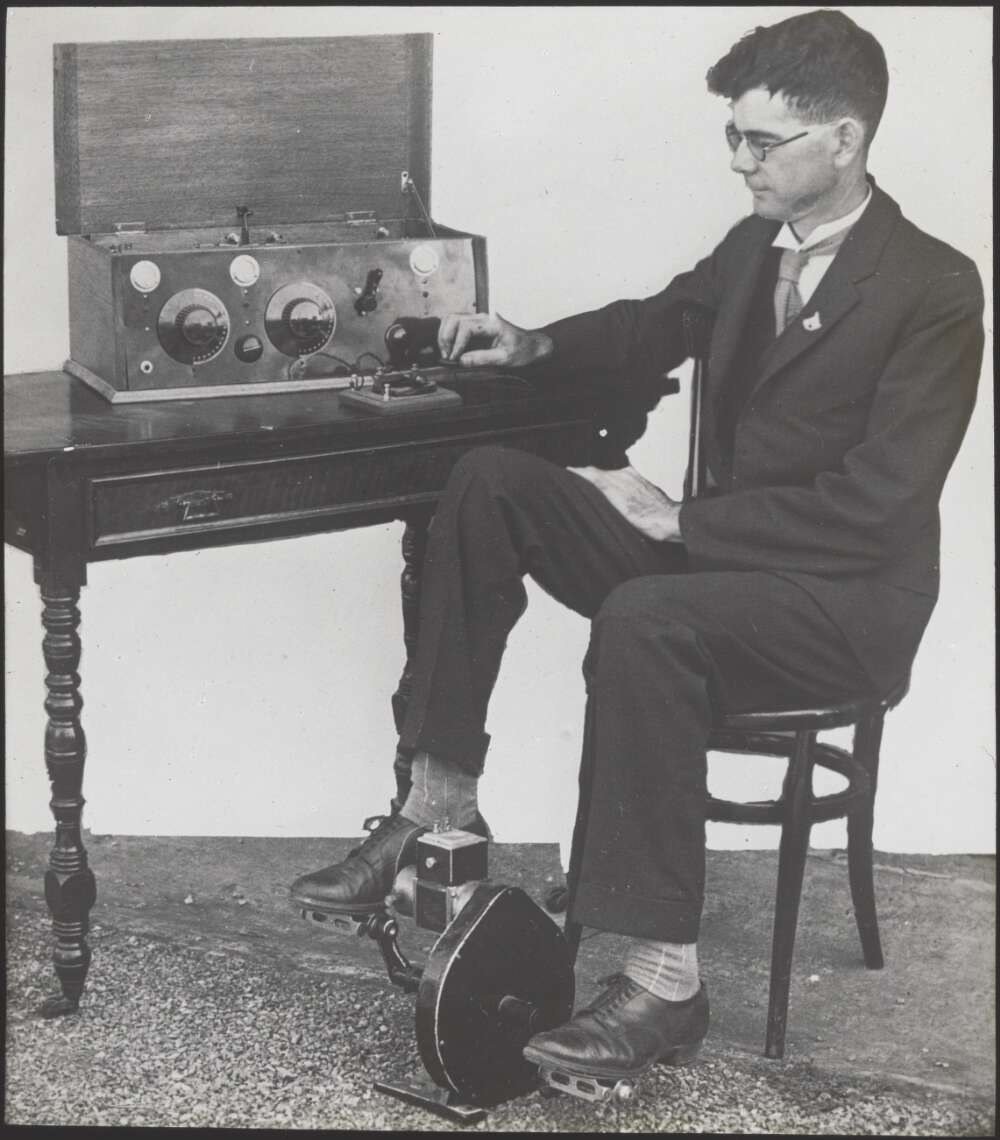
The RFDS Queensland Section tells the story in How Alfred Traeger gave the outback its voice. Flynn hired Traeger as his assistant, and for two years they travelled the outback testing the unreliable transceivers of the day. In 1928 Traeger came up with the answer: a floor-mounted generator driven by bicycle pedals, powering a transceiver that could send Morse code. In 1929 a base station was set up at Cloncurry, and the first pedal wireless was installed at Augustus Downs Station, about 240 km (150 miles) away. The first transmission was made on 19 June 1929 by Gertrude Rothery, the manager’s wife, to Traeger’s assistant Harry Kinzbrunner at Cloncurry.
Pedalling and tapping out Morse at the same time took some effort. When the National Museum of Australia put a Traeger pedal generator on display in 2018, curator Laina Hall told ABC News:
“There’s this lovely phrase ‘pedal and puff’, because you needed to really give it a good go.”
Later transceivers could switch between Morse code and voice, and the outback was never quite the same. The NMA describes how the radio network became a social lifeline too, with set times for chatting, sharing news and recipes, known as “galah sessions” after the noisy, chattering bird. The RFDS says the same network helped Adelaide Miethke establish the School of the Air in Alice Springs in 1951.
Radio also made the famous Flying Doctor medical chest possible. The NMA explains that Dr Keith Sweetman, a flying doctor in Western Australia, developed standardised chests so that people in remote places could give first aid under a doctor’s guidance over the radio. According to the RFDS’s national Annual Report 2023/24, there were 2,370 medical chests located around Australia.
From Aerial Medical Service to Royal Flying Doctor
The experiment quickly spread. The RFDS’s history of its Sections says the Victorian Section was the first to be formed, in 1934, taking responsibility for the remote Kimberley, with its first base at Wyndham, WA, opening in 1935. The NMA says that in 1934 the state and territory operations were brought together in a national network, the Australian Aerial Medical Services. In Western Australia, a provisional committee bought a de Havilland Fox Moth in 1935, and the Port Hedland base opened on 10 October that year, with the first medical flight made on opening day. Broken Hill became operational in 1937, Alice Springs in 1939, and Tasmania’s Section, the last, was formed in 1960.
The name changed to the Flying Doctor Service in 1942. In 1954, during her visit to Broken Hill, Queen Elizabeth II spoke over the base’s wireless to a young mother at Muloorina, on Lake Eyre, and in 1955 the service received the royal title. Back where it all started, the Cloncurry base kept operating until 1964, when it moved to Mount Isa.
Sadly, Flynn didn’t live to see the royal title. The RFDS says he attended his last Flying Doctor Council meeting in May 1950 and died of cancer in May 1951. His ashes rest under the Flynn Memorial at the foot of Mount Gillen, just west of Alice Springs, and his burial service was carried over the Flying Doctor radio network to remote stations across the outback. His face has been on the Australian $20 note since 1994.
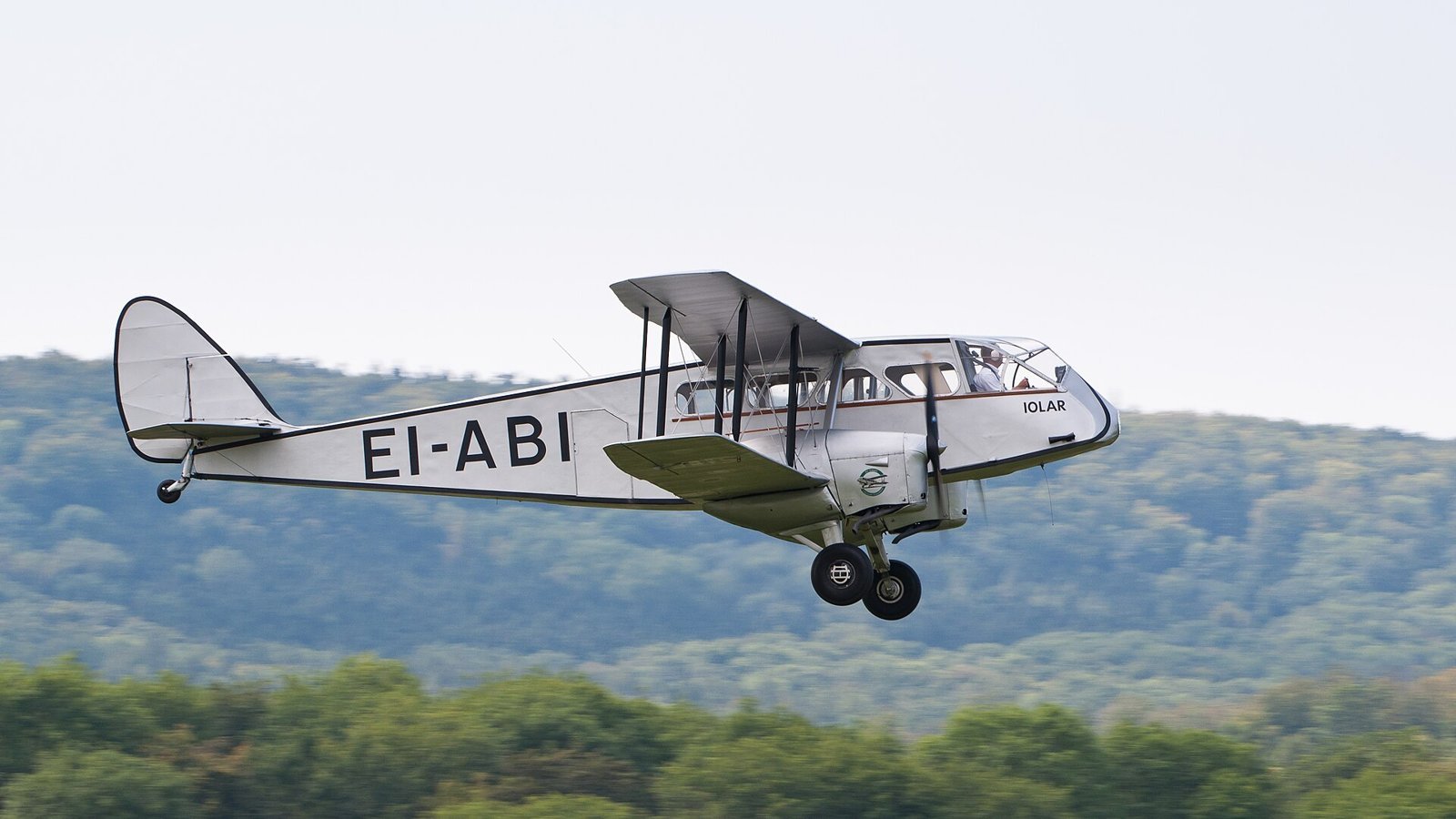
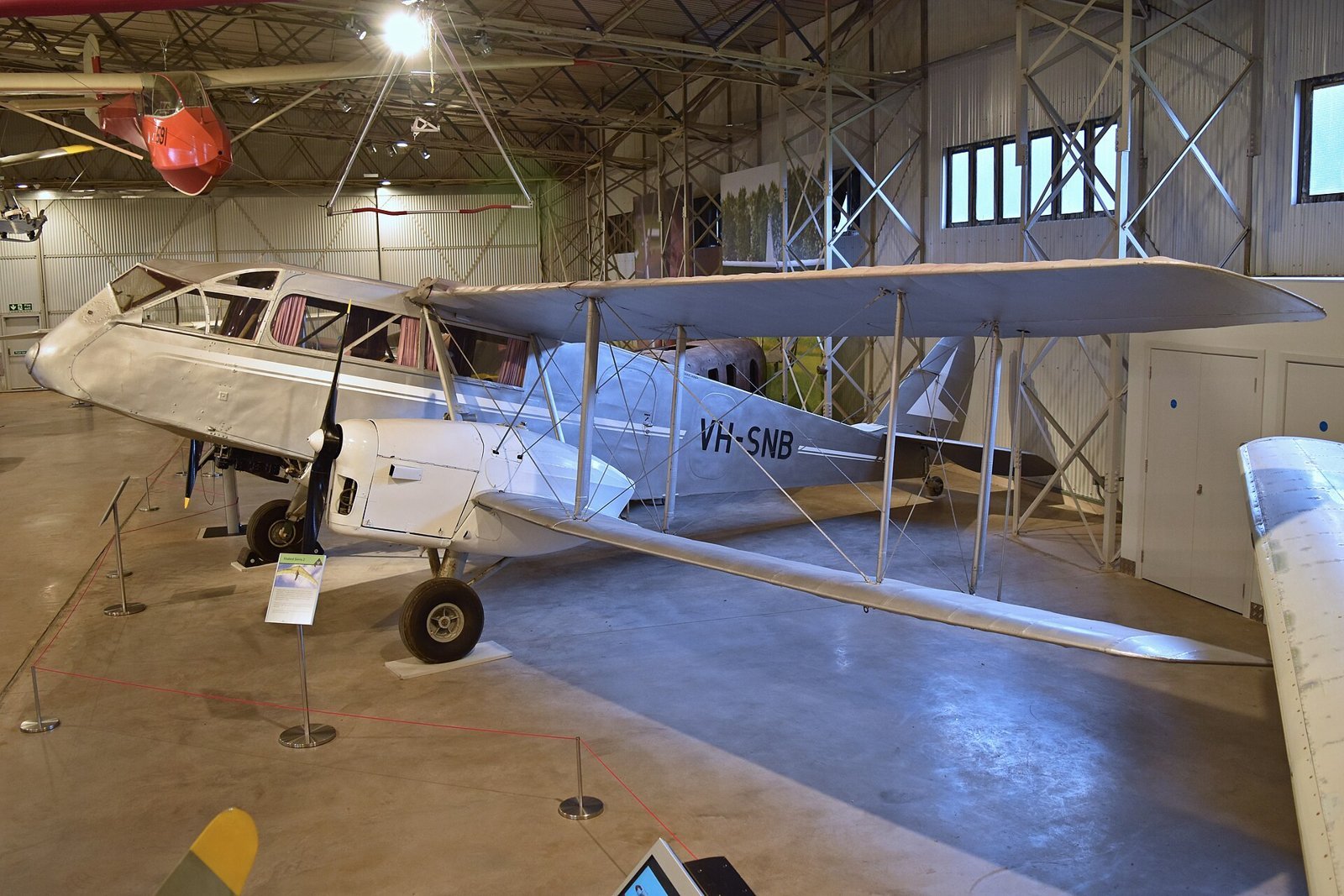
The aircraft changed a lot over the decades. The same archived RFDS history page lists mostly British types in the 1930s and 1940s: the DH.50, DH.83 Fox Moth, DH.84 Dragon, DH.104 Dove and the Australian-built DHA Drover. American types followed, including the Beechcraft Baron, Travel Air, Queen Air and Duke, Cessna 180, 182 and 421B, and Piper Cherokee, Chieftain and Navajo. Then came the King Airs and Conquests from the 1980s and, later, the Pilatus PC-12. If you’ve read our de Havilland Dragon feature, you’ll remember that Qantas flew Dragons for the Flying Doctor’s Queensland Section at Cloncurry. The RFDS adds that until the 1960s it relied on contractors for aircraft and pilots, before progressively buying its own aircraft and employing its own pilots and engineers.
The Flying Doctor Today
The scale today would astonish Affleck and Welch. According to the RFDS’s national Annual Report 2023/24 (the latest consolidated national report on its website when we checked), the service had:
- 87 aircraft and 292 road service vehicles
- 23 air bases around the country
- 1,652 full and part-time staff
- 345,136 total patient contacts
- 32,949 patients transported by an aeromedical aircraft, plus 53,914 by road
- 22,462 primary health clinics, the equivalent of 62 a day
- 55,930 remote telehealth consultations
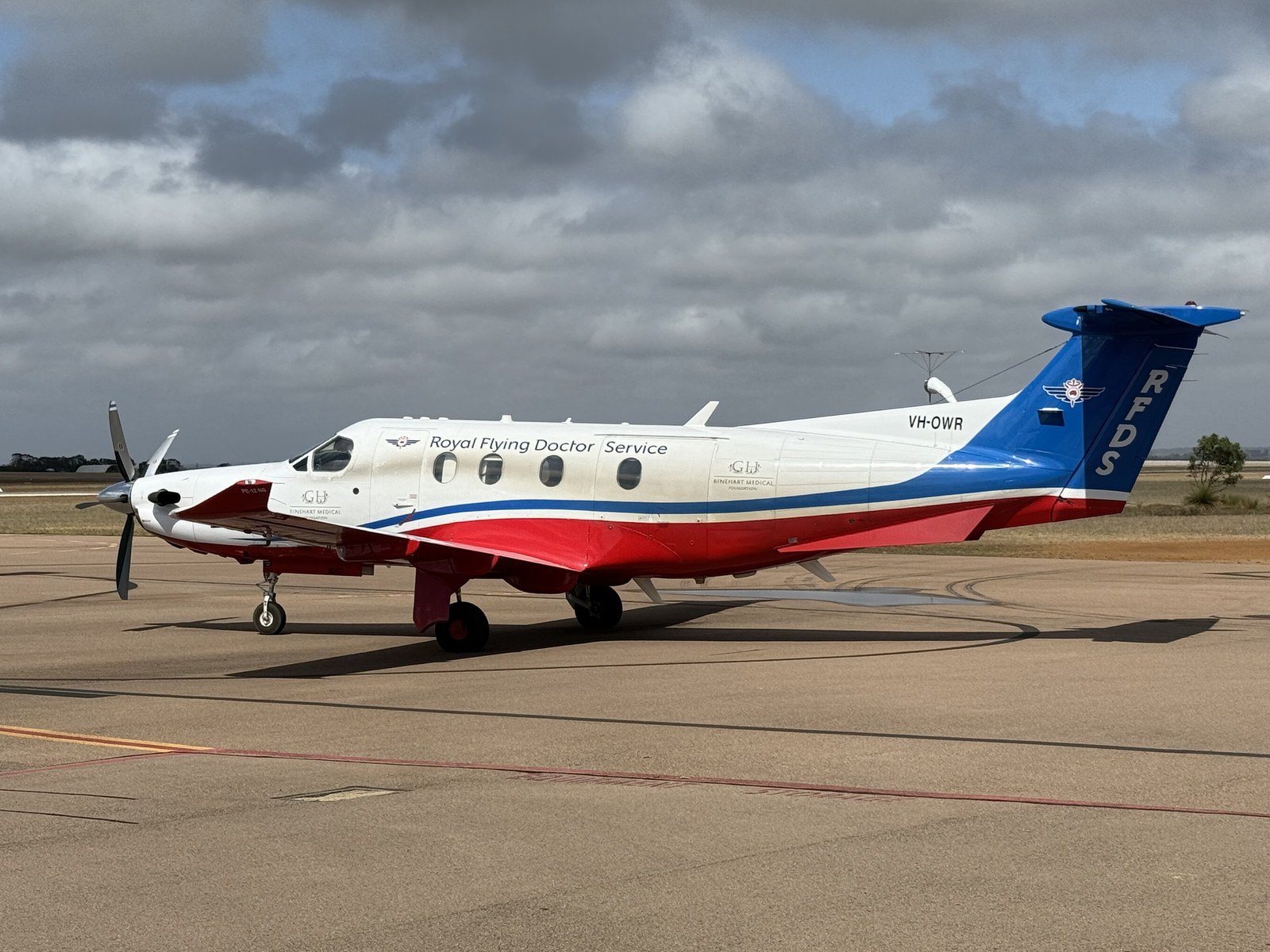
The RFDS fleet page explains who flies what. Pilatus PC-12 single-engine turboprops and PC-24 jets serve South Australia, the Northern Territory and Western Australia. Beechcraft King Air twin turboprops serve Queensland, New South Wales, Victoria and Tasmania, and Queensland also flies the newer King Air 360. The annual report also lists a Cessna C208 and Eurocopter EC145 helicopters, and the RFDS says its partnership with Fortescue brought two EC145s into its Western Australian fleet for hospital-to-hospital transfers.
Each aeroplane gets an extensive medical fit-out. The RFDS says a PC-12 cabin is set up with two stretchers and three seats, and the aircraft is flown by a single pilot, day and night. Its King Airs have the standard passenger door replaced with a large cargo door, so stretchers can be loaded easily. A flight nurse is usually on every flight, and a doctor joins when the patient is seriously ill. The PC-24 jets, based at Jandakot and Broome in WA and in Adelaide, can carry three stretcher patients. The RFDS says they can operate from unsealed runways as short as 800 m and can halve flying times over long distances.
The aircraft are only part of the work. Those numbers include GP and nurse clinics, dental care, mental health support and telehealth for people who live a long way from a hospital. The RFDS celebrates Flying Doctor Day each 17 May, the anniversary of Victory‘s first flight, and 2028 will mark 100 years since that morning at Cloncurry.
Where to See the Flying Doctor Story
The RFDS lists several places on its Visit the Flying Doctor page where you can learn the story first-hand. Opening hours and ticketing change, so check each website before you travel.
- RFDS Alice Springs Tourist Facility, NT: set in the original 1939 heritage building that housed the first Alice Springs base radio operator. It features a life-size hologram of John Flynn, an immersive museum, a replica PC-12 you can sit in and a real former RFDS communications centre. rfdsalicesprings.com.au
- RFDS Darwin Tourist Facility, NT: on Darwin’s historic Stokes Hill Wharf, it combines the RFDS story with a virtual reality experience of the 1942 Bombing of Darwin. The RFDS runs it in partnership with NT Tourism. rfdsdarwin.com.au
- Broken Hill Outback Heritage Experience, NSW: inside a working RFDS base at the airport, where you can tour the base, see aircraft in the hangar and explore the Mantle of Safety Museum. The site says the new facility opened in February 2025. brokenhill.experience.flyingdoctor.org.au
- Flying Doctor Visitor Experience, Dubbo, NSW: an interactive centre where you can try the “operations control” screens, take part in augmented reality missions and explore an actual emergency aircraft. dubbo.experience.flyingdoctor.org.au
- Charleville RFDS Visitors Centre, Qld: beside the operational Charleville base, which the RFDS says began operating in 1943.
- John Flynn Place Museum, Cloncurry, Qld: the town where it all began, with a museum dedicated to Flynn, Traeger and the early Flying Doctor teams.
- Australian Stockman’s Hall of Fame, Longreach, Qld: the RFDS says an original Flying Doctor Queen Air, built in 1977 and restored, hangs in the atrium, and its display there includes a full-size cutaway King Air B200.
- John Flynn’s Grave, Alice Springs, NT: on a low hill at the foot of the MacDonnell Ranges, with a plaque that reads “His vision encompassed the continent.”
One more tip if you’re heading bush: the RFDS says up to a quarter of the emergency evacuations it carries out each year involve city travellers who get into trouble on outback trips. Its guide to preparing for remote travel is well worth a read before you go.
Bring a piece of Flying Doctor history home
The de Havilland Dove is one of the post-war types listed in the RFDS’s own history of its fleet, and it’s available as a display model. Please note: this model is in Dan-Air London airline colours, not Flying Doctor livery.

de Havilland DH.104 Dove Dan-Air (1/72 scale)
About our links: these are affiliate links, so PlanesNStuff may earn a small commission at no extra cost to you.
Keep Exploring
The Flying Doctor started out as an arm of a church mission, so it fits right alongside the story we told in Mission Aviation: The Early Years. And for one of the classic types that carried flying doctors in the 1940s, read our de Havilland Dragon feature.
Have you or your family ever been helped by the Flying Doctor, or visited one of the centres above? We’d love to hear your story.
God bless you with blue skies!