Tag: Airmodels

  • McDonnell F/A-18F Super Hornet Model (1/100 Scale)

    McDonnell F/A-18F Super Hornet Model (1/100 Scale)

    Grey F/A-18F Super Hornet model with black and yellow tail fins and lowered landing gear on a curved display stand
    Image: Airmodels

    Twin tails, a long canopy and a grey naval-jet finish: the McDonnell F/A-18F Super Hornet model (1/100 scale) gives the display shelf a modern carrier-aircraft subject. This is Airmodels’ diecast metal and ABS version of the two-seat Super Hornet. If you arrived from a pin or a Short, this single-model spotlight is the place to take a closer look.

    See the McDonnell F/A-18F Super Hornet model (1/100 scale) at Airmodels

    The official photograph above shows this particular model. Follow the linked name for the full listing and gallery, rather than a different Hornet variant or scale.

    About our links: this is an affiliate link, so PlanesNStuff may earn a small commission at no extra cost to you.

    A Two-Seat Super Hornet With a Naval Story

    The US Navy’s F/A-18 fact file distinguishes the single-seat F/A-18E from the two-seat F/A-18F. It describes the Super Hornet as a twin-engine, multi-mission aircraft and records the E/F family entering fleet service in 1999. Its roles include fighter escort, reconnaissance, aerial refuelling, close air support and precision strike.

    That breadth of work gives a Super Hornet a story beyond its fighter silhouette. The Navy explains that the two-seat version also serves as a trainer and allows a shared mission workload on deployment. Here, the F suffix matters: this spotlight is about the two-seat Super Hornet, not the single-seat E or the earlier C/D Hornets.

    For that background, read the US Navy’s Hornet and Super Hornet fact file. This is context for the aircraft family, not a claim that the replica depicts a particular operational airframe, squadron or aircraft in an official photograph.

    What Airmodels Lists

    We haven’t handled this model ourselves. This is a research-based product spotlight, not a hands-on review: these details come from the Airmodels listing, rather than our own measurements or testing.

    • Aircraft: McDonnell Douglas & Boeing F/A-18F Super Hornet.
    • Scale: 1/100.
    • Nose-to-tail length: 16 cm (6.25 inches).
    • Wingspan width: 14 cm (5.5 inches).
    • Materials: diecast metal and ABS plastic.
    • Display: a display stand is included.
    • Preparation: described as ready to display, with no painting or assembly required.

    These are the retailer’s stated specifications for this listing. We have not independently checked the dimensions or the fit and stability of the stand. Airmodels describes the model as “meticulously crafted”; that is its description, not our own verdict on the replica’s accuracy or finish.

    A Closer Look at the Photos

    The downloaded official gallery shows a grey model with a long transparent canopy, twin black tail fins with yellow edging, pale decorative tail markings and lowered wheeled landing gear. The featured view places it above a grey base on a curved support. Other angles show the upper surfaces and items carried beneath the wings and fuselage.

    Angled upper view of the grey F/A-18F model showing its long canopy, twin black and yellow tail fins and lowered landing gear
    Image: Airmodels

    Those are observations from the official photographs, not an inspection of a model in our hands. The listing does not name a particular squadron or individual airframe, so we have not used the painted markings to assign either identity. Nor have we inferred opening canopies, retracting landing gear or removable stores from still photographs.

    Making Room for the Super Hornet

    The listed 16 cm length and 14 cm wingspan are the dimensions to keep in mind when choosing a shelf. Allow room around the nose, wings and tails rather than placing the model tightly between other objects. The listing does not give the stand’s footprint or the overall height on display.

    Airmodels says no painting or assembly is required, making this a finished-model option rather than a kit-building project. The useful questions are whether you want the two-seat F/A-18F, whether this particular finish appeals to you and whether the listed dimensions suit your display space.

    See the F/A-18F Super Hornet at Airmodels

    Grey F/A-18F Super Hornet model with black and yellow tail fins and lowered landing gear on a curved display stand
    Image: Airmodels

    Take a closer look at the McDonnell F/A-18F Super Hornet model (1/100 scale)

    Use the official gallery and listed dimensions to decide whether this is the Super Hornet for your shelf. This spotlight stays with the 1/100 F/A-18F throughout.

    About our links: this is an affiliate link, so PlanesNStuff may earn a small commission at no extra cost to you.

    Thanks for Flying With Us

    Thanks for stopping by PlanesNStuff. Whether you’re choosing a modern jet model or exploring the history behind it, we’re glad to have you along.

    God bless you with blue skies!

  • Boeing CH-47 Chinook HC.1 RAF Model (1/72 Scale)

    Boeing CH-47 Chinook HC.1 RAF Model (1/72 Scale)

    Olive-green Boeing Chinook HC.1 model with tandem rotors and wheeled landing gear on a curved display stand
    Image: Airmodels

    Two rotors, a long cabin and a familiar heavy-lifter silhouette: the Boeing CH-47 Chinook HC.1 RAF model (1/72 scale) brings a different shape to the display shelf. This is Airmodels’ Royal Air Force HC.1, made from diecast metal and ABS. If you arrived from a pin or a Short, this single-model spotlight is the place to take a closer look.

    See the Boeing Chinook HC.1 RAF model (1/72 scale) at Airmodels

    The official photograph above shows this particular model. Follow the linked name for the full product listing and gallery, rather than a different helicopter or scale.

    About our links: this is an affiliate link, so PlanesNStuff may earn a small commission at no extra cost to you.

    A Heavy-Lifter With a Story Behind It

    The Chinook’s RAF story includes more than its distinctive outline. The RAF Museum’s collection page for a photograph of Chinook HC Mk 1 ZA718/BN, known as Bravo November, describes its work during the 1982 Falklands campaign. It records the helicopter moving troops, supplies, casualties and prisoners of war.

    That is a useful reminder of the transport work behind the aircraft’s familiar shape. A helicopter collection can tell stories about moving people and equipment as well as the machines themselves, and the Chinook makes that part of aviation history easy to recognise.

    For that historical background, read the RAF Museum’s Bravo November collection entry. This is a reference to a documented RAF Chinook, not a claim that the Airmodels replica depicts that airframe, its crew or a particular squadron.

    What Airmodels Lists

    We haven’t handled this model ourselves. This is a research-based product spotlight, not a hands-on review: these details come from the Airmodels listing, rather than our own measurements or testing.

    • Aircraft: Boeing CH-47 Chinook HC.1 in Royal Air Force markings.
    • Scale: 1/72.
    • Fuselage length: 23 cm (9 inches).
    • Rotor span / width: 25 cm (10 inches).
    • Materials: diecast metal and ABS.
    • Display: a display stand is included.
    • Preparation: described as ready to display; the rotors need to be attached by hand.

    Those are the supplier’s stated specifications for this RAF HC.1. We have not checked the dimensions, assembly fit or stand stability independently. Airmodels describes the model as a “faithful representation”; that is the retailer’s description, not our own accuracy verdict.

    A Closer Look at the Photos

    The downloaded official gallery shows an olive-green helicopter with two sets of black rotor blades, cockpit glazing, round cabin windows and wheeled landing gear. The featured view shows it raised above a grey base on a curved support, while the side view gives a clearer look along the long fuselage.

    Closer view of the olive-green Boeing Chinook HC.1 model showing tandem rotors, wheeled landing gear and display stand
    Image: Airmodels

    These are observations from the photographs, not a hands-on inspection. We have not used the painted markings to identify a squadron or individual airframe. The different angles are useful for deciding whether this particular finish and display arrangement suit your collection.

    Making Room for the Chinook

    The listed 25 cm rotor span is worth keeping in mind when choosing a shelf. Leave room around the blades rather than squeezing the helicopter between books or other models. The listing gives fuselage length and rotor width, but does not supply the stand’s footprint or the overall height on display.

    There is also a small preparation step: although Airmodels calls it ready to display, the rotors still need attaching by hand. Follow the supplier’s instructions when setting it up. The listing does not specify the stand’s material, so we have not assumed it is metal.

    See the RAF Chinook HC.1 at Airmodels

    Olive-green Boeing Chinook HC.1 model with tandem rotors and wheeled landing gear on a curved display stand
    Image: Airmodels

    Take a closer look at the Boeing Chinook HC.1 RAF model (1/72 scale)

    Use the official gallery and listed dimensions to decide whether this is the Chinook for your shelf. This spotlight is specifically for the RAF HC.1 in 1/72 scale.

    About our links: this is an affiliate link, so PlanesNStuff may earn a small commission at no extra cost to you.

    Thanks for Flying With Us

    Thanks for stopping by PlanesNStuff. Whether you’re choosing a helicopter model or exploring the history behind it, we’re glad to have you along.

    God bless you with blue skies!

  • Bell UH-1H Huey Model (1/48 Scale)

    Bell UH-1H Huey Model (1/48 Scale)

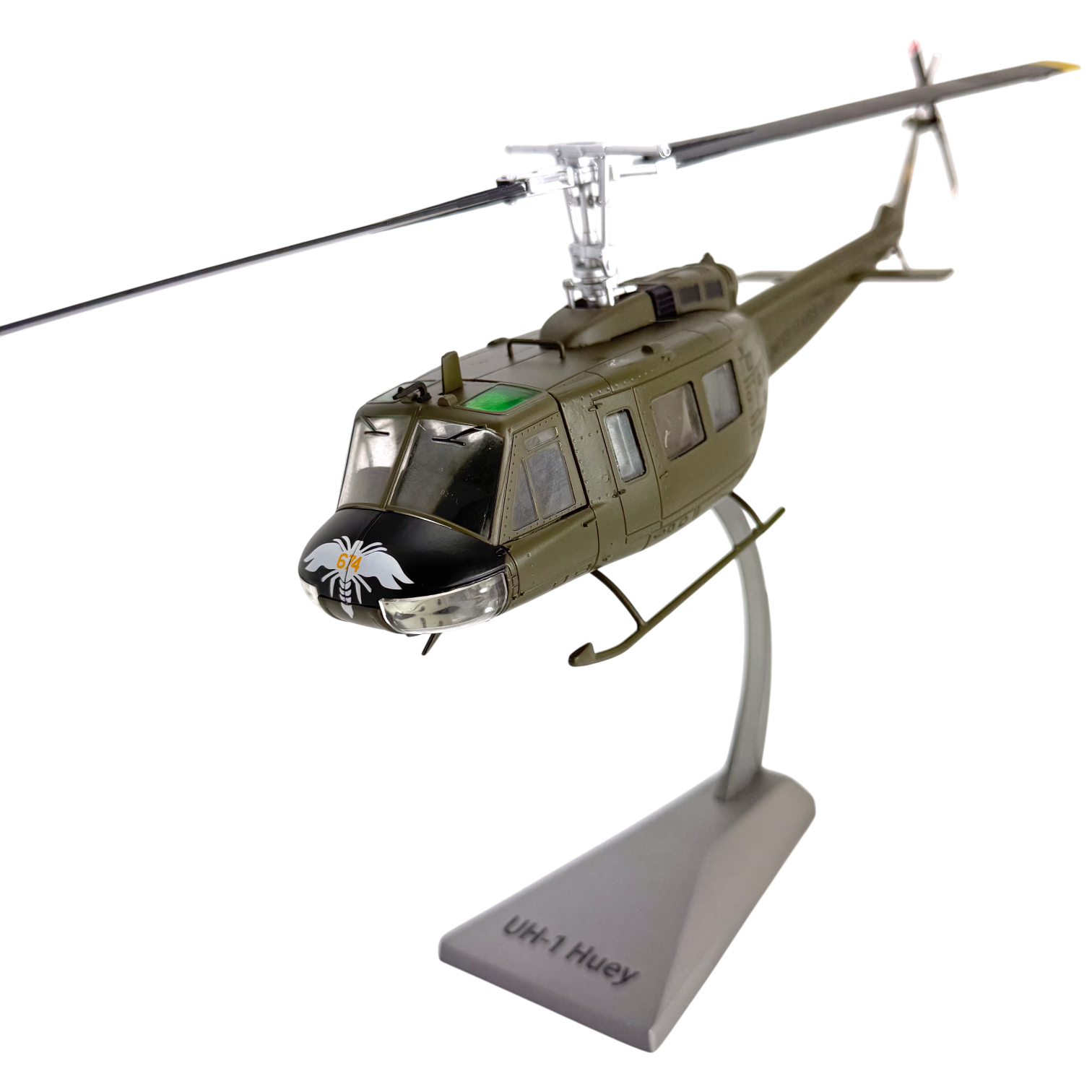
    Bell UH-1H Huey 1/48 diecast model in olive green on its display stand, with skids and a two-bladed main rotor
    Image: Airmodels

    An olive-green fuselage, a long rotor and that familiar skid-equipped shape: the Bell UH-1H Huey model (1/48 scale) brings a much-loved helicopter subject to the display shelf. This is Airmodels’ premium diecast UH-1H, and this page is our single-model spotlight. If you arrived from a pin or a Short, this is the model you came to see.

    See the Bell UH-1H Huey (1/48 scale) at Airmodels

    The official product image above shows this particular model. Follow the linked name to explore the full listing and its gallery, rather than a different Huey variant or scale.

    About our links: this is an affiliate link, so PlanesNStuff may earn a small commission at no extra cost to you.

    A Familiar Shape With a Utility Story

    The UH-1 Iroquois is better known to many enthusiasts as the “Huey”. The Museum of Flight describes the family as a multipurpose utility helicopter widely used during the Vietnam War, primarily for troop and cargo transport, medical evacuation and aerial assault. Its collection includes a UH-1H that served with the US Army in Vietnam.

    That history gives a Huey model a different place in an aviation collection from a fighter or bomber. It invites a look at the transport crews, medical evacuation work and air mobility behind the familiar silhouette—not just the shape of the helicopter itself.

    For that broader background, The Museum of Flight’s Bell UH-1H Iroquois (Huey) page is a useful starting point. The museum’s aircraft is a historical reference here; we are not claiming that this replica depicts that particular helicopter, unit or crew.

    What Airmodels Lists

    We haven’t handled this model ourselves. This is a research-based product spotlight, not a hands-on review: these details come from the Airmodels listing, rather than our own measurements or testing.

    • Aircraft: Bell UH-1H Huey, described as a premium diecast helicopter model.
    • Scale: 1/48.
    • Fuselage length: 26.5 cm (10.4 inches).
    • Rotor width: 30 cm (11.8 inches).
    • Materials: diecast metal.
    • Display: a metal display stand is included.
    • Preparation: ready to display, with rotors that need to be attached by hand.
    • Surface and cockpit details: Airmodels lists realistic panel lines and detailed cockpits visible through transparent windows.
    • Markings: described by Airmodels as genuine markings; the listing does not name a particular airframe or unit.
    • Moving features: the main and rear rotors spin freely, according to the listing.

    A Closer Look at the Photos

    The official photographs show an olive-green finish, a dark nose with a pale decorative emblem, transparent cockpit and cabin windows, and skid landing gear. The main rotor has two blades, and the tail rotor has contrasting coloured tips. Several views show the model raised on its curved display support.

    Closer view of the olive-green Bell UH-1H Huey model showing its dark nose, transparent windows and skids
    Image: Airmodels

    Those are observations from Airmodels’ photographs, not an independent accuracy assessment. We have not assigned the markings to a named helicopter or unit. The gallery’s different angles are useful for deciding whether this particular finish suits your collection.

    Making Room for the Huey

    The stated 30 cm rotor width is the dimension to keep in mind when choosing a shelf. Allow space around the blades rather than placing the model tightly between books or other aircraft. The listing gives fuselage length and rotor width, but not the stand’s footprint or the overall height on display.

    Although Airmodels calls it ready to display, the rotors still need to be attached by hand. The included metal stand and freely spinning main and rear rotors are listed features; we have not tested the fit, movement or stability ourselves. Follow the supplier’s instructions when setting it up.

    For someone who enjoys finished helicopter models, that makes this a subject to consider without starting a full kit-building project. The useful questions are whether the recipient likes the UH-1H, collects 1/48 scale and has enough display room.

    See the UH-1H Huey at Airmodels

    Bell UH-1H Huey 1/48 diecast model in olive green on its display stand, with skids and a two-bladed main rotor
    Image: Airmodels

    Take a closer look at the Bell UH-1H Huey (1/48 scale)

    Use the official photographs and listed dimensions to decide whether this is the Huey for your shelf. This spotlight is for the premium 1/48 UH-1H, not the separate 1/72 UH-1B model.

    About our links: this is an affiliate link, so PlanesNStuff may earn a small commission at no extra cost to you.

    Thanks for Flying With Us

    Thanks for stopping by PlanesNStuff. Whether you’re choosing a helicopter model or following the history behind it, we’re glad to have you along.

    God bless you with blue skies!

  • P-51C Mustang “Alice-Jo” Model (1/48 Scale)

    P-51C Mustang “Alice-Jo” Model (1/48 Scale)

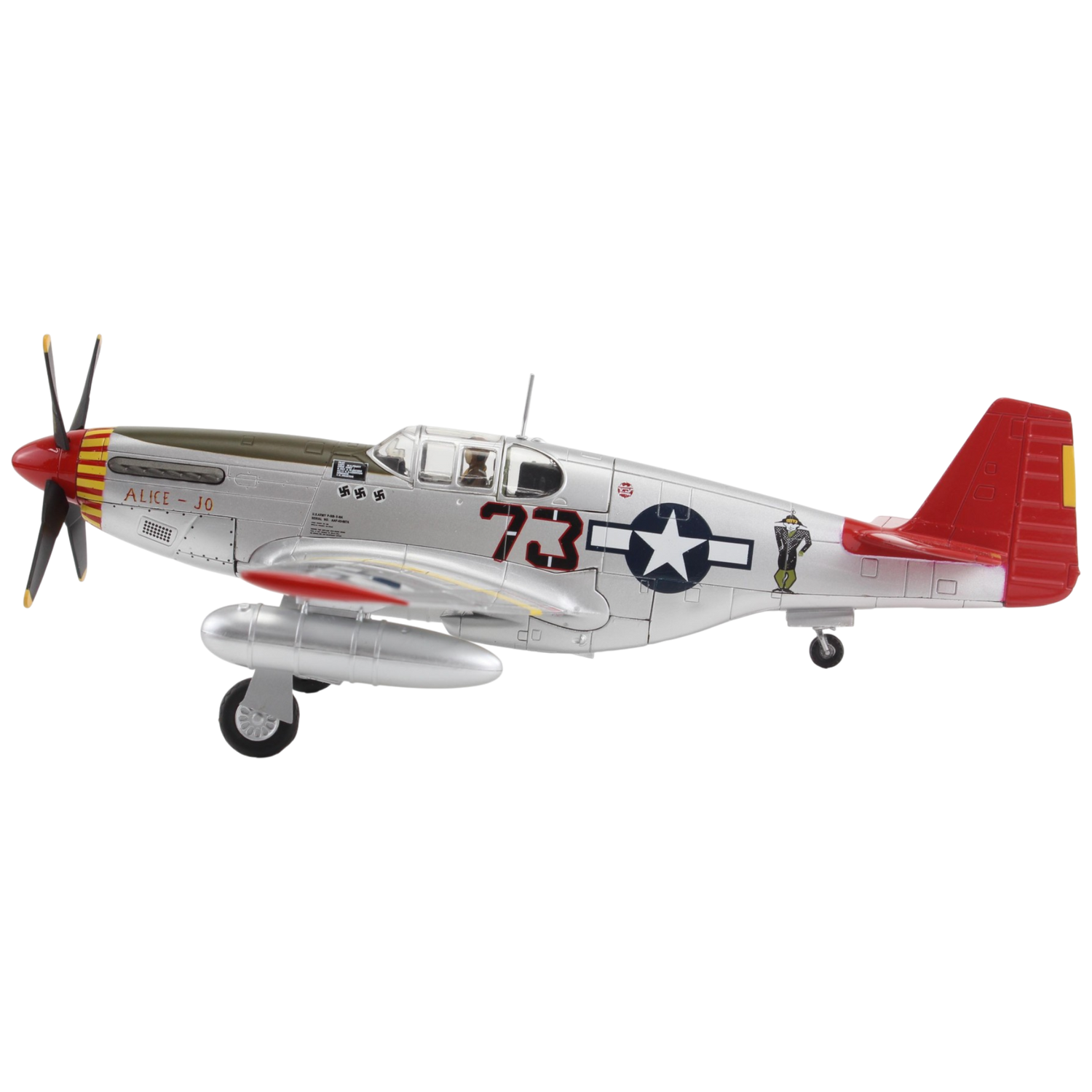
    P-51C Alice-Jo 1/48 diecast model with silver finish, red tail, number 73 and underwing drop tank
    Image: Airmodels

    A silver finish, a bright red tail and a name on the nose: the P-51C Mustang “Alice-Jo” (1/48 scale) is our first single-model spotlight. This is Airmodels’ premium diecast North American P-51C, identified on its listing as the aeroplane flown by Capt. Wendell Pruitt, 302nd Fighter Squadron, Ramitelli, Italy, 1944. If you arrived from a pin or a Short, this is the model you came to see.

    See the P-51C Mustang “Alice-Jo” (1/48 scale) at Airmodels

    The official product image above shows this particular Alice-Jo model; follow the linked name to see the full listing and its photographs.

    About our links: this is an affiliate link, so PlanesNStuff may earn a small commission at no extra cost to you.

    A Small Model With a Real Person Behind It

    The name matters as much as the shape. Wendell O. Pruitt was a Tuskegee Airman who served with the 302nd Fighter Squadron of the 332nd Fighter Group. The Commemorative Air Force’s RISE ABOVE biography identifies him with his P-51C Alice-Jo at Ramitelli Airfield, Italy, in November 1944. Imperial War Museums’ American Air Museum archive also connects Pruitt, Alice-Jo and those units.

    That gives this model a specific historical connection rather than just a familiar fighter silhouette. It can be a starting point for reading about Pruitt and the Tuskegee Airmen, as well as an addition to a shelf of wartime aircraft.

    For the broader aircraft story, head to The North American P-51: The WWII Fighter That Took the Bombers All the Way. This page stays focused on the Alice-Jo model itself.

    What Airmodels Lists

    We haven’t handled this model ourselves. This is a research-based spotlight, not a hands-on review: the specifications below come from the live Airmodels product page, rather than our own measurements or testing.

    • Aircraft and markings: North American P-51C Mustang, “Alice-Jo”, Capt. Wendell Pruitt, 302nd FS, Ramitelli, Italy, 1944.
    • Scale: 1/48.
    • Nose-to-tail length: 20 cm (8 inches).
    • Wingspan: 23.5 cm (9.25 inches).
    • Construction: diecast metal; Airmodels describes heavy metal construction with a minimum of plastic.
    • Finish: professionally painted, with tampo (pad-applied) markings.
    • Display: a stand is provided, and the landing gear can be displayed up or down.
    • Cockpit: canopy can be displayed open or closed; a removable pilot figure is included.
    • Preparation: fully painted and pre-assembled, with no glue or painting required.
    • Packaging: protective collector packaging, according to the listing.

    The display choices are worth noting. Wheels down offers a parked-aircraft look, while the supplied stand and wheels-up option give you another way to present it. The canopy and removable pilot provide further choices without turning the purchase into a painting project.

    At the stated 23.5 cm wingspan, it’s worth measuring the intended shelf space before ordering. Allow room around the model rather than squeezing the wingtips between books. The listing gives the aeroplane’s length and span, but not the stand’s footprint or the overall height on the stand.

    A Closer Look at the Photos

    The official listing photographs show silver-coloured surfaces, a red tail and spinner, a dark panel ahead of the cockpit, and yellow bands across the wings. “ALICE-JO” appears on the nose, with a large number 73 on the fuselage and US star-and-bar markings. Underwing drop tanks are visible too.

    P-51C Alice-Jo 1/48 diecast model, angled view showing the upper surfaces, yellow wing bands and red tail
    Image: Airmodels

    Those are observations from Airmodels’ photographs, not a claim that we have checked every marking against wartime records. The different angles are useful when deciding whether this particular colour scheme is the one you want on display.

    Who Might Enjoy It?

    If you collect finished 1/48 aircraft, this is a subject to consider for a shelf centred on named aeroplanes or the Tuskegee Airmen. The pilot and unit identification give it a story you can follow beyond the display cabinet.

    It could also suit an aviation-history enthusiast who would rather display a completed model than build a kit. No glue or painting is required, though choosing the display configuration is still part of setting it up. As a gift, the useful questions are whether the recipient likes this aircraft, collects this scale and has enough room for it—not whether they own modelling tools.

    See Alice-Jo at Airmodels

    P-51C Alice-Jo 1/48 diecast model with silver finish, red tail, number 73 and underwing drop tank
    Image: Airmodels

    Take a closer look at the P-51C Mustang “Alice-Jo” (1/48 scale)

    Use the product photographs and listed dimensions to decide whether this is the right addition to your collection. This spotlight is for the premium 1/48 Alice-Jo P-51C, not another P-51 variant.

    About our links: this is an affiliate link, so PlanesNStuff may earn a small commission at no extra cost to you.

    Thanks for Flying With Us

    Thanks for stopping by PlanesNStuff. Whether you’re choosing a model or following the history behind a name on the nose, we’re glad to have you along.

    God bless you with blue skies!