
If you’ve ever heard the thud of rotor blades over the beach and looked up to see a bright red and yellow rescue helicopter, you’ve seen the end result of one of aviation’s great stories. The helicopter took longer to tame than the airplane, but once it worked, it changed what “rescue” means: it can land where there’s no runway, hover where it can’t land at all, and get a badly hurt person to the hospital in a fraction of the time.
In our Royal Flying Doctor Service story we followed the fixed-wing side of aerial medicine. This is its rotary-wing twin: from Igor Sikorsky’s first wobbly hover to the medevac crews of Korea and Vietnam, and on to the rescue and aeromedical helicopters flying over Australia and the US today.
Ten Seconds That Changed Everything: Sikorsky’s VS-300
Igor Sikorsky first tried to build a helicopter as a young man in Russia in 1909, according to The Henry Ford. It didn’t work, so he made his name with fixed-wing aircraft instead, and only came back to the problem in the late 1930s in the United States.
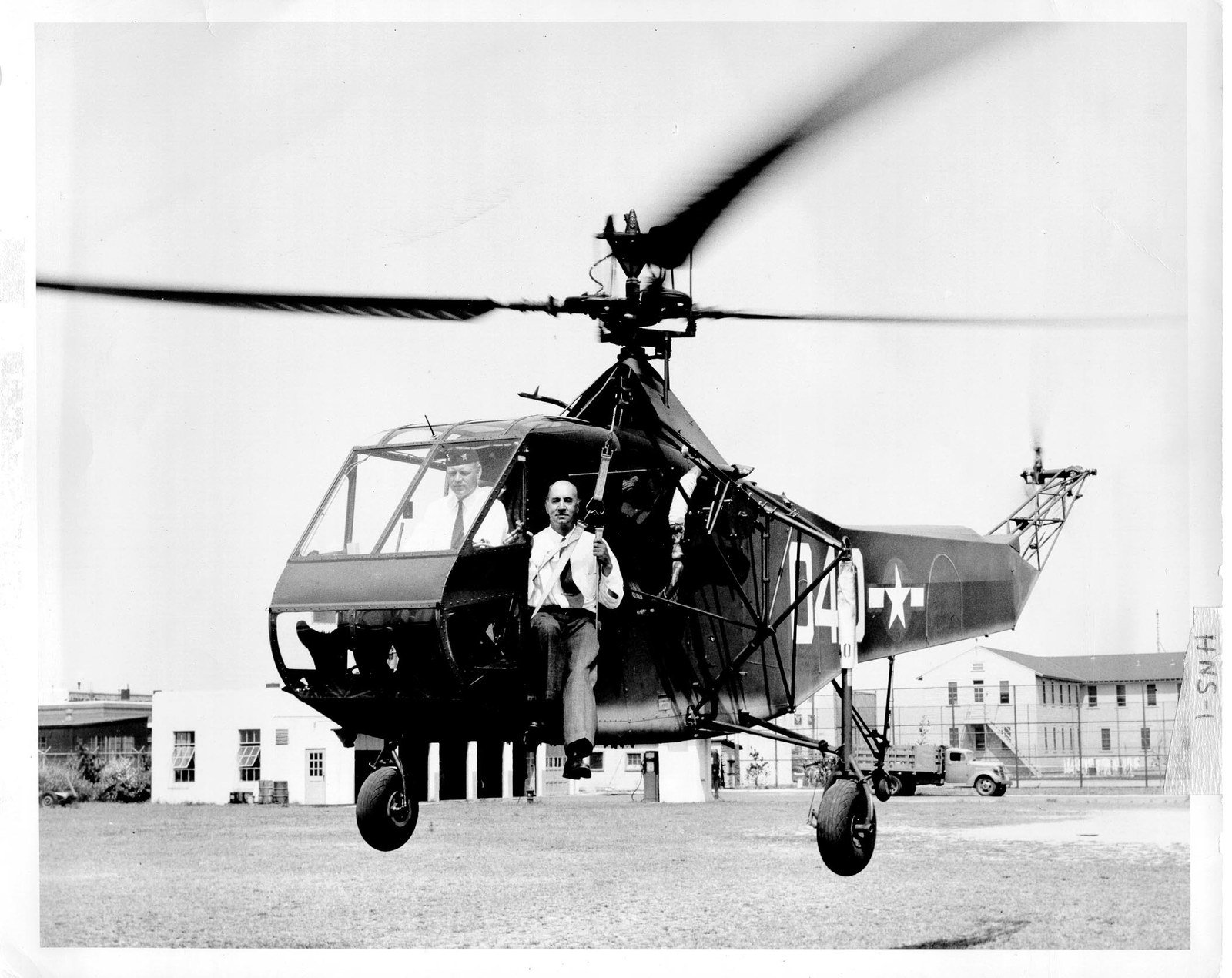
The Igor I. Sikorsky Historical Archives record that the VS-300 first flew on 14 September 1939 at Stratford, Connecticut, with Sikorsky himself at the controls. It wasn’t exactly a soaring debut. The flight lasted about 10 seconds, and for safety the machine was tied by four cables to a heavy plate on the ground, with a crew standing by in case it tried to roll over.
What followed was years of “fly, fix, fly”. The Archives say the first untethered flight came on 13 May 1940, and on 6 May 1941 Sikorsky set a world helicopter endurance record of 1 hour, 32 minutes and 26 seconds. By December 1941 the VS-300 had settled on the layout you still see on most helicopters today: one main rotor for lift and control, and one small tail rotor to stop the whole machine spinning the other way. That’s why the Archives call it the first practical helicopter in America and the first in the world to perfect the single main rotor and tail rotor design.
The VS-300 was presented to Henry Ford’s museum in Dearborn, Michigan, in October 1943, and it’s still there. The Henry Ford lists it on display in the Heroes of the Sky exhibit at the Henry Ford Museum of American Innovation.
The R-4 Hoverfly: The First Production Helicopter
The VS-300 led straight to the VS-316, better known as the R-4. The Archives call it the world’s first production helicopter. The prototype XR-4 first flew in January 1942, and according to the National Museum of the US Air Force, its success led the US Army Air Forces to order three YR-4As and 27 YR-4Bs for testing and training, then 100 R-4Bs. Some went to the US Navy, the US Coast Guard and Britain’s Royal Navy too.
By modern standards it was fragile. The museum lists a 200 hp engine and a cruising speed of 65 mph (about 105 km/h). But it could do something no airplane could, and two young pilots were about to prove it.
Firsts in the Snow and the Jungle
A Coast Guard mercy flight, January 1944
The US Coast Guard saw the helicopter’s rescue potential early. Its Historian’s Office says Commander Frank Erickson became Coast Guard Helicopter Pilot No. 1. On 3 January 1944, the destroyer USS Turner exploded and burned off New York Harbor. In a violent storm, Erickson flew an HNS-1 (the Navy’s name for the R-4) from New York City to Sandy Hook, New Jersey, carrying two cases of blood plasma for the injured crew. The Coast Guard describes it as the first rescue flight ever made by helicopter.
Erickson went on to train 102 helicopter pilots and 225 mechanics during the war, and he helped develop the power hoist, rescue slings and baskets, and floats that let helicopters land on water. If you’ve ever seen a rescue crewman winched down on a cable, that’s part of his legacy.
Behind enemy lines in Burma, April 1944
A few months later and half a world away, the helicopter flew its first combat rescue. The National Museum of the United States Army tells how Technical Sergeant Ed Hladovcak was flying three wounded soldiers out of the Burmese jungle in an L-1 Vigilant when his plane went down in a rice paddy, deep in Japanese-held territory. A light plane found them but couldn’t land.
The only available helicopter pilot was Lieutenant Carter Harman of the 1st Air Commando Group, with a YR-4B that was never meant for this kind of work. As Smithsonian Air & Space recounts, he stripped out excess weight, loaded jerry cans of fuel and flew across a mountain range that was right at the helicopter’s ceiling. Because the little machine could carry only one passenger at a time, he made four trips. His engine overheated on the way, forcing him to wait overnight for it to cool, but he brought all four men out. On the last lift-off he saw armed soldiers bursting out of the jungle, and only later learned they were Chindits, Allied troops who had come to rescue their own.
The Army museum calls it the first medical evacuation by helicopter in enemy territory and the beginning of what we now call medevac. Harman received the Distinguished Flying Cross.
Korea: The “Angel of Mercy”
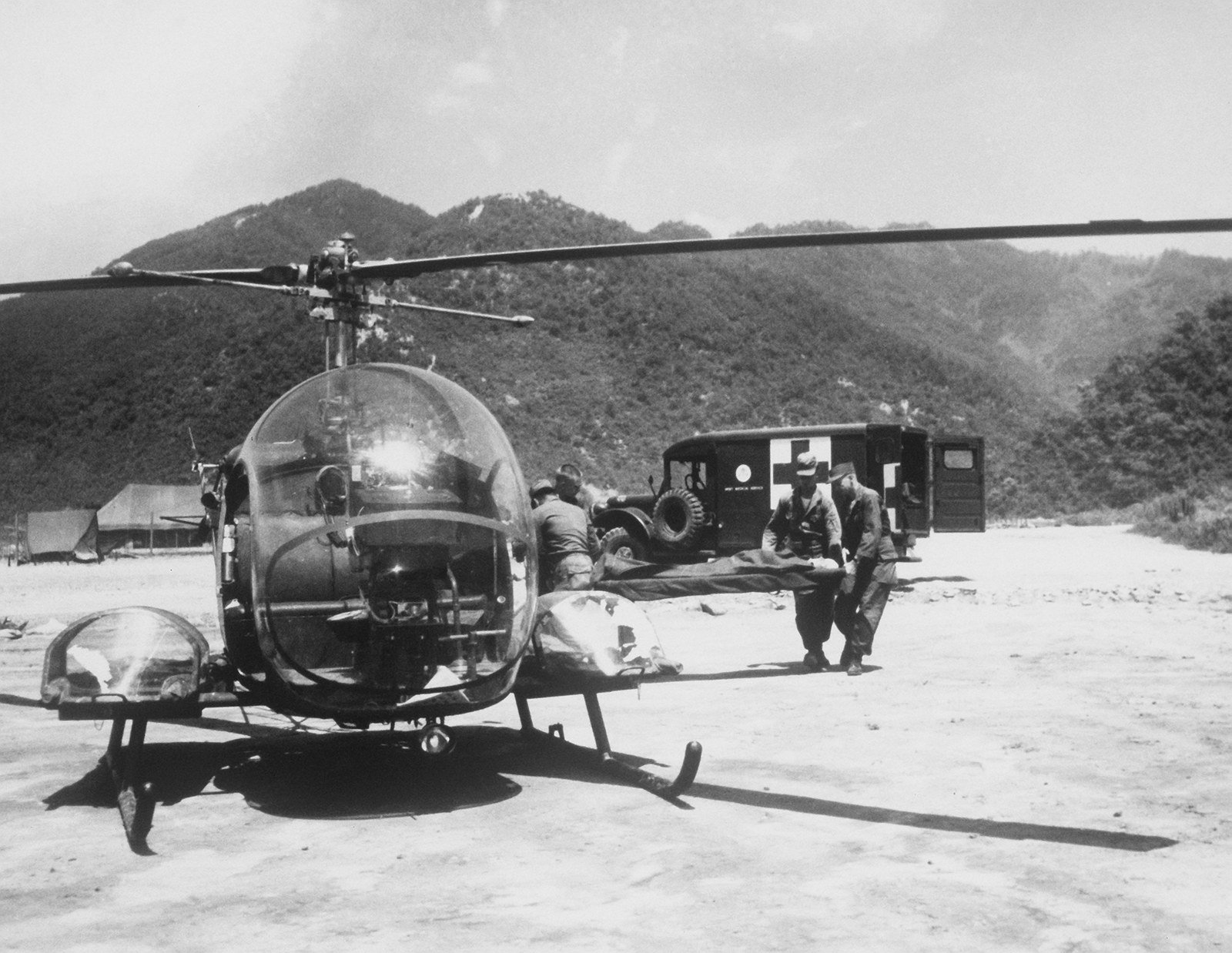
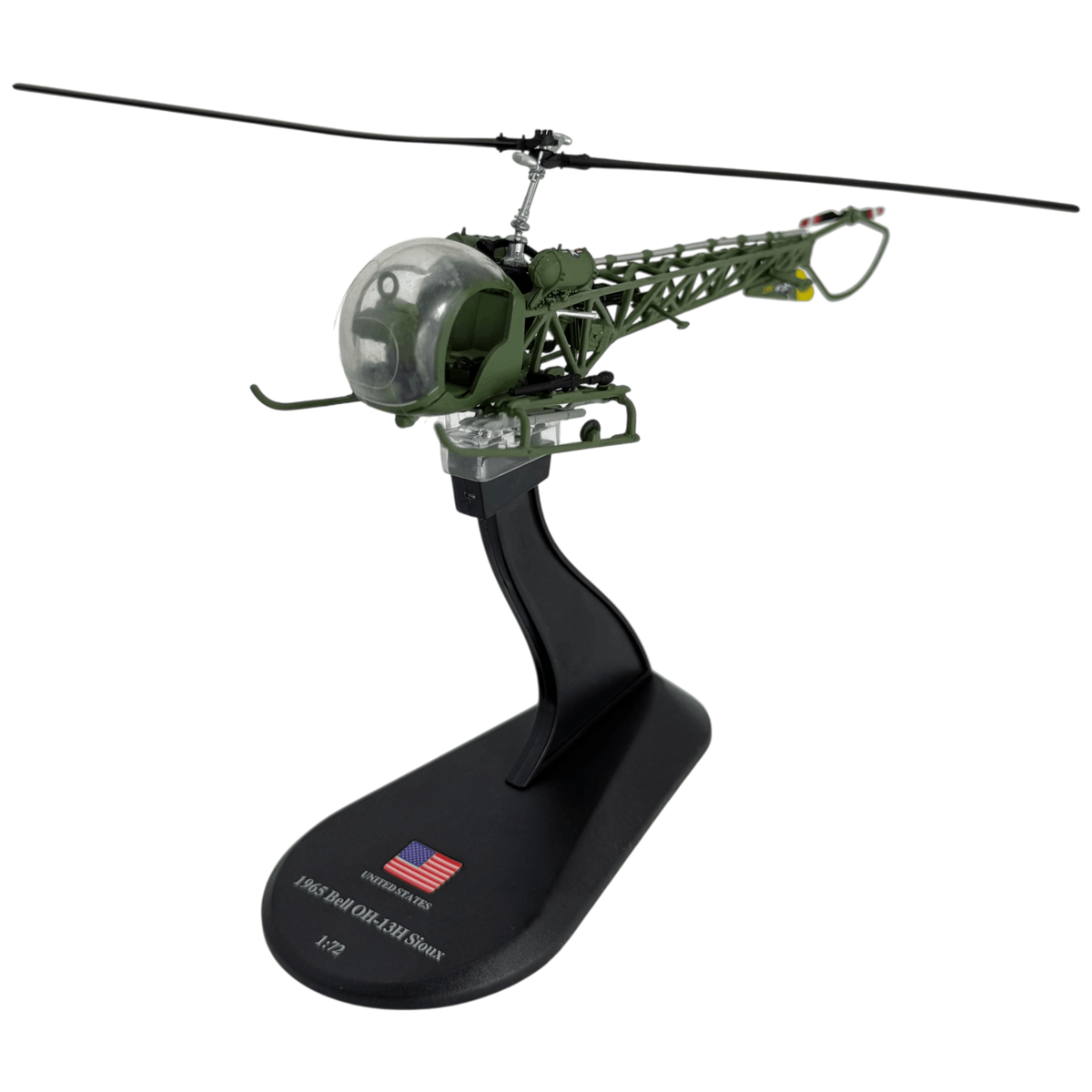
The helicopter really proved itself as an air ambulance in Korea. According to the US Army, its first helicopters there were the Bell H-13 Sioux and the Hiller H-23 Raven. The 2nd Helicopter Detachment arrived in November 1950 with four Sioux, and on 3 January 1951, 1st Lieutenants Willis G. Shawn and Joseph L. Bowler flew the Army’s first aerial medical evacuation (MEDEVAC) missions.
There was no room inside the H-13’s bubble cockpit for stretchers, so patients rode in two pods mounted outside the cabin. It sounds alarming, but it worked. The Army says soldiers dubbed the helicopter the “Angel of Mercy”, and that its aviators carried 18,000 of the war’s 23,000 casualties to forward Mobile Army Surgical Hospitals (MASH), the units that later inspired the TV series M*A*S*H. The Army also credits these MEDEVAC techniques with cutting the death rate of evacuated patients from 4.5 per cent in World War II to 2.5 per cent in Korea. In November 1952 it formed its first purely medical aviation unit, the 49th Medical Detachment (Air Ambulance).
The H-13 was the military version of the civilian Bell 47, and that’s a name we’ll meet again in Australia.
Vietnam: The Birth of “Dustoff”
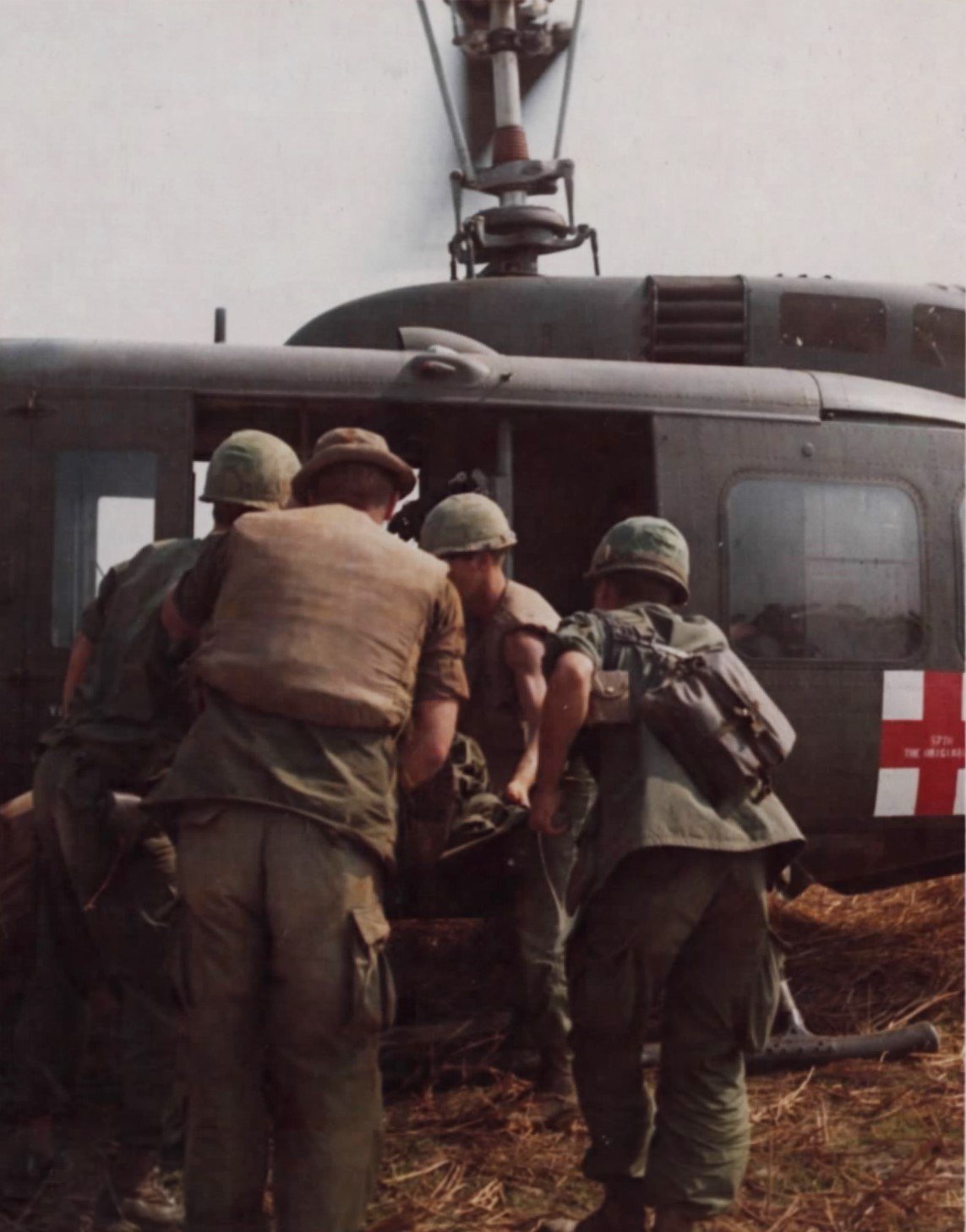
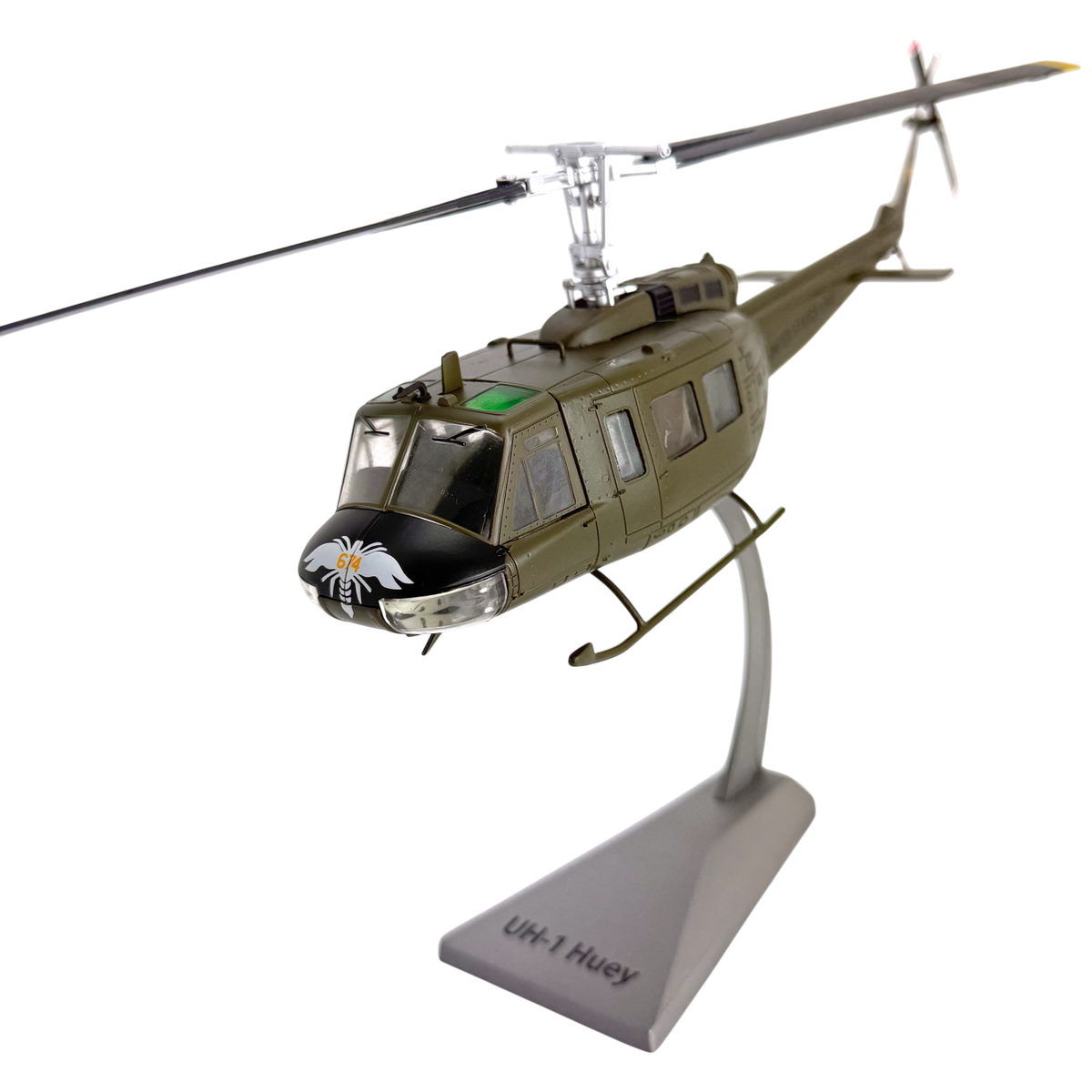
If Korea proved the idea, Vietnam made it routine. The Army’s official history, published by the AMEDD Center of History and Heritage, says the 57th Medical Detachment (Helicopter Ambulance) arrived in 1962 and, at first, had the only UH-1 “Huey” helicopters in the country. Its first mission came on 12 May 1962, when it flew an American Army captain with a dangerously high fever from Tuy Hoa to the 8th Field Hospital.
For its first year, the unit had no proper call sign; pilots simply used “Army” plus the aircraft’s serial number. In 1963 its new commander, Major Lloyd E. Spencer, went through a list of unused call words. Most, like “Bandit”, suited assault units better, but one stood out. Because a helicopter landing in a dry field blew dust, blankets and everything else all over the people waiting below, he chose “Dust Off”. The history says the name lasted the rest of the war, and “Dustoff” is still how many people remember Vietnam’s medevac crews.
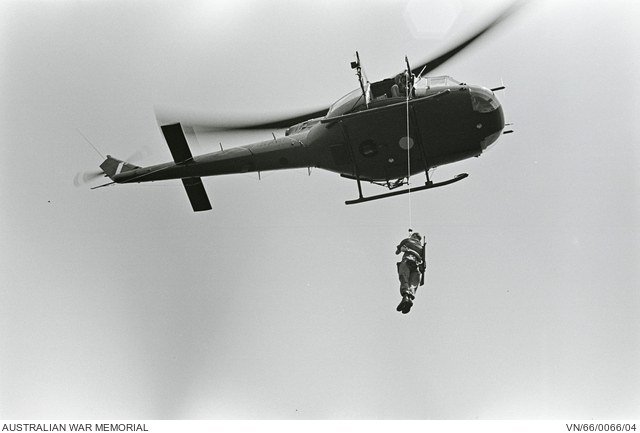
Australians flew the Huey in Vietnam too. A 1966 photo caption at the Australian War Memorial describes a No. 9 Squadron RAAF Iroquois on stand-by at Vung Tau for exactly this kind of job. When a soldier on patrol fell ill with dysentery or malaria, the helicopter could be airborne in minutes and have him at the US Army’s No. 36 Field Evacuation Hospital within half an hour, winching him out of a rubber plantation if there was nowhere to land.
Rescue Helicopters in Australia Today
The lessons of Korea and Vietnam came home. In Australia, the story starts on a Sydney beach. Surf Life Saving and Westpac say the Westpac Life Saver Rescue Helicopter Service began operating on 29 September 1973 with one Bell 47 (yes, the same type as Korea’s Angel of Mercy) and support from the Bank of New South Wales, as Westpac was then known. Surf Life Saving Australia calls it Australia’s first integrated civilian helicopter rescue service, and the longest-serving civilian-based rescue helicopter service in the world.
Early rescues were hair-raising. Westpac recalls that a lifesaver would jump into the water, grab the swimmer, and then the pair would dangle on a cord about 30 feet (9 meters) below the helicopter all the way to shore. At first the service flew only on weekends and public holidays during the surf season. By its 50th anniversary in 2023, it reported more than 100,000 missions and 15 rescue helicopters, plus one offshore rescue boat, operating from 13 bases around Australia. Today patients are winched straight into the cabin, and the service proudly says no one has ever paid to be rescued.
Other services grew from community roots too:
- LifeFlight (Queensland): its history begins in 1979 with the Sunshine Coast Helicopter Rescue Service, followed in 1981 by the Gold Coast Helicopter Rescue Service. After a string of mergers it became LifeFlight in 2016, and it now says it flies more than 8,000 missions a year. It also trains and supplies the doctors and nurses who fly with other Queensland aeromedical services, including the RFDS.
- CareFlight (NSW and beyond): CareFlight’s history starts in 1986 with a single Squirrel AS350B helicopter. Its first patients, 14-year-old Andrew Withers and his 11-year-old sister Heidi, were flown from Lithgow to Westmead after a car crash, and both made a full recovery. CareFlight marked 40 years in July 2026, and today its doctors and nurses fly helicopters, airplanes and medical jets.
Air Medical Helicopters in the United States
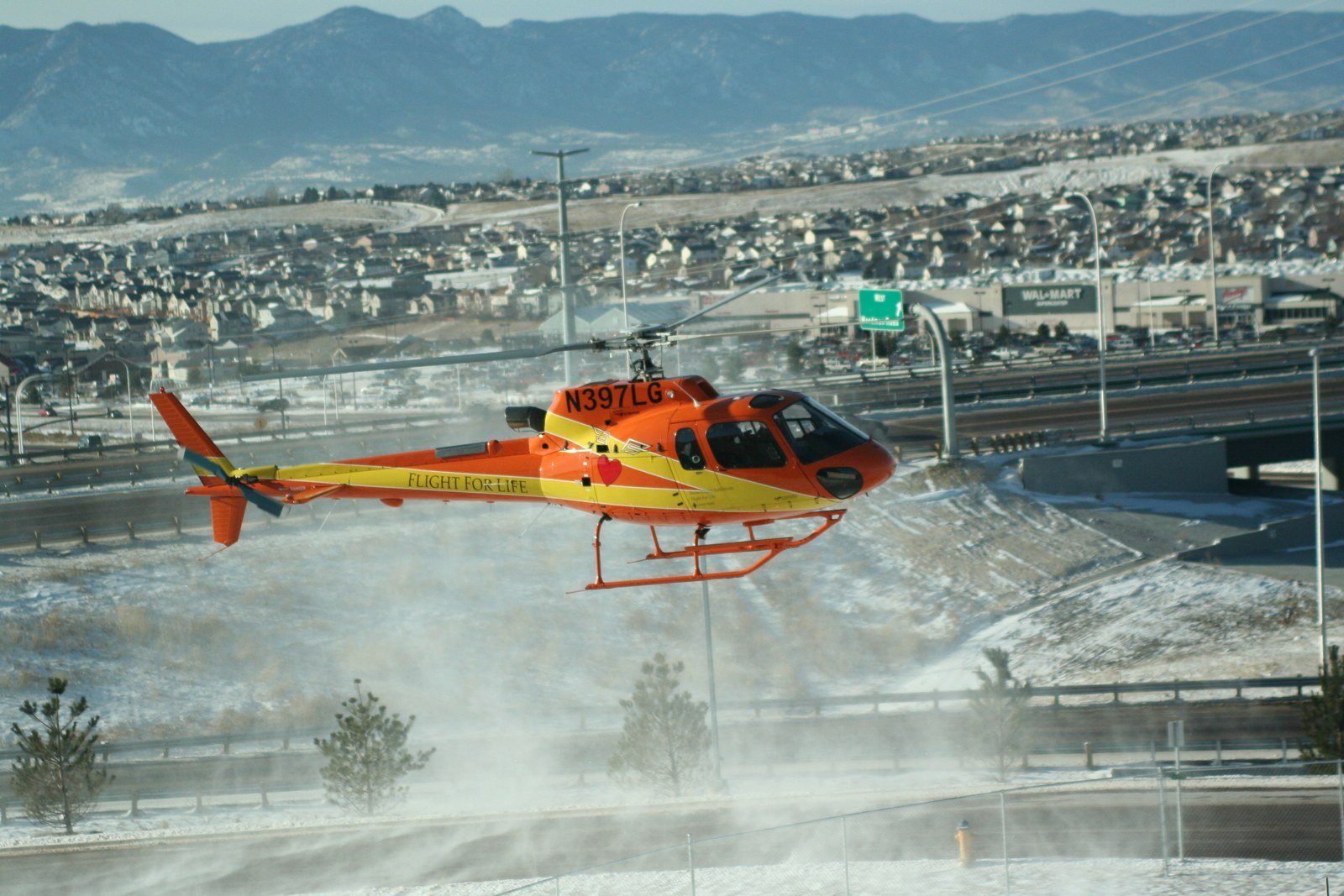
In the US, the big step from military to civilian came in Colorado. Flight For Life says it has been in continuous service since 1972, when St. Anthony Hospital in Denver started what it describes as the first civilian, hospital-based emergency medical helicopter program in the United States. It began with a single Alouette III helicopter, and Flight For Life says more than 300 flight programs around the country and the world have since been modelled on the idea.
Today it flies from several bases in Colorado and works with ski patrols and search and rescue teams across the Rocky Mountain region. It’s a long way from Harman’s overheating YR-4B, but the idea is the same: get skilled care to the patient, and the patient to hospital, as fast as possible.
Where to See Pioneering Helicopters
Opening hours and displays change, so check each museum’s website before you go.
- The Henry Ford, Dearborn, Michigan (US): the original Sikorsky VS-300A, listed on display in the Heroes of the Sky exhibit. thehenryford.org
- National Museum of the US Air Force, Dayton, Ohio (US): an R-4B Hoverfly in the World War II Gallery, donated by the University of Illinois in 1967. nationalmuseum.af.mil
- Australian Army Flying Museum, Oakey, Queensland (AU): its displays include the Bell 47 Sioux and the UH-1H Iroquois, alongside later Army helicopters such as the Kiowa, Black Hawk and Chinook. The Army says admission is free but visits must be booked in advance. army.gov.au
Bring a Piece of Medevac History Home
If this story has you itching for a helicopter on the shelf, these two die-cast models cover the two great medevac machines of the 20th century. The Sioux is the Korean War “Angel of Mercy” type, and we’ve given the Huey its own model spotlight. Neither model is painted in a medevac scheme, so they won’t show red crosses.
About our links: these are affiliate links, so PlanesNStuff may earn a small commission at no extra cost to you.
Keep Exploring
Helicopters are only half of the aerial medicine story in remote country. For the fixed-wing side, read The Royal Flying Doctor Service: From One Biplane to a Mantle of Safety. And to see how helicopters help mission pilots reach some of the world’s most isolated communities, take a look at Mission Aviation Today.
Have you ever been winched, flown or rescued by a helicopter crew, or flown one yourself? We’d love to hear your story.
God bless you with blue skies!

Leave a Reply